Everyone’s talking about AI in hospitality. They’re focused on chatbots for booking, personalized recommendations, and operational efficiency. None of that is wrong. But it’s incomplete.
The deeper, harder truth is that AI is rapidly transforming the very *creative process* itself for hospitality brands. It’s not just about streamlining existing workflows; it’s about fundamentally changing how ideas are generated, visuals are conceived, and guest experiences are designed.
1. Beyond the Buzzwords: AI as a Creative Partner
The initial wave of AI in creative fields felt like a novelty. Tools generating images from text prompts, writing basic copy, or suggesting design layouts. For hospitality, this often translated to generating generic social media posts or draft website copy.
But this is no longer the edge case. AI is evolving into a genuine creative partner, capable of complex ideation, nuanced stylistic adaptation, and even predictive trend analysis that directly informs creative strategy.
Ideation Amplified
Think beyond simple prompt-and-response. Advanced AI models can analyze vast datasets of past campaigns, guest feedback, and market trends to suggest entirely new creative directions. For a hotel chain looking to refresh its brand image, AI can identify under-served market segments and propose visual themes or messaging angles that resonate with them, based on data that would be impossible for a human team to process manually.
Rapid Prototyping at Scale
Imagine needing to visualize several different room design concepts, lobby aesthetics, or even menu layouts for a new restaurant. AI can generate photorealistic renderings or mood boards in minutes, not days or weeks. This dramatically accelerates the feedback loop with stakeholders and allows creative teams to explore more options before committing significant resources.
Personalization at the Core of Design
AI’s ability to understand individual guest preferences can now be integrated directly into the creative output. This means not just personalized emails, but potentially dynamic visual content for in-room displays, tailored amenity suggestions visualized, or even music playlists curated based on real-time guest mood analysis. The creative brief becomes less about a static campaign and more about a living, adaptable experience.
2. The Operational Shift: From Reactive to Proactive Creativity
Many creative teams in hospitality have historically operated reactively. Respond to a brief, execute the design, get feedback, revise, approve. It’s a necessary cycle, but AI introduces a proactive element that can shift the entire paradigm.
Predictive Trend Forecasting
AI can sift through social media chatter, travel blogs, competitor activities, and even economic indicators to predict emerging design trends, popular travel themes, or shifts in guest expectations. This allows creative teams to get ahead of the curve, developing concepts that will be relevant not just today, but months or years from now.
Data-Driven Creative Briefs
Instead of subjective interpretations of market needs, AI can provide objective data to inform creative briefs. For example, analyzing reviews of competing hotels could highlight a consistent gap in perceived luxury, or a desire for more sustainable design elements. This ensures creative work is grounded in demonstrable guest needs, not just assumptions.
Automated Quality Assurance
Beyond generating content, AI can also be used to *check* it. For instance, AI tools can analyze website layouts for accessibility compliance (WCAG standards), ensure brand visual consistency across thousands of digital assets, or even predict user engagement with different creative variations before launch. This frees up human reviewers for higher-level strategic thinking.
3. Challenges and Considerations for Hospitality Creatives
This transformation isn't without its hurdles. Simply adopting AI tools without strategic thinking leads to wasted resources and underwhelming results.
The Human Element Remains Crucial
AI is a tool, not a replacement for human creativity, empathy, and strategic oversight. The most effective use of AI in hospitality creative processes involves augmentation, not automation. Human creatives are essential for understanding brand nuance, emotional connection, and the unique cultural context that AI might miss.
Data Privacy and Ethical Use
Leveraging AI for personalization requires access to guest data. Hospitality brands must navigate this carefully, ensuring robust data privacy measures and transparent ethical guidelines are in place. Trust is paramount in hospitality, and any perceived misuse of data can be catastrophic.
Skill Gaps and Training
Creative teams need to develop new skills. This includes prompt engineering, understanding AI model capabilities and limitations, and critically evaluating AI-generated output. Agencies and in-house teams must invest in training to ensure their staff can effectively leverage these new technologies.
Integration Complexity
Implementing AI tools effectively often requires integration with existing systems – CRM, CMS, project management software. This can be technically challenging and require significant investment. A piecemeal approach rarely works; a holistic strategy is key.
Where Revue Fits In
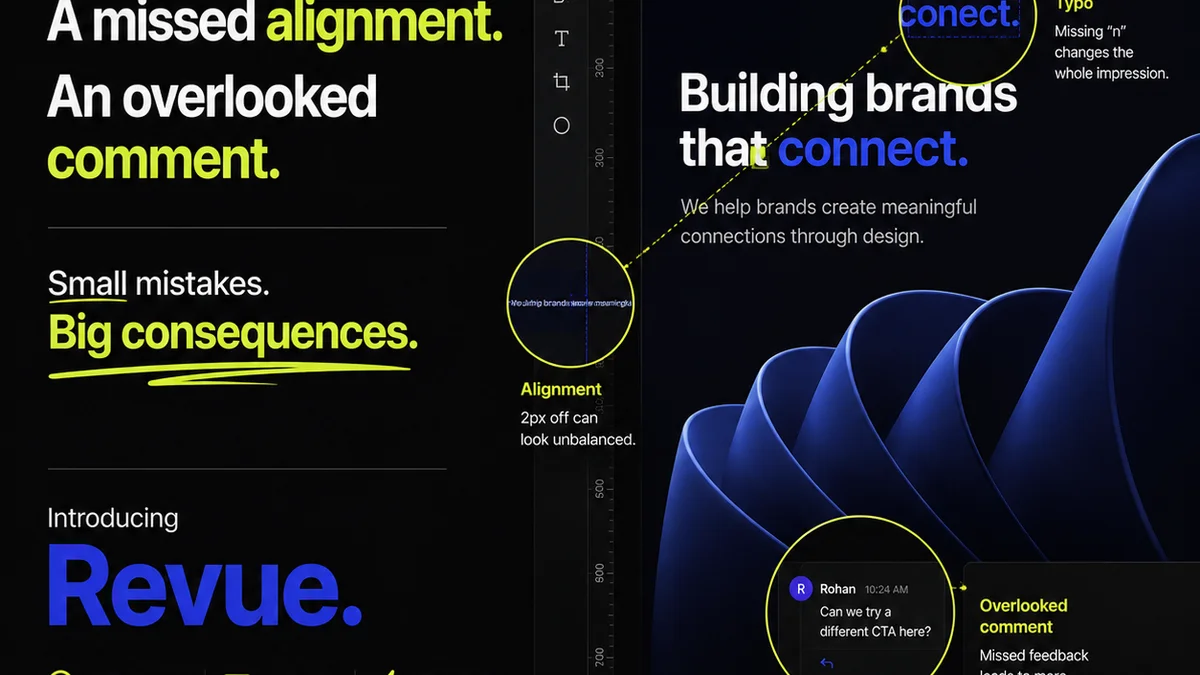
As AI continues to inject speed and complexity into the creative process, the need for clear, centralized communication and workflow management becomes even more critical. This is where a platform like Revue becomes indispensable for hospitality creative teams.
When AI is generating multiple visual concepts or drafting campaign copy variations, managing feedback and revisions can quickly become chaotic. Revue provides a single source of truth for all creative assets and client feedback.
- Centralized Feedback: AI can generate numerous options, but consolidating client input on those options needs structure. Revue allows stakeholders to comment directly on specific versions of designs or copy, preventing scattered email threads and missed comments.
- Revision Visibility: Tracking how a creative asset evolves, especially when AI suggests iterative changes, is vital. Revue’s version control and annotation tools ensure everyone sees the progression and understands the rationale behind each revision, AI-assisted or otherwise.
- Streamlined Approvals: With faster ideation cycles driven by AI, the approval process must keep pace. Revue simplifies approvals, ensuring that the right stakeholders sign off efficiently, allowing teams to move quickly from AI-powered concepting to final execution.
- Quality Control: While AI can assist in QA, human oversight is still key. Revue ensures that final creative assets meet brand standards and strategic objectives before deployment, acting as the final gatekeeper for AI-influenced work.
Effectively managing the output of AI-augmented creative processes requires robust project management. Revue bridges the gap between rapid AI generation and disciplined, client-approved execution.
Final Thought
The integration of AI into the hospitality creative process is not a future concept; it’s a present reality. The question for agencies and in-house teams isn't *if* they should adopt these tools, but *how* they can best leverage them to enhance, not replace, human ingenuity. Are you prepared to redefine your creative workflows for the age of artificial intelligence?
Frequently asked questions
How can AI help in the initial ideation phase for hospitality creative projects?
AI can analyze vast datasets of past campaigns, guest feedback, and market trends to suggest novel creative directions, identify underserved market segments, and propose relevant visual themes or messaging angles that humans might overlook due to the sheer volume of data.
Can AI tools replace human creativity in hospitality marketing?
No, AI is best viewed as a creative partner or an augmentation tool. While AI can generate content and analyze data rapidly, human creatives are essential for understanding brand nuance, emotional connection, strategic oversight, and cultural context that AI may miss.
What are the main challenges in integrating AI into hospitality creative workflows?
Key challenges include the need for new skills within creative teams (prompt engineering, critical evaluation of AI output), ensuring data privacy and ethical use of guest data, the complexity of integrating AI tools with existing systems, and overcoming the initial investment required.
How does a platform like Revue help manage AI-driven creative output?
Revue helps by providing centralized feedback, clear revision visibility through version control, streamlined approvals, and quality control checkpoints. It ensures that the rapid output from AI-augmented processes is managed effectively, leading to disciplined, client-approved execution.