Will AI replace graphic designers? It’s the question buzzing around every creative studio and design department. You see the headlines, the demos, the tools that can churn out logos or website mockups in seconds. The fear is that automation is coming for creative jobs.
None of that is wrong. But it’s incomplete.
The hard truth is that AI won’t replace graphic designers. It will, however, fundamentally change how graphic design is done, who does it, and what skills are most valuable. The real shift isn't about AI taking jobs; it's about AI augmenting capabilities and forcing a re-evaluation of core design processes.
1. AI as a Tool, Not a Replacement
Think about the history of design tools. Desktop publishing software didn't eliminate designers; it democratized layout and empowered them. Digital cameras didn't kill photographers; they changed the medium. AI is the next evolution in that toolchain.
AI excels at specific, often repetitive, tasks. It can:
- Generate variations of an existing design.
- Automate image resizing and formatting.
- Suggest color palettes or typography pairings based on data.
- Perform basic image editing like background removal.
- Analyze vast datasets for design trends.
These are powerful capabilities. But they are tools. A hammer doesn't replace a carpenter; it enables them to build faster and more precisely. AI offers similar leverage to designers.
The Human Element Remains Critical
What AI currently lacks is the nuanced understanding that fuels great design. It doesn't grasp:
- Strategic brand intent.
- Deep cultural context.
- Subtle emotional resonance.
- The 'why' behind a design choice.
- Client relationships and nuanced feedback interpretation.
A designer’s job is more than just arranging pixels. It’s about understanding the problem, empathizing with the audience, and crafting a visual solution that achieves a specific business goal. AI can generate options, but it can't yet originate strategy or truly understand the human experience. That requires intuition, experience, and critical thinking – human traits.
2. The Workflow Shift: Efficiency and Specialization
The most immediate impact of AI will be on the efficiency of the design workflow. Tedious, time-consuming tasks will be automated, freeing up designers to focus on higher-value activities.
Consider the process of creating a campaign with multiple ad variations. Previously, a designer might spend hours resizing and adapting assets for different platforms. An AI tool can now handle much of that grunt work in minutes.
New Roles and Skill Demands
This shift will likely lead to increased specialization. Designers who can effectively leverage AI tools will be in demand. This includes:
- AI Prompt Engineers for Design: Individuals who can craft precise instructions to guide AI generation effectively.
- AI-Assisted Art Directors: Those who can curate, refine, and strategically integrate AI-generated assets.
- Workflow Automators: Designers who can set up and manage AI-powered pipelines for repetitive tasks.
- Human-Centric Designers: Those who focus on the strategic, conceptual, and emotionally resonant aspects of design that AI can't replicate.
The ability to critically evaluate AI output, to understand its limitations, and to integrate it seamlessly into a larger strategic vision will become paramount.
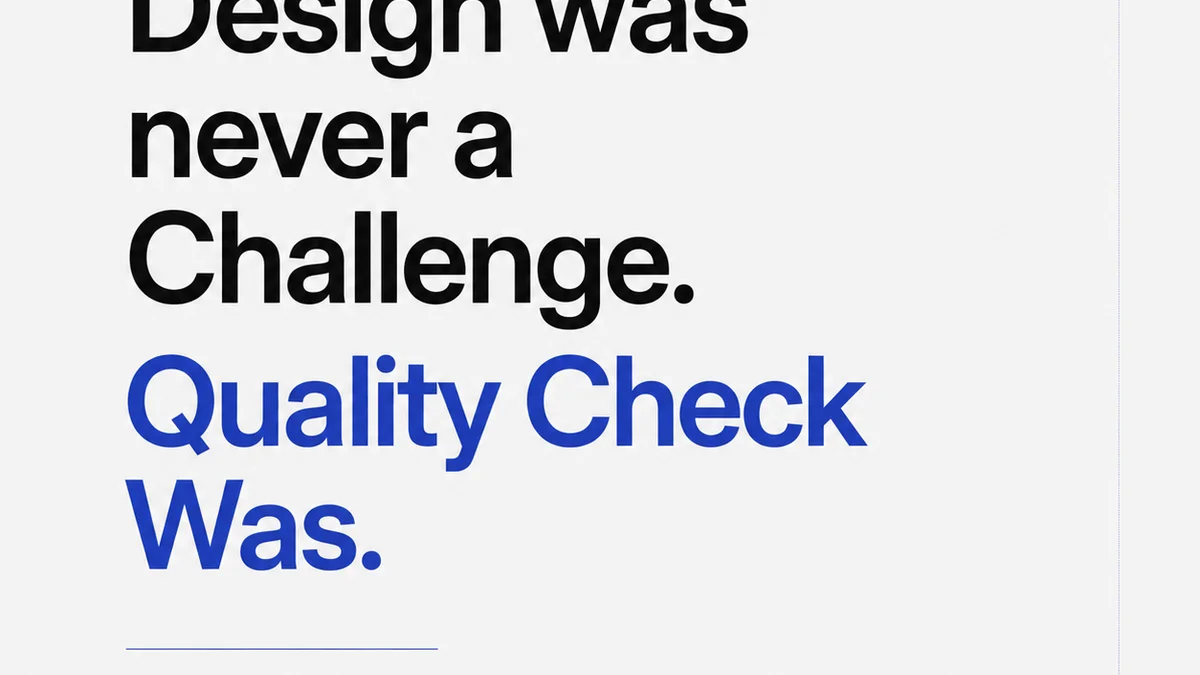
3. Quality Control and Consistency Challenges
While AI can generate content quickly, maintaining brand consistency and ensuring high quality across all outputs remains a significant challenge. AI models can produce outputs that are:
- Visually inconsistent with brand guidelines.
- Off-brand in tone or style.
- Prone to subtle errors or nonsensical elements.
- Lacking originality or creative spark.
This is where the human designer's oversight becomes indispensable. They are the arbiters of quality, ensuring that every piece of creative work aligns with strategic objectives and brand integrity.
The risk of AI generating generic or even problematic content is real. Designers act as a crucial filter, applying their expertise to ensure that AI-assisted outputs are not just aesthetically pleasing but also strategically sound and ethically responsible.
4. Ethical Considerations and Bias
AI models are trained on existing data. This means they can inherit and perpetuate biases present in that data. For designers, this raises critical ethical questions:
- Is the AI generating imagery that reinforces stereotypes?
- Are the training datasets representative of diverse audiences?
- Who is accountable when AI-generated design content is biased or offensive?
Designers have a responsibility to be aware of these potential pitfalls. They must actively work to mitigate bias in AI-generated content and ensure that their work is inclusive and equitable. This requires a critical eye and a commitment to ethical design practices.
5. Where Revue Fits In
The integration of AI into the design process doesn't eliminate the need for robust project management and clear communication. In fact, it amplifies it. As AI tools accelerate output and generate more variations, the need for centralized feedback, clear revision tracking, and seamless approvals becomes even more critical.
Revue provides that essential layer of control. When AI is part of the equation, you need a system that can:
- Centralize all feedback: Whether from AI-generated drafts or human-led iterations, all comments live in one place. No more scattered emails or lost Slack messages.
- Provide clear revision visibility: Track every change, understand the context, and see how AI-assisted iterations evolve over time.
- Streamline approvals: Ensure that the strategically vetted and refined creative work, whether AI-assisted or not, gets the sign-off it needs efficiently.
- Maintain quality control: Use Revue's features to ensure that AI-generated elements meet brand standards and project requirements before final delivery.
AI can speed up creation, but Revue ensures that the process remains organized, transparent, and accountable. It’s the human layer that manages the AI-augmented workflow.
Final Thought
AI isn't a magic wand that will make designers obsolete. It's a powerful new set of tools that will redefine the landscape of graphic design. The designers who thrive will be those who embrace these tools, understand their limitations, and focus on the strategic, conceptual, and human-centric aspects of their craft.
The question isn't whether AI will replace designers, but rather, how will designers leverage AI to elevate their work and their impact?
Frequently asked questions
Can AI create original graphic designs?
AI can generate novel visual outputs based on its training data and specific prompts. However, 'originality' in the human sense—driven by unique insight, strategic intent, and emotional depth—is still a frontier for AI. It excels at variation and synthesis rather than genuine conceptual origination.
What are the biggest limitations of AI in graphic design?
AI currently struggles with deep strategic understanding, nuanced emotional connection, cultural context, and interpreting complex client needs. It also faces challenges with brand consistency, ethical considerations like bias, and true creative problem-solving that goes beyond pattern recognition.
How can graphic designers prepare for the rise of AI?
Designers should focus on developing skills in strategic thinking, critical evaluation of AI output, prompt engineering, and workflow integration. Specializing in areas that require deep human insight, client relationship management, and ethical oversight will also be crucial.
Will AI make graphic design jobs obsolete?
It's unlikely that AI will make graphic design jobs obsolete. Instead, it will transform them. Tedious tasks will be automated, leading to increased efficiency and a shift towards roles that leverage AI as a tool while focusing on higher-level strategy, creativity, and human-centric design.