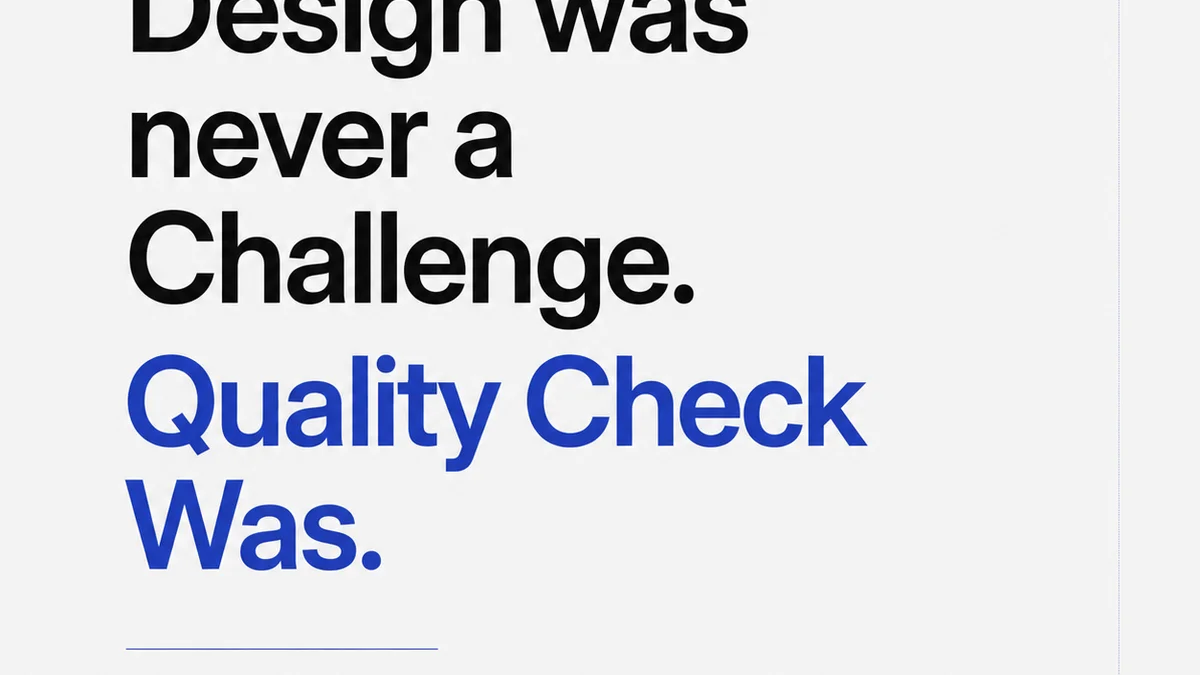
Everyone’s talking about AI. Specifically, how AI can write copy, generate images, or even code. It’s the shiny new toy, and understandably, agencies are jumping on board to explore its creative potential.
None of that is wrong. But it’s incomplete.
The real operational revolution AI offers isn't in *creating* the work. It's in managing it. Specifically, how we handle the feedback, revisions, and approvals that have always been the bottleneck for creative agencies.
The Hard Truth About Creative Workflow
The assumption is that AI will magically make creative processes faster and smoother. The hard truth? AI doesn't fix broken processes. It *reveals* them.
If your review and approval process is a mess – full of conflicting feedback, endless revision loops, and unclear sign-offs – AI will just highlight the chaos.
But if you embrace AI strategically, it becomes the most powerful tool for streamlining those very workflows. It forces you to define what
Frequently asked questions
Can AI replace human review entirely?
No, AI is best viewed as an augmentation tool. It can automate repetitive tasks, flag inconsistencies, and provide initial analysis, but human judgment, creativity, and strategic oversight remain crucial for final decisions and nuanced feedback.
What are the biggest benefits of using AI in review automation?
The primary benefits include significant time savings, reduced errors through consistent analysis, faster turnaround times, better organization of feedback, and the ability to identify patterns in revisions that can inform future projects.
How can agencies start implementing AI for review automation?
Start by identifying the most time-consuming and error-prone parts of your current review process. Look for AI tools that integrate with your existing systems and focus on automating specific tasks, like sentiment analysis of feedback or version control, rather than a complete overhaul.
Is AI review automation expensive to implement?
The cost varies widely depending on the tools and complexity. Many AI-powered platforms offer tiered pricing, and the initial investment can often be offset by the significant gains in efficiency and reduction in costly revision cycles.