Everyone’s talking about AI search. It’s the future, they say. The next big thing. That it’ll totally disrupt SEO as we know it. None of that is wrong. But it’s incomplete.
The real truth? AI search isn’t a replacement for what we do; it’s an evolution. And optimizing for it means doubling down on what actually works, just with a sharper focus.
1. Understand the Shift: From Keywords to Intent
Traditional SEO was about matching keywords. You'd stuff them into content, build links, and hope for the best. AI search, particularly with large language models (LLMs), is different. It’s about understanding the *intent* behind the query.
Think of it this way:
- A user asks, “best project management tools for agencies.”
- A traditional search engine might return a list of pages containing those exact words.
- An AI search engine aims to *answer* the question directly, synthesizing information from multiple sources.
This means your content needs to be more than just keyword-rich. It needs to be comprehensive, authoritative, and clearly address user needs.
The Hard Truth: Your Content Needs to Be *Better*
AI doesn't just scan; it comprehends. It can detect thin content, AI-generated spam, and unhelpful answers. The bar for quality has just been raised.
2. Content Quality: The Unshakeable Foundation
If you thought content quality mattered before, you were right. Now, it's paramount. AI search optimization demands content that is:
- Authoritative: Demonstrates expertise and deep knowledge.
- Trustworthy: Cites sources, avoids speculation, and is factually accurate.
- Comprehensive: Covers the topic thoroughly, anticipating follow-up questions.
- User-centric: Directly answers the user's implicit or explicit intent.
This isn't about writing for bots anymore. It's about writing for humans, and letting AI recognize the value.
E-E-A-T: Experience, Expertise, Authoritativeness, Trustworthiness
Google's E-E-A-T guidelines are more relevant than ever. AI models are trained on vast datasets, and they're learning to recognize signals of quality and credibility. Your content needs to shout these signals loud and clear.
This means:
- Author bios that highlight real credentials.
- Citations and links to reputable sources.
- Case studies and real-world examples.
- Clear, well-structured information architecture.
3. Structured Data: Speaking AI's Language
While AI excels at understanding natural language, it still relies on structured data to organize and interpret information efficiently. This is where schema markup becomes critical.
Schema.org provides a vocabulary for marking up your content so search engines (and AI models) can understand its context and meaning more easily. Think of it as providing a detailed blueprint for your content.
For agencies, this could mean:
- Marking up your services (e.g., `Service` schema).
- Detailing your team members and their expertise (`Person` schema).
- Highlighting client testimonials and reviews (`Review` schema).
- Specifying project details (`CreativeWork` or custom schemas).
Properly implemented structured data helps AI models extract key information and present it accurately in search results, whether that's in a featured snippet or an AI-generated answer.
4. User Experience (UX): The Silent Authority
AI search is designed to provide a better user experience. It's no surprise, then, that a good user experience on your own site is a strong signal for AI optimization.
What does this look like?
- Fast page load speeds.
- Mobile-friendliness.
- Clear navigation and site structure.
- Accessible design (WCAG compliance).
- Content that is easy to read and digest.
If users struggle to find what they need on your site, or if it's a frustrating experience, AI will likely de-prioritize it. Think Nielsen Norman Group's heuristics — they still apply, perhaps more than ever.
5. Topical Authority: Owning Your Niche
AI models are trained to identify entities and relationships between them. To rank well in AI-driven search, you need to establish topical authority.
This means becoming the go-to source for a specific set of topics relevant to your agency. It’s not about breadth; it’s about depth.
How do you build topical authority?
- Create comprehensive content clusters around core service areas.
- Answer every conceivable question related to those areas.
- Link internally between related pieces of content, guiding users and AI through your expertise.
- Consistently publish new, high-quality content that reinforces your niche.
For an agency, this might mean becoming the definitive resource on “client feedback management for creative teams” or “digital transformation for mid-sized businesses.”
6. Originality and Insight: The Human Edge
As AI gets better at synthesizing existing information, the value of unique insights, original research, and human perspective will increase.
AI can summarize. It can rephrase. But it can't (yet) replicate genuine creativity, nuanced strategic thinking, or firsthand experience.
Your agency's unique perspective, case studies, and thought leadership are your competitive advantage. Lean into them.
The Future is Collaborative
AI search is not a threat to be outsmarted, but a tool to be understood and leveraged. It rewards clarity, depth, and genuine value.
Where Revue Fits In
Optimizing for AI search means creating content that is clear, comprehensive, and authoritative. This is precisely what Revue helps you achieve, albeit indirectly.
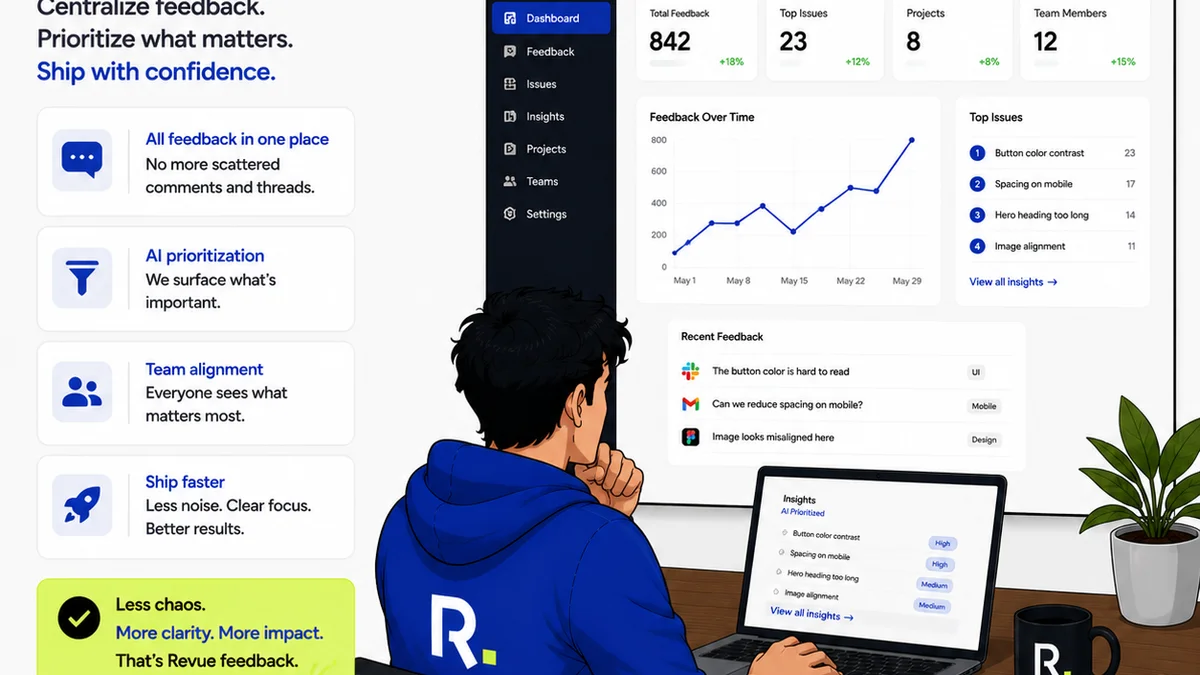
Revue centralizes client feedback, making it easier to gather the insights needed for truly user-centric content. When you have all feedback in one place, you can identify common pain points and questions, which directly inform your content strategy.
Managing revisions and approvals within Revue ensures that your published content is polished, accurate, and reflects your agency's best thinking. This contributes to the trustworthiness and expertise signals that AI values.
Ultimately, using Revue streamlines your workflow, allowing you to focus more on creating high-quality, authoritative content that will resonate with both human audiences and AI search engines.
Final Thought
AI search is here. The question isn't whether you're ready, but how you'll adapt. Will you chase algorithms, or will you focus on building genuine authority and providing unparalleled value? The answer will define your success in the evolving digital landscape.
Frequently asked questions
How is AI search different from traditional SEO?
AI search focuses on understanding user intent and providing direct answers by synthesizing information, rather than just matching keywords. This requires content to be more comprehensive, authoritative, and user-centric.
What is E-E-A-T and why is it important for AI search?
E-E-A-T stands for Experience, Expertise, Authoritativeness, and Trustworthiness. AI models are trained to recognize these signals of quality, making content that demonstrates these attributes more likely to rank well.
How can structured data help with AI search optimization?
Structured data (like schema markup) helps AI models understand the context and meaning of your content more efficiently. It provides a clear framework for extracting key information, which can improve how your content is presented in AI-driven search results.
Should agencies focus on broad topics or niche expertise for AI search?
For AI search, establishing topical authority in a niche is generally more effective. AI models reward depth and comprehensiveness within specific subject areas, making your agency the go-to resource for that niche.