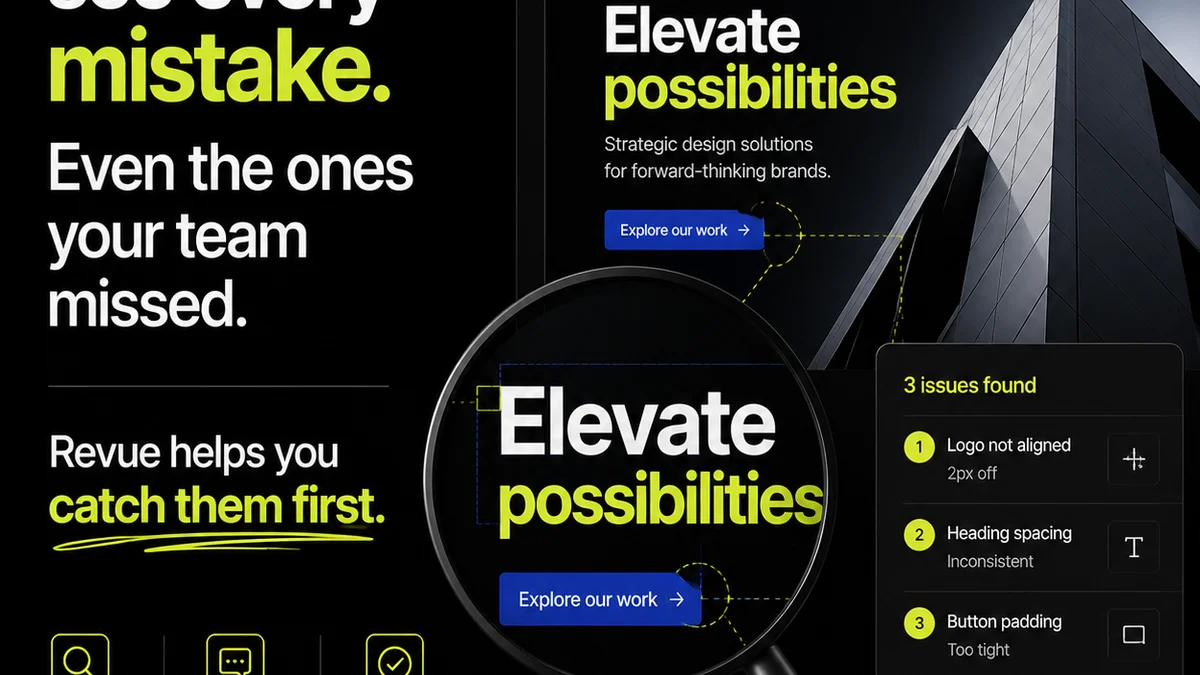
Everyone's talking about AI in creative. Generative tools, chatbots, content creation – it’s everywhere. It’s easy to assume AI’s main impact is just making *more* stuff, faster. That’s not wrong, but it’s incomplete.
The real, seismic shift AI brings to brand review isn't about speed or volume. It’s about the *intelligence* we can now embed into the review process itself, driving consistency, accuracy, and strategic alignment at a scale previously unimaginable. This is the hard truth: AI is poised to automate not just the creation, but the critical evaluation of creative work.
1. The Automation of Brand Guidelines
Brand guidelines are the bedrock of consistent brand execution. They’re also notoriously difficult to enforce, especially as teams grow and projects multiply. Manual checks are time-consuming, prone to human error, and often lag behind the pace of modern creative production.
AI changes this equation entirely. Imagine AI tools that can:
- Scan visual assets against established brand color palettes and typography rules.
- Verify logo usage, clear space, and correct placement in real-time.
- Check copy for tone of voice, adherence to messaging frameworks, and legal disclaimers.
- Analyze video content for brand elements, music licensing compliance, and on-screen text accuracy.
This isn't about replacing brand managers. It's about augmenting their capabilities, freeing them from tedious compliance checks to focus on higher-level strategy and creative direction. The goal is to build AI-powered guardrails that ensure brand integrity across every single piece of content, from the first draft to final delivery.
The Shift from Manual Audits to Continuous Compliance
Traditionally, brand reviews involved periodic audits or a final sign-off. This meant issues were often caught late, leading to costly rework or brand inconsistencies slipping through the cracks. Continuous compliance, powered by AI, means that adherence to brand standards is checked at multiple points in the workflow, ideally as assets are being created.
This proactive approach significantly reduces the risk of brand dilution. It transforms brand review from a gatekeeping function into an integrated quality assurance layer.
2. Predictive Quality and Risk Assessment
Beyond just checking against rules, AI can start to predict potential issues before they arise. By analyzing vast datasets of past creative projects – including feedback, revisions, and final outcomes – AI can identify patterns associated with successful campaigns and common pitfalls.
This means AI can flag creative assets that are statistically more likely to:
- Underperform in A/B tests.
- Generate negative user feedback.
- Require significant revisions due to unclear messaging.
- Violate emerging accessibility standards (like WCAG 2.2).
This predictive power allows creative teams and brand managers to intervene earlier. They can refine concepts, adjust messaging, or strengthen visual impact based on data-driven insights, rather than relying solely on intuition or post-hoc analysis.
From Subjective Feedback to Data-Informed Decisions
Creative review has always had a subjective element. While valuable, subjective feedback can sometimes be inconsistent or difficult to action. AI can help bridge this gap by providing objective, data-backed context to qualitative assessments.
For example, an AI might analyze sentiment in user comments related to a particular campaign visual, providing a quantifiable measure of public reception that complements the internal review team's subjective opinion. This blend of human judgment and AI analysis leads to more robust decision-making.
3. Enhanced Accessibility Review
Accessibility is no longer an afterthought; it's a critical component of responsible design and a legal requirement in many regions. Ensuring digital products and marketing materials are usable by everyone, including people with disabilities, is paramount.
AI offers powerful tools for automating aspects of accessibility review:
- Automated alt-text generation for images, providing descriptive text for screen readers.
- Contrast ratio checking for text and background colors, crucial for visual clarity.
- Identification of potential issues with keyboard navigation and focus states.
- Analysis of video transcripts for accuracy and completeness.
While AI cannot replace human testing with users with disabilities, it can significantly speed up the initial identification and remediation of common accessibility barriers. This makes achieving compliance with standards like WCAG more attainable for busy teams.
The Democratization of Accessibility Expertise
Previously, in-depth accessibility audits required specialized knowledge and often external consultants. AI tools can embed basic accessibility checks directly into the creative workflow, making designers and content creators more aware of potential issues as they work. This cultivates a more inclusive design culture from the ground up.
4. Streamlining Legal and Compliance Checks
Beyond brand guidelines and accessibility, AI can assist with a host of other compliance requirements. This is particularly relevant for industries with heavy regulation, such as finance, healthcare, or pharmaceuticals.
AI can be trained to identify:
- Potentially misleading claims or unsubstantiated statements in marketing copy.
- Incorrect or outdated disclaimers.
- Misuse of copyrighted material or trademarks.
- Adherence to specific advertising standards (e.g., FDA, FTC guidelines).
The ability to quickly scan large volumes of content for specific legal or regulatory triggers can save enormous amounts of time and mitigate significant legal risks. It ensures that creative output is not only on-brand but also legally sound.
Reducing the Burden on Legal Teams
Legal reviews are a notorious bottleneck. By automating the first pass and flagging specific areas of concern, AI can allow legal teams to focus their expertise on the most complex or high-risk elements, rather than wading through routine checks. This speeds up approval cycles and keeps projects moving.
Where Revue Fits In
The integration of AI into brand review doesn't eliminate the need for robust workflow management. In fact, it amplifies it. Centralizing feedback, managing revisions, and ensuring clear approval processes become even more critical when AI is contributing insights and performing automated checks.
Revue is designed to be the central hub for this intelligent review process. It ensures that:
- All feedback, human and AI-generated, is captured in one place. No more hunting through emails or disparate documents.
- Revision history is clear and accessible. Track changes and understand the evolution of an asset, including how AI-suggested modifications were handled.
- Approvals are streamlined and auditable. Know who signed off on what, when, and with what context, whether the approval was based on human review or AI verification.
- Quality checks are systematic. Integrate AI-powered compliance and consistency checks directly into your review stages, ensuring brand, legal, and accessibility standards are met before final delivery.
As AI takes on more of the analytical heavy lifting in brand review, a platform like Revue ensures that these insights are actionable, trackable, and integrated seamlessly into your team's daily operations.
Final Thought
AI is not a magic wand that will instantly solve all brand review challenges. It requires careful implementation, ongoing training, and a clear understanding of its capabilities and limitations. The real transformation comes when teams move beyond seeing AI as just a tool for faster content creation and recognize its power to elevate the strategic rigor of their brand review process.
Are you ready to build brand integrity not just through human oversight, but through intelligent automation?
Frequently asked questions
Can AI completely replace human brand reviewers?
No. AI excels at identifying objective deviations from rules (e.g., color palettes, logo usage) and analyzing large datasets for patterns. However, it cannot replicate human judgment, strategic understanding, cultural nuance, or subjective creative evaluation. AI should be seen as a powerful assistant that augments human reviewers, freeing them for higher-level tasks.
How can small agencies afford AI tools for brand review?
The cost of AI tools is decreasing rapidly. Many platforms offer tiered pricing, free trials, or basic functionalities that can be invaluable for smaller teams. Start by exploring AI features within existing creative software or dedicated tools that focus on specific pain points like accessibility or grammar checking.
What are the biggest risks of relying too heavily on AI for brand review?
Over-reliance can lead to a loss of creativity and strategic thinking if AI's suggestions are followed blindly. There's also the risk of 'algorithmic bias' if the AI is trained on flawed data, potentially perpetuating errors or excluding important audience segments. Finally, AI can miss subtle contextual cues or the 'why' behind creative decisions.
How do I integrate AI brand review tools into my existing workflow?
Start small. Identify a specific pain point (e.g., checking alt-text for images, ensuring consistent tone in copy). Research AI tools that address this. Pilot the tool with a single project or team, gather feedback, and then gradually expand its use. Ensure clear guidelines are in place for how AI outputs are interpreted and actioned by human team members.