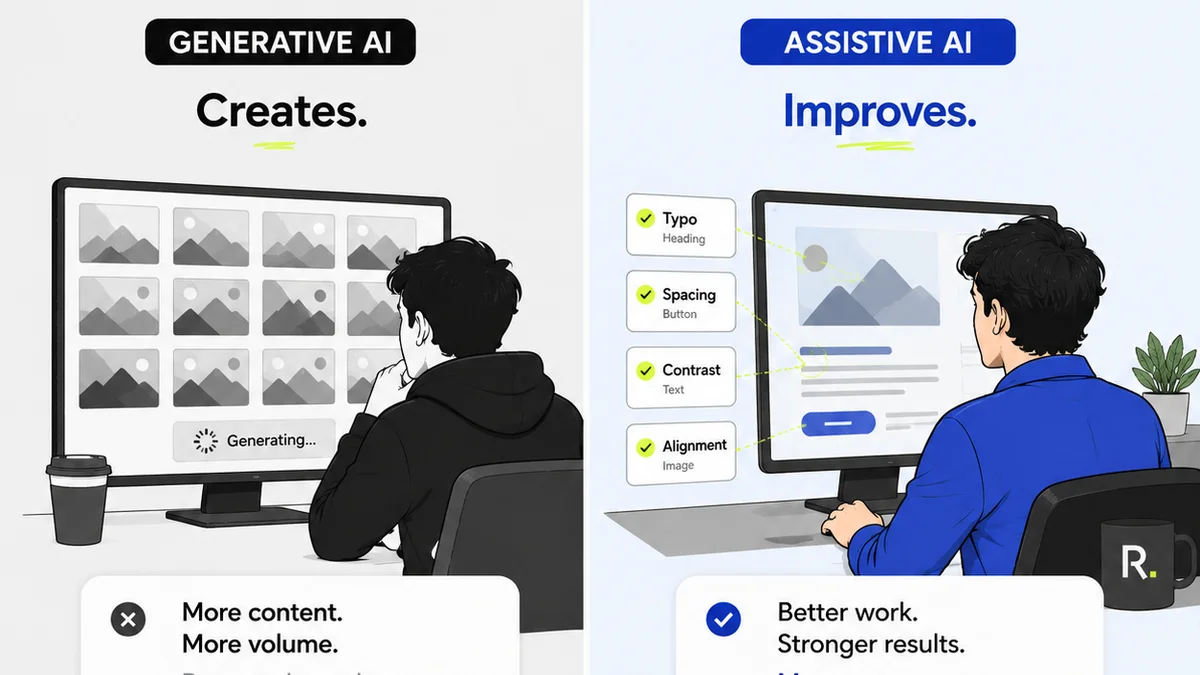
Everyone’s talking about AI in creative workflows. You hear it’s going to automate everything, make designers obsolete, and churn out content at lightning speed. None of that is wrong. But it’s incomplete.
The real story isn't just about speed or automation. It’s about a seismic shift in how we approach quality assurance, particularly in the demanding world of publications. The hard truth? AI isn't just a tool; it's a new partner in the QA process, forcing us to rethink our standards and strategies.
1. Beyond Basic Spellcheck: AI's Evolving Role in Content Verification
For years, spellcheck and grammar tools were the extent of AI’s involvement in publication QA. They caught typos and awkward phrasing. Useful, sure, but hardly revolutionary.
Today’s AI goes much deeper. It can analyze tone, check for factual consistency across large documents, and even flag potential copyright infringements. This isn't just about surface-level errors anymore.
Content Consistency and Brand Voice
Maintaining a consistent brand voice across dozens or hundreds of pages is a Herculean task. AI can be trained on your brand guidelines to identify deviations in tone, style, and terminology. It acts as an tireless brand guardian, ensuring every piece of content aligns with your established voice.
This is invaluable for large projects, ongoing publications, or when multiple writers and editors are involved. It reduces the subjective burden on human reviewers, allowing them to focus on higher-level strategic elements of content quality.
Factual Accuracy and Citation Checking
Imagine an AI that can cross-reference every claim made in a document against a curated set of trusted sources. This is becoming reality. AI can flag unsourced claims, identify outdated statistics, and even check if citations are correctly formatted and linked.
While human fact-checking remains critical, AI can perform the initial, time-consuming legwork. This accelerates the review cycle dramatically, especially in fields where accuracy is paramount, like technical documentation or academic publishing.
Plagiarism and Copyright Detection
AI-powered tools can scan vast amounts of online content to identify potential plagiarism. They go beyond simple text matching, looking for paraphrased content that might still infringe on copyright. This protects your publication’s integrity and your clients' intellectual property.
2. Visual QA: AI's Eye for Design and Layout
Content isn't just text. Visuals are equally critical, and AI is making inroads into visual QA as well.
Think beyond just image resolution. AI can now analyze layouts for adherence to design systems, check for accessibility issues in images, and even spot inconsistencies in branding elements.
Design System Compliance
Creative agencies live and die by their design systems. Ensuring every asset—from buttons to hero images—conforms to these systems is vital. AI can be trained to recognize components and flag deviations.
This means fewer manual checks for things like corner radius, button states, or typography hierarchies. It frees up designers and QA specialists to focus on the aesthetic and functional impact of the design, rather than rote component verification.
Accessibility in Visuals
Web Content Accessibility Guidelines (WCAG) are non-negotiable for inclusive design. AI can assist in checking for sufficient color contrast in text and graphical elements, ensuring images have appropriate alt text, and verifying that interactive elements are clearly discernible.
Tools are emerging that can automate checks for common accessibility pitfalls in visual design, providing actionable feedback before a publication goes live. This proactive approach is far more efficient than reactive fixes.
Brand Consistency in Visuals
AI can analyze logos, color palettes, and typography used in visual assets to ensure they consistently match brand guidelines. It can spot incorrect logo usage, off-brand color combinations, or inconsistent font applications across different pages or assets.
3. The Human Element: Where AI Falls Short (and Why It Matters More Than Ever)
It’s tempting to think AI will replace human QA entirely. That’s a mistake.
AI excels at pattern recognition, data analysis, and repetitive tasks. It can catch errors humans might miss due to fatigue or oversight. But it lacks nuanced understanding, creative judgment, and the ability to grasp strategic intent.
Nuance and Context
AI can flag a sentence that deviates from a learned brand voice, but it can’t understand *why* that deviation might be intentional or strategically effective. It can’t grasp the subtle humor, the cultural context, or the emotional impact of a piece of content.
Human reviewers bring a deep understanding of the target audience, the client’s business goals, and the overall narrative arc. This subjective layer of quality control is irreplaceable.
Strategic Oversight
Is the publication achieving its intended purpose? Does the messaging resonate with the target audience on an emotional level? Is the overall user experience cohesive and engaging?
These are strategic questions that AI is not equipped to answer. Human oversight ensures the publication isn't just technically correct, but also strategically sound and creatively impactful.
Ethical Considerations and Bias
AI models are trained on data, and that data can contain biases. This can lead AI tools to inadvertently perpetuate stereotypes or make unfair judgments. Human reviewers are crucial for identifying and mitigating these biases, ensuring ethical content creation and review.
4. Implementing AI in Your Publication QA Workflow
Integrating AI into your QA process isn't about flipping a switch. It requires thoughtful planning and a phased approach.
Start Small, Scale Gradually
Don't try to automate everything at once. Begin with specific, well-defined tasks where AI can provide clear value. This could be grammar and style checking, basic accessibility scans, or plagiarism detection.
As you gain confidence and your team becomes more comfortable with the tools, you can gradually expand AI’s role to more complex areas.
Choose the Right Tools
The AI tool landscape is exploding. Research and select tools that align with your specific needs and integrate well with your existing workflow. Look for tools that offer transparency in their decision-making and allow for human oversight and correction.
Train Your Team
Your team needs to understand how to use these AI tools effectively. This includes knowing their capabilities and limitations. Provide training on prompt engineering, interpreting AI feedback, and how to override AI suggestions when necessary.
Emphasize that AI is an assistant, not a replacement. The goal is to augment human capabilities, not to supplant them.
Establish Clear Feedback Loops
Ensure there’s a clear process for how AI-generated feedback is reviewed, actioned, and used to refine future work. This loop is essential for continuous improvement, both for your team and for the AI models themselves (if you're using customizable solutions).
Where Revue Fits In
While AI handles the granular, data-driven checks, managing the overall publication process requires a centralized system. This is where Revue becomes indispensable.
Revue provides a single source of truth for client feedback, ensuring that all comments, revisions, and approvals are tracked and visible. This clarity is crucial, especially when AI tools might flag issues that require subjective human interpretation or client clarification.
Our platform streamlines the revision and approval cycles, making it easy to see what’s been addressed and what still needs attention. This structured workflow complements AI’s analytical power by providing the essential human oversight and strategic decision-making layer.
By centralizing feedback and managing revisions, Revue ensures that the insights from AI-driven QA are integrated effectively into the project’s overall quality and client satisfaction goals.
5. The Future of Publication QA: A Human-AI Symbiosis
The integration of AI into publication QA is not a distant possibility; it's happening now. The most successful agencies and creative teams will be those that embrace this shift strategically.
This means viewing AI not as a threat, but as a powerful collaborator. It’s about leveraging AI’s strengths—speed, consistency, data processing—to amplify human expertise, creativity, and judgment.
The future isn't AI *or* humans doing QA. It’s AI *and* humans, working together to achieve unprecedented levels of quality, efficiency, and impact in every publication.
Final Thought
As AI capabilities grow, will our definition of
Frequently asked questions
Can AI fully automate publication QA?
No, AI can automate many repetitive tasks and provide data-driven insights, but it cannot replace human judgment, nuanced understanding, and strategic oversight required for comprehensive publication QA.
What are the main benefits of using AI in publication QA?
Key benefits include increased speed and efficiency, improved consistency, enhanced accuracy by catching errors humans might miss, and the ability to analyze larger volumes of content. AI can also assist with accessibility checks and brand voice adherence.
How can creative agencies best integrate AI into their QA process?
Agencies should start by identifying specific, well-defined tasks for AI automation, choose appropriate tools, train their teams on effective usage and limitations, and establish clear feedback loops for continuous improvement. A phased approach is recommended.
What are the limitations of AI in publication QA?
AI lacks nuanced understanding, cannot grasp complex context or strategic intent, and may perpetuate biases present in its training data. It struggles with subjective creative judgment and ethical considerations that require human input.