Everyone’s talking about AI in manufacturing. It’s easy to assume AI’s main role is automating tedious tasks or predicting equipment failure. And that’s not wrong.
But it’s incomplete.
The real game-changer for visual feedback in manufacturing isn’t just about faster image recognition. It’s about how AI fundamentally reshapes the entire quality control and client approval process, turning static images into dynamic, actionable intelligence.
1. The Assumption: AI Just Sees Defects Faster
The common narrative is that AI-powered visual inspection systems simply identify flaws more quickly than human eyes. Think of cameras on assembly lines spotting scratches or misalignments in milliseconds.
This is the low-hanging fruit. AI excels at pattern recognition, making it a natural fit for spotting deviations from a known standard.
But this viewpoint misses the operational shift.
The Hard Truth: AI Integrates Perception with Action
The true power of AI in visual feedback isn’t just detection; it’s the seamless integration of that detection into the workflow. It’s about connecting what the AI *sees* to what needs to be *done*.
This means moving beyond simple pass/fail alerts. It involves AI that can:
- Categorize defects with granular detail.
- Pinpoint the exact location and severity of issues.
- Trigger automated workflows for rework or rejection.
- Provide context-rich data for root cause analysis.
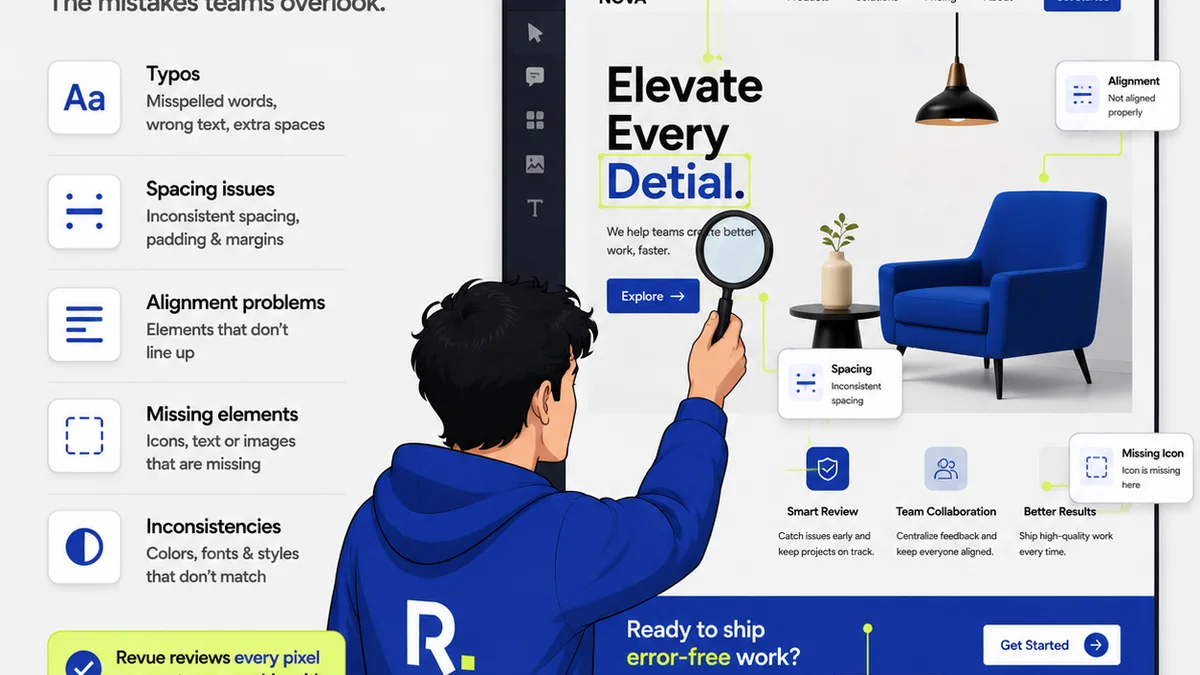
- Facilitate smarter client review by highlighting specific problem areas.
This shift transforms visual inspection from a reactive check into a proactive, integrated part of production and client communication.
2. Beyond Basic Defect Detection
Early AI visual systems focused on binary outcomes: good or bad. This is useful, but limited. Manufacturing involves nuance.
Modern AI goes deeper. It can analyze complex visual data, understanding context and subtleties that were previously difficult or impossible to quantify.
Granular Defect Classification
Instead of just flagging a
Frequently asked questions
How does AI improve visual inspection accuracy in manufacturing?
AI algorithms can be trained on vast datasets to identify subtle patterns and anomalies that human inspectors might miss due to fatigue or subjective interpretation. This leads to more consistent and precise defect detection.
Can AI visual feedback systems integrate with existing manufacturing software?
Yes, advanced AI visual feedback systems are designed with integration capabilities. They can connect with MES (Manufacturing Execution Systems), ERP (Enterprise Resource Planning), and other quality management software to automate data logging, trigger work orders, and streamline communication.
What are the key benefits of using AI for client approvals in manufacturing?
AI can pre-qualify visual submissions by highlighting specific areas of concern or confirming adherence to standards. This reduces the time clients spend reviewing minor issues, allowing them to focus on critical decisions and speeding up the overall approval cycle.
Is AI visual feedback only for detecting physical defects?
While defect detection is a primary use case, AI can also be used for verifying assembly correctness, ensuring aesthetic consistency, checking label placement, confirming packaging integrity, and even analyzing material properties through visual cues.