Everyone's talking about AI. And many assume it's just about faster task completion, especially when comparing AI tools to project management stalwarts like Jira. None of that is wrong. But it’s incomplete.
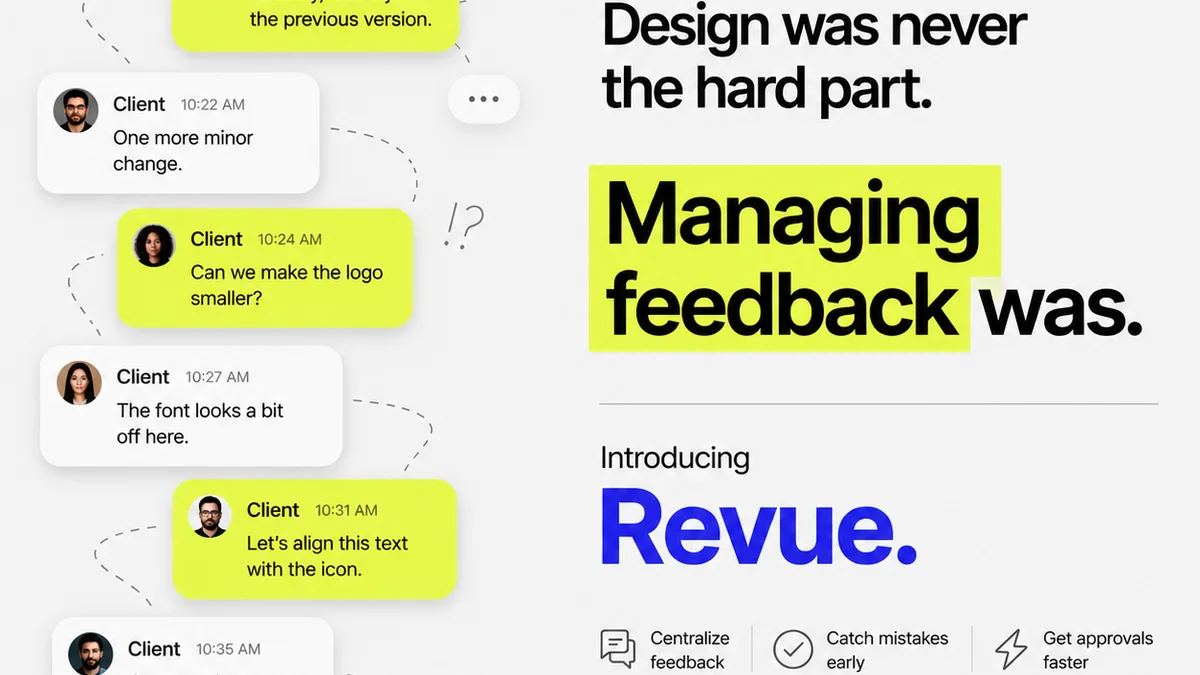
The real transformation AI brings to creative agencies isn't just about speed. It's about fundamentally changing how we handle the messiest part of our work: client feedback and revisions.
1. The Illusion of Centralization in Jira
Jira is a powerful tool for software development. It excels at tracking bugs, managing sprints, and documenting complex technical processes. For creative agencies, it often feels like overkill. Or worse, it becomes a black box where creative work goes to die, buried under tickets and sub-tasks.
Many agencies try to force creative workflows into Jira. They create custom fields, complex workflows, and endless boards. The goal is often to centralize feedback and track revisions.
The Feedback Black Hole
But what actually happens?
- Feedback gets lost in comment threads.
- Revisions are hard to track visually.
- Stakeholders bypass the system, leading to conflicting input.
- The sheer volume of tickets overwhelms creative teams.
The intention is centralization, but the reality is often fragmentation and confusion. Jira’s strength in structured, technical environments becomes a weakness when dealing with the subjective, iterative nature of creative work.
2. AI's Role: Beyond Automation to Augmentation
AI isn't here to replace Jira entirely, nor is it a magic bullet for creative chaos. Its real power lies in augmenting human judgment and streamlining processes that Jira struggles with.
Think of AI not as a project manager, but as a hyper-efficient assistant that understands context.
Contextual Understanding of Feedback
AI can analyze unstructured feedback – comments, emails, even transcribed calls – and identify key themes, action items, and potential conflicts. This is something Jira, in its standard configuration, simply cannot do.
- Sentiment Analysis: Understand the tone of client feedback.
- Action Item Extraction: Pull out specific tasks from lengthy comments.
- Conflict Detection: Flag contradictory feedback from different stakeholders.
- Summarization: Condense lengthy feedback threads into digestible summaries.
This level of contextual understanding is crucial for creative teams drowning in subjective input.
Visual Revision Tracking
Jira is text-based. Creative work is visual. AI is starting to bridge this gap. Tools are emerging that can compare different visual versions, highlight changes, and even categorize the nature of those changes (e.g., color adjustment, layout tweak, content addition).
This moves beyond simple version control to intelligent comparison, making it easier to see exactly what changed and why.
3. The Hard Truth: Workflow, Not Just Tools
The common assumption is that better tools solve workflow problems. Jira is a tool. AI tools are tools. But the hard truth is that no tool, not even AI, can fix a broken workflow.
Jira often fails creative teams because the underlying workflow is ill-suited. Trying to shoehorn creative processes into a development tool creates friction, not efficiency.
AI offers a new set of capabilities, but they too need to be integrated into a workflow designed for creativity. This means focusing on:
- Clarity of Input: How is feedback gathered and structured?
- Visibility of Progress: How are revisions tracked and communicated?
- Efficiency of Approval: How are decisions made and ratified?
- Quality Assurance: How is the final output checked?
Jira attempts to manage these through rigid structures. AI can help interpret and streamline them through intelligent analysis and automation.
4. Where Revue Fits In
This is where platforms like Revue come into play, not as a direct Jira competitor, but as a specialized solution for the creative process.
Revue is built from the ground up to centralize client feedback specifically for creative assets. It’s designed to manage the iterative nature of design and video production.
Centralized Feedback Hub
Instead of scattered emails and comments, all feedback lives in one place, attached directly to the creative asset. This eliminates the
Frequently asked questions
Can AI replace project management tools like Jira for creative agencies?
AI is more likely to augment than replace. While Jira excels at structured tasks, AI can enhance creative workflows by intelligently analyzing feedback, tracking visual revisions, and identifying inconsistencies, areas where Jira is less suited.
How does AI improve client feedback management?
AI can analyze unstructured feedback (comments, emails, transcripts) to extract key themes, action items, and detect conflicts. This provides a deeper, contextual understanding than traditional text-based systems, helping teams prioritize and act on feedback more effectively.
What are the limitations of using Jira for creative feedback?
Jira's strength lies in software development's structured processes. For creative work, its text-heavy interface, difficulty in visually tracking revisions, and tendency to bury feedback in tickets can lead to confusion and inefficiency, often failing to centralize feedback effectively.
How can creative agencies benefit from integrating AI into their workflow?
By leveraging AI for tasks like feedback analysis, visual comparison of revisions, and automated quality checks, agencies can reduce manual effort, minimize misinterpretations, speed up iteration cycles, and ultimately deliver higher-quality creative work faster.