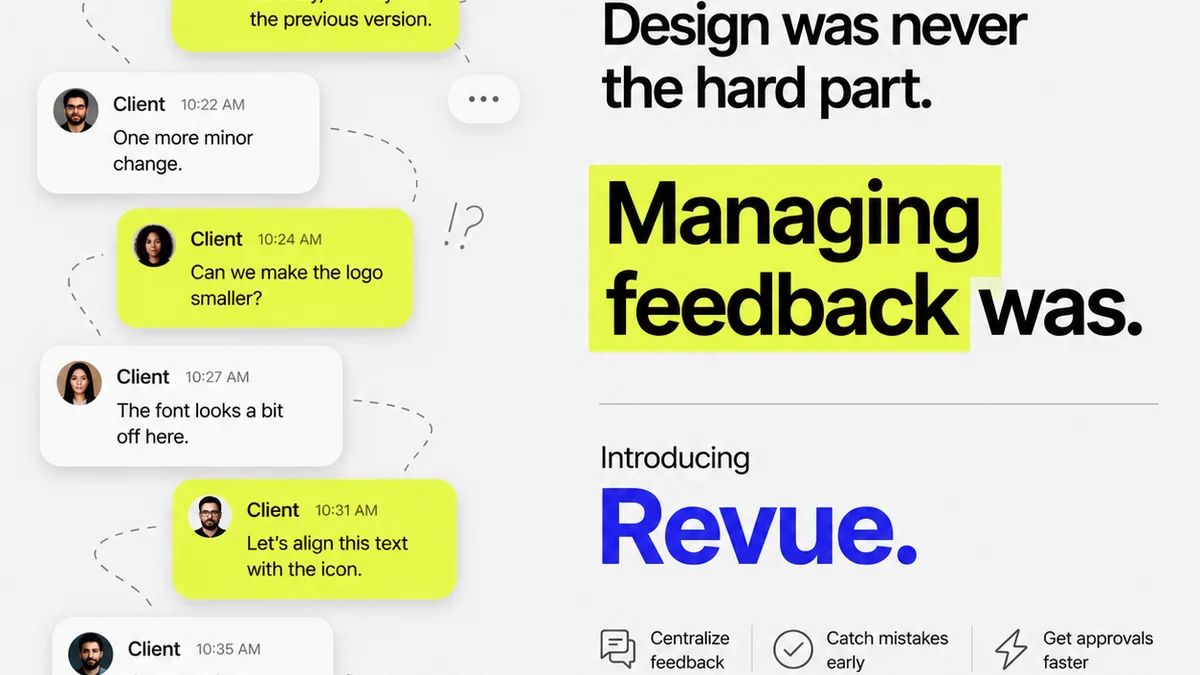
Everyone thinks artwork approval is just about getting a client sign-off. A final OK before launch. Simple, right?
None of that is wrong. But it’s incomplete.
The hard truth is that artwork approval isn't a single event; it's a complex, often chaotic process that sits at the heart of creative agency operations. Get it wrong, and you’re bleeding time, money, and goodwill. Get it right, and you’re unlocking serious efficiency and client satisfaction.
1. The Illusion of Client Speed
Agencies often blame clients for slow approvals. And sometimes, that’s true. But usually, the real problem isn’t the client’s speed; it’s the agency’s internal process for *managing* that approval.
Think about it. How often are you waiting on a client who’s waiting on an internal team member to gather feedback? Or waiting for a client to find the right file? Or waiting because the feedback itself is vague and requires follow-up?
This isn’t a client problem. It’s an agency workflow problem.
The Feedback Loop Breakdown
The core issue is a lack of clear, centralized communication and version control. When feedback is scattered across emails, Slack messages, and impromptu calls, it’s:
- Easy to miss.
- Hard to track.
- Difficult to consolidate.
- Prone to misinterpretation.
This makes the *actual* approval stage longer, more painful, and more expensive than it needs to be. The perceived client delay is often a symptom of deeper agency disorganization.
2. Version Control Nightmares
“Which version is the latest?” is the eternal question. Without a robust system, this question haunts every creative project.
Agencies juggle multiple drafts, iterations, and client requests. Storing these files correctly, naming them consistently, and ensuring everyone is working from the correct baseline is a monumental task.
This leads to:
- Wasted design time on outdated concepts.
- Confusion about which feedback to act on.
- The dreaded “oops, we missed that change” moment.
- Risk of delivering the wrong asset.
This isn’t just about file names. It’s about a clear, auditable trail of revisions that everyone can trust.
The Cost of Confusion
Every minute spent searching for the right file, deciphering conflicting feedback, or re-doing work because of versioning errors is a direct hit to your project margin. It’s billable time that isn’t being billed, or worse, it’s unbillable time you’re eating.
3. Unclear Feedback = Unresolvable Revisions
The most common cause of extended artwork approval cycles isn’t stubborn clients; it’s unclear, subjective, or conflicting feedback. “Make it pop more” is not actionable feedback. Neither is “I don’t like it” without context.
Agencies often fail to establish a clear feedback framework with clients upfront. This leaves designers guessing and clients frustrated.
What does good feedback look like?
- Specific: “Increase the contrast on the main CTA button by 15%.”
- Actionable: “Change the headline font to Open Sans Bold.”
- Contextual: “This blue is too close to our competitor’s primary color; let’s try a warmer tone.”
When feedback is vague, the revision process becomes a game of 20 questions, extending the approval timeline indefinitely.
4. The Toll on Client Relationships
A drawn-out, confusing artwork approval process erodes client trust. Clients want to see progress, clear communication, and a smooth path to launch.
When approval cycles drag on, or when clients feel like they’re constantly being asked to clarify, they perceive the agency as inefficient or disorganized.
This can lead to:
- Client frustration and dissatisfaction.
- Increased client calls and emails demanding updates.
- Damage to the agency's reputation.
- Potential loss of future business.
Conversely, a streamlined, transparent approval process builds confidence and positions your agency as a professional, reliable partner.
5. Quality Control Slipped Through the Cracks
Artwork approval isn’t just about client preference; it’s the final gate for quality control. This is where brand guidelines, technical specs, and accessibility standards are checked.
If the approval process is just a quick glance, these critical checks get missed.
Are you checking:
- Brand consistency? Colors, fonts, logos, tone of voice.
- Technical specs? File formats, resolution, dimensions, bleed.
- Accessibility? Color contrast ratios, readable font sizes.
- Call to action clarity? Is the CTA obvious and functional?
When these checks are an afterthought, or worse, skipped entirely, the final output suffers. This leads to rework down the line, missed deadlines, and potential brand damage.
Where Revue Fits In
Managing artwork approval effectively requires more than just good intentions. It demands a system. This is where tools designed for creative workflows become indispensable.
Revue helps agencies centralize the entire artwork approval process. Instead of juggling emails and spreadsheets, you can:
- Centralize Feedback: All client comments, annotations, and approvals live in one place, directly on the artwork. No more hunting through inboxes.
- Manage Revisions Clearly: Track every version, see who approved what, and understand the history of changes. This eliminates version control confusion.
- Streamline Communication: Provide clear, contextual feedback that designers can act on immediately. Reduce back-and-forth and misinterpretation.
- Ensure Quality Checks: Integrate review steps for brand consistency, technical specs, and other critical quality gates before final sign-off.
By bringing structure to the chaos, Revue ensures that artwork approval is a clear, efficient step towards project completion, not a roadblock.
Final Thought
Artwork approval is often treated as a passive final step. But it’s an active, critical phase of the creative process that dictates project efficiency, client satisfaction, and final output quality.
Are you treating your artwork approval process as a strategic advantage, or is it just another fire you have to fight?
Frequently asked questions
What are the biggest challenges in artwork approval for agencies?
The biggest challenges include unclear or subjective client feedback, poor version control, scattered communication channels (email, chat), lack of defined review processes, and insufficient quality checks before final sign-off. These issues lead to extended timelines and client frustration.
How can agencies get better client feedback for artwork?
Agencies can improve feedback by setting clear expectations upfront, using a centralized platform for comments, asking clients to be specific and actionable (e.g., 'Increase contrast by 15%' instead of 'Make it pop'), and providing contextual notes. Establishing a feedback framework is key.
What is the role of version control in artwork approval?
Version control is crucial for tracking every iteration of an artwork. It ensures everyone is working from the latest approved version, prevents confusion, avoids wasted design time on outdated concepts, and maintains an auditable history of changes. This minimizes errors and speeds up the revision process.
How does artwork approval impact client relationships?
A smooth, efficient, and transparent artwork approval process builds client trust and satisfaction. Conversely, a drawn-out, confusing, or error-prone process can lead to client frustration, damage the agency's reputation, and potentially result in lost business. It's a key touchpoint for demonstrating professionalism and reliability.