Everyone talks about asset management for creative agencies. They say it’s about folders. It’s about naming conventions. It’s about making sure everyone can find that logo file from three years ago.
None of that is wrong. But it’s incomplete.
The hard truth? Effective asset management isn’t about finding files. It’s about controlling your creative workflow, mitigating risk, and ensuring profitability. It’s the operational bedrock that separates a chaotic shop from a high-performing agency.
1. The Myth of the Perfect Folder Structure
The classic approach is the hierarchical folder system. Project > Client > Deliverable > Version. Simple, right?
It works, until it doesn’t. Until a new project type breaks the mold. Until a junior designer uses a slightly different naming convention. Until a client requests a file that’s buried three levels deeper than expected.
This system is brittle. It requires constant policing. And it doesn't scale with complexity.
The Hidden Costs of Disorganization
- Wasted time searching for files.
- Duplicated work because existing assets weren't found.
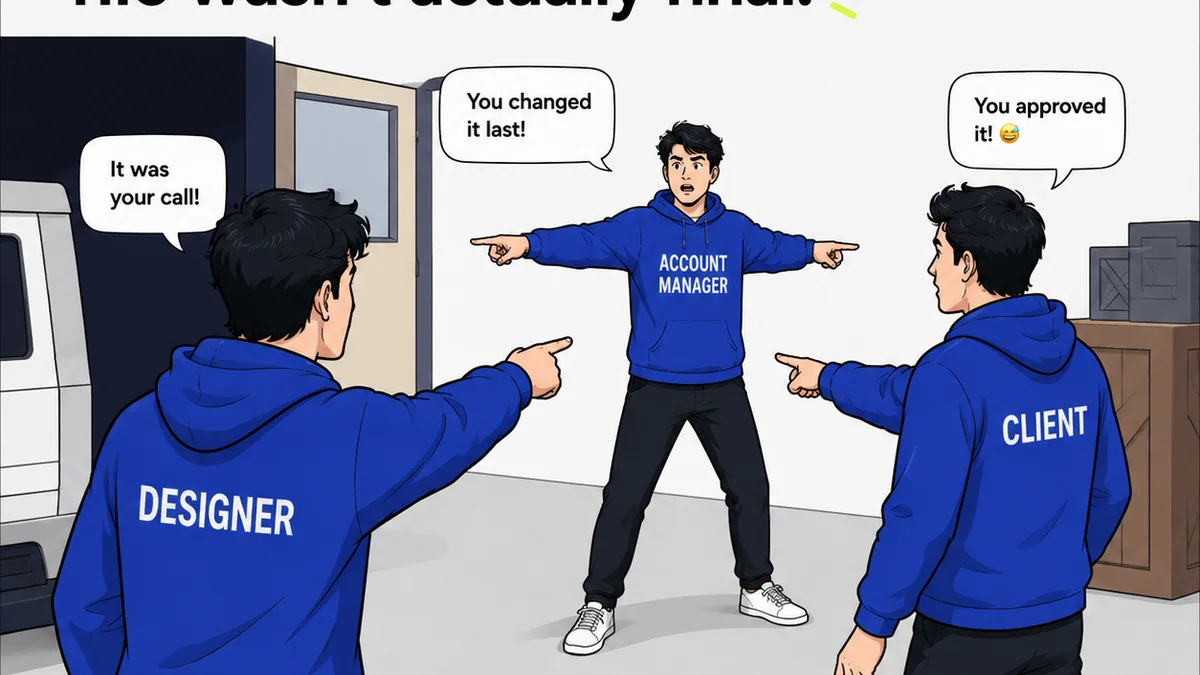
- Incorrect asset versions used in client presentations or final delivery.
- Missed deadlines due to version control chaos.
- Brand inconsistency across deliverables.
- Increased client frustration and churn.
This isn't just about messy desktops. This is about dollars and cents. Every minute spent searching is a minute not spent creating, selling, or managing clients. Every incorrect version is a potential rework, a scope creep, a client complaint.
2. Understanding Your Creative Assets Holistically
Think beyond just the final output. Your assets include everything that contributes to the creative product.
What Constitutes an Asset?
- Final design files (logos, brand guides, web graphics, print layouts)
- Raw footage and unedited audio
- Source files (e.g., Photoshop PSDs, Illustrator AI files, Figma designs)
- Stock photography and videography licenses
- Font libraries and usage rights
- Project briefs and client feedback documents
- Mood boards and concept sketches
- Marketing copy and website content
- Development assets (code snippets, UI kits)
- Previous campaign materials
Each of these needs to be tracked, versioned, and managed with its own lifecycle in mind. A static logo is one thing. A video project with multiple edits, music tracks, and voiceovers is another beast entirely.
Metadata is Your Friend
Folders are a primitive way to organize. Modern asset management relies on metadata. Think of it as a universal language for your files.
What is metadata? It’s data about data. For an image, it could be:
- Client name
- Project name
- Date created/modified
- File type
- Usage rights/license expiry
- Keywords (e.g.,
Frequently asked questions
What are the key benefits of good asset management for a creative agency?
Good asset management streamlines workflows, reduces wasted time searching for files, prevents the use of incorrect versions, ensures brand consistency, mitigates legal risks associated with asset usage, and ultimately improves client satisfaction and profitability.
How does metadata improve asset management?
Metadata provides rich descriptive information about an asset, allowing for advanced searching, filtering, and categorization beyond simple folder structures. It enables tracking of usage rights, version history, and project associations, making assets much more discoverable and manageable.
Can a cloud storage solution replace dedicated asset management software?
While cloud storage offers accessibility and basic file organization, it typically lacks the advanced features of dedicated Digital Asset Management (DAM) systems. DAMs offer robust metadata capabilities, version control, granular permissions, workflow automation, and usage tracking essential for creative agencies.
What is the difference between a Digital Asset Management (DAM) system and a file-sharing service?
A file-sharing service is primarily for storing and sharing files. A DAM system is a comprehensive solution for organizing, storing, retrieving, and managing all of an organization's digital assets. DAMs include features like advanced search, version control, metadata management, rights management, and workflow integration, which are crucial for creative operations.