Everyone talks about optimizing their creative workflow. They focus on faster turnaround times, sharper client communication, and hitting deadlines.
None of that is wrong. But it’s incomplete.
The real truth? You can’t optimize what you don’t understand. And most agencies operate on assumptions about their campaign design process, not on data. You think you know where the friction points are, but do you really?
A deep-dive audit of your campaign design process isn’t about finger-pointing. It’s about ruthlessly uncovering the hidden inefficiencies, communication breakdowns, and quality gaps that are costing you time, money, and client trust. It’s about moving from gut feelings to hard facts.
1. Map Your Current State: The Undeniable Truth
Before you can fix anything, you need to see it clearly. Most teams have a vague idea of their process, but rarely a documented, step-by-step reality.
Start by mapping every single stage of a typical campaign design project. From initial brief to final asset delivery. Don’t leave anything out. Be brutally honest.
Brief Intake & Interpretation
How is the brief received? Is it a formal document, a hurried email, a chaotic Slack thread? Who interprets it? What’s the process for clarifying ambiguities?
- Client submits brief via email.
- Account Manager forwards to Creative Director.
- Creative Director adds notes and sends to Designer.
- Designer asks clarifying questions in Slack.
- Client responds hours later.
This is where many projects go sideways before they even start. Misinterpretations breed revisions.
Concepting & Ideation
What’s the process for generating ideas? Is it structured brainstorming, individual work, or a free-for-all? How are concepts presented internally for review?
Design & Development
What tools are used? What are the file naming conventions? How are assets organized? What’s the internal review and feedback loop like before client-facing versions are prepped?
Client Feedback & Revisions
This is often the biggest black hole. How is feedback collected? Is it consolidated? Is it clear? How are revision rounds tracked? What’s the definition of “final”?
Quality Assurance & Delivery
Who checks the final files? Are specs verified? How are files delivered to the client or media platforms? What’s the sign-off process?
Documenting this is crucial. Use flowcharts, detailed process docs, or even video walkthroughs. The goal is a crystal-clear, undeniable picture of how things *actually* get done, not how you wish they did.
2. Identify the Bottlenecks: Where Time Disappears
Once mapped, scrutinize each step for delays. Where does work get stuck? Where do handoffs cause information loss?
The Waiting Game
How much time is spent waiting for:
- Client input or approvals?
- Internal feedback from other departments?
- Assets from third parties?
- Clarification on briefs?
Quantify this if possible. Even an estimate is better than nothing. Days of waiting add up fast.
The Rework Loop
Where does the most rework originate?
- Vague initial briefs?
- Unclear feedback from clients?
- Misinterpretation of feedback?
- Scope creep disguised as minor tweaks?
- Internal misalignment on creative direction?
This is a major indicator of process failure. Each rework cycle is a direct hit to your profitability and team morale.
The Information Silo
Where does critical information get lost or become inaccessible?
- Feedback buried in email chains?
- Design decisions only known by one person?
- Revision history that’s impossible to trace?
- Final approved assets that can’t be found later?
Silos kill efficiency and create massive risks. If only one person knows how something was done, you’re one vacation or resignation away from disaster.
3. Analyze Communication Breakdowns: The Root of Revision Hell
Most campaign design problems stem from communication failures. The audit must expose these.
Feedback Fragmentation
Is feedback coming from multiple sources? Is it conflicting? Is it clear what needs to be done, and why?
A single design asset can receive feedback from:
- The client
- The account manager
- The creative director
- The marketing lead
- Legal/compliance
If this isn't funneled and clarified, the designer is left to decipher a mess. This is not a recipe for great creative or efficient revisions.
Lack of Context
Does feedback include the necessary context? Or is it just a blunt instruction?
“Make this pop more” is useless without understanding why and how. Is it about hierarchy? Color contrast? A specific call to action?
Unclear Approval Gates
When is a design officially approved? What does
Frequently asked questions
What is a campaign design process audit?
A campaign design process audit is a systematic review of all the steps involved in creating and delivering campaign designs. It aims to identify inefficiencies, bottlenecks, communication breakdowns, and areas for improvement to enhance quality, speed, and profitability.
Why is auditing my design process important?
Auditing your design process is crucial because it moves you from assumptions to data-driven insights. It helps uncover hidden costs, reduce rework, improve client satisfaction, and ensure your team is working as efficiently and effectively as possible.
How often should I audit my design process?
The frequency depends on your agency's growth and changes. A good starting point is annually. However, if you're experiencing significant project delays, increased client complaints, or team burnout, an ad-hoc audit is warranted sooner.
What are the common bottlenecks in campaign design?
Common bottlenecks include unclear briefs, fragmented client feedback, lengthy internal review cycles, waiting for approvals, inefficient revision rounds, and poor asset organization. An audit helps pinpoint which of these are most impacting your specific workflow.
How can technology help with auditing and improving the design process?
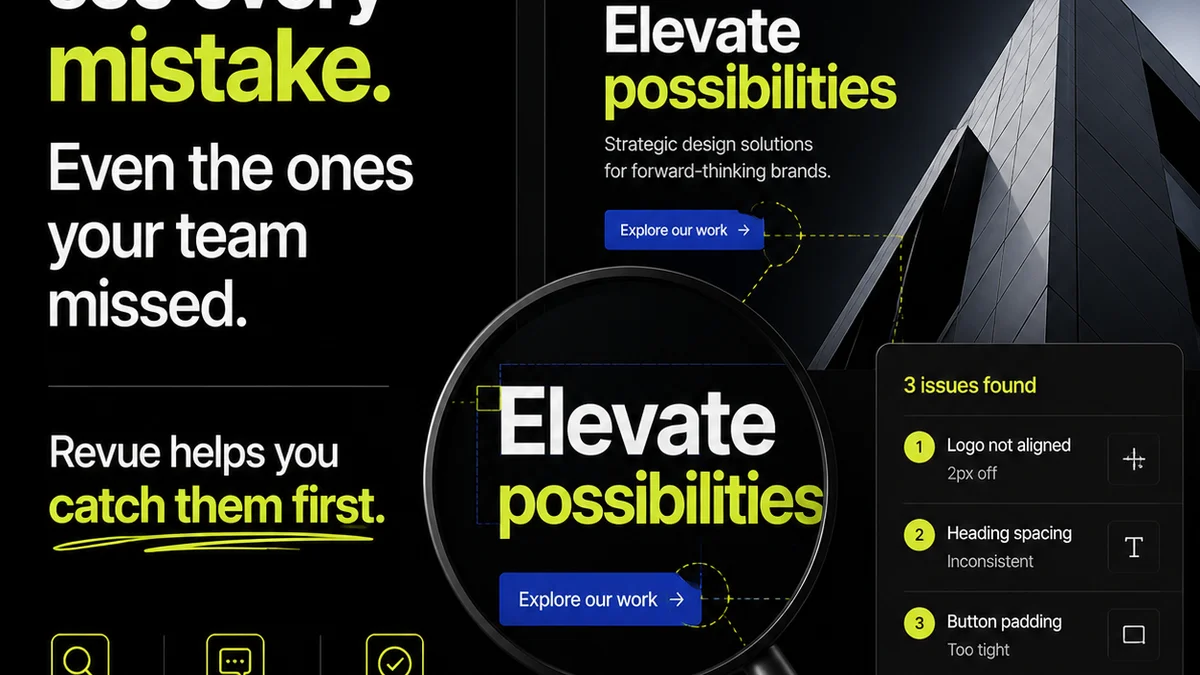
Technology like centralized feedback platforms (e.g., Revue) can help by consolidating feedback, providing clear version control, streamlining approvals, and offering visibility into the entire revision history. This data makes future audits more accurate and improvements more measurable.