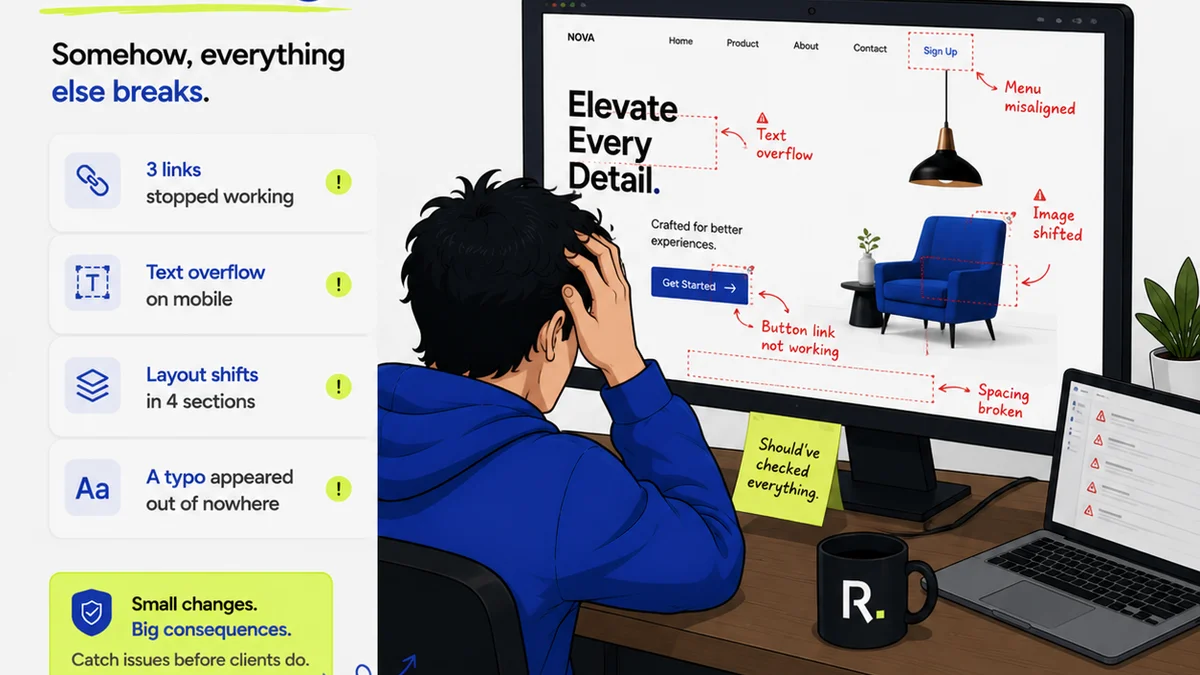
Everyone talks about creative compliance. You need to tick the boxes, get the approvals, and make sure clients are happy. It sounds simple enough.
None of that is wrong. But it’s incomplete.
The hard truth is that most agencies treat compliance as a rearview mirror activity – a necessary evil to get paid. They focus on the *outputs* of compliance, not the *inputs* and the underlying *process*. This leads to bottlenecks, missed deadlines, and frustrated teams.
A true audit of your creative compliance process isn't about checking if you filed the right forms. It's about dissecting how your team actually works, where friction points emerge, and how you can build a more robust, efficient system.
1. Deconstruct Your Current Compliance Workflow
Where does compliance actually live in your agency?
Is it a dedicated role? Is it spread across project managers, account managers, and creative leads? Is it an afterthought tacked onto the end of a project?
Start by mapping every single touchpoint where a piece of creative work is reviewed, approved, or checked against a standard. This isn't just about client sign-offs.
Identify Every Approval Gate
Think broader than just the final client approval.
- Internal creative reviews
- Internal client services reviews
- Legal or brand guideline checks
- Technical spec checks (e.g., for digital assets)
- Pre-production approvals
- Post-production sign-offs
- Media-buying approvals
Each of these is a potential bottleneck. Each needs to be documented.
Map the Information Flow
How does feedback get from the reviewer to the person who needs to act on it?
Is it email chains? Slack messages? Sticky notes? A project management tool that’s only loosely followed?
Document the tools, the methods, and the people involved at each step. Look for:
- Information silos
- Redundant communication
- Lack of a single source of truth
- Conflicting feedback
This mapping exercise will reveal the hidden inefficiencies that plague your compliance process.
2. Analyze Feedback Loops and Revision Cycles
This is where most agencies stumble. They assume feedback is just feedback.
But *how* feedback is given, received, and actioned is critical. Inefficient feedback loops kill productivity.
The Quality of Feedback
Is feedback specific? Is it actionable? Is it tied to the brief or the client's objectives?
Or is it vague, subjective, and contradictory?
A compliance audit should assess the *quality* of the feedback itself, not just whether it was logged.
The Velocity of Revisions
How long does it take to incorporate feedback and get a revised asset back for review?
Are revisions being made efficiently, or are designers and developers stuck in endless loops of minor tweaks?
Look at the time spent between receiving feedback and resubmitting a revised version. Are there patterns? Are certain types of feedback consistently causing delays?
The Cost of Rework
Every revision cycle has a cost. It’s not just the time of the person making the change.
It’s the time of the reviewer, the project manager, the account team. It’s the potential delay to launch dates. It's the wear and tear on team morale.
Quantify this where possible. Even a rough estimate is better than ignoring it.
3. Evaluate Tooling and Technology Stack
Are your tools helping or hindering your compliance process?
Many agencies rely on a patchwork of disconnected tools. Email for initial briefs, Slack for quick chats, a PM tool for tasks, and maybe a separate tool for approvals.
This fragmentation is a compliance killer.
Centralization is Key
Where is the definitive record of client feedback and approvals?
If it’s scattered across inboxes and chat logs, you have a problem. A compliance audit needs to assess if your tools support a centralized, accessible record.
Visibility and Traceability
Can you easily trace a specific piece of feedback back to its source? Can you see the full history of revisions and approvals for any asset?
If not, your compliance process is opaque. This makes accountability difficult and risk management a nightmare.
Automation Potential
What manual steps in your compliance process could be automated?
Automated reminders for approvals? Version control that’s built-in? Standardized review checklists?
Your technology should be streamlining, not complicating, compliance.
4. Assess Team Roles and Responsibilities
Who owns compliance in your agency?
If the answer is vague, you have a problem.
Clarity of Ownership
Every step in the compliance process needs a clear owner. Who is responsible for gathering feedback? Who synthesizes it? Who approves the final version? Who checks it against the brief?
Ambiguity here leads to dropped balls and missed requirements.
Training and Onboarding
Are your team members trained on the compliance process? Do they understand their role and the importance of adhering to it?
A compliance audit should include an assessment of team knowledge and buy-in.
If people don't understand *why* they're doing something, they're less likely to do it correctly.
Accountability Mechanisms
How are people held accountable for their part in the compliance process?
Are there regular reviews of process adherence? Are there consequences for consistently failing to follow protocol?
Without accountability, your carefully designed process will quickly degrade.
Where Revue Fits In
Auditing your creative compliance process is about more than just checklists. It’s about building a system that’s efficient, transparent, and effective.
Tools like Revue are built precisely to address these workflow challenges.
By centralizing client feedback, tracking revisions and approvals within a single platform, and providing clear audit trails, Revue helps you move beyond a fragmented, email-heavy approach.
This means less time spent chasing down feedback, fewer misunderstandings, and greater confidence that your creative work meets all necessary requirements before it goes live.
It transforms compliance from a reactive chore into a proactive, integrated part of your creative workflow.
Final Thought
Is your compliance process a rigid set of rules designed to prevent mistakes, or is it a flexible framework that empowers your team to deliver high-quality work efficiently?
The difference isn't just semantic. It's the difference between an agency that constantly battles fires and one that consistently delivers.
Frequently asked questions
What is a creative compliance process?
A creative compliance process refers to the set of procedures and checks an agency follows to ensure creative work meets client requirements, brand guidelines, legal standards, and technical specifications before final delivery or launch.
Why is auditing the compliance process important?
Auditing your compliance process helps identify inefficiencies, bottlenecks, and areas of risk. It ensures that approvals are handled effectively, feedback loops are streamlined, and the final output meets all necessary standards, ultimately saving time and reducing errors.
How does feedback quality impact compliance?
Poorly delivered or vague feedback can lead to misunderstandings, unnecessary revisions, and delays, undermining the compliance process. High-quality, actionable feedback is crucial for efficient and accurate adherence to requirements.
Can technology help improve creative compliance?
Yes, technology can significantly improve creative compliance by centralizing feedback, providing clear version control, automating reminders, and creating auditable trails of approvals. Tools designed for creative workflow management streamline these processes.
What are the signs of a weak compliance process?
Signs of a weak compliance process include frequent missed deadlines, repeated revisions for minor issues, scattered feedback across multiple communication channels, lack of clear ownership for approvals, and difficulty tracing the history of an asset's development.