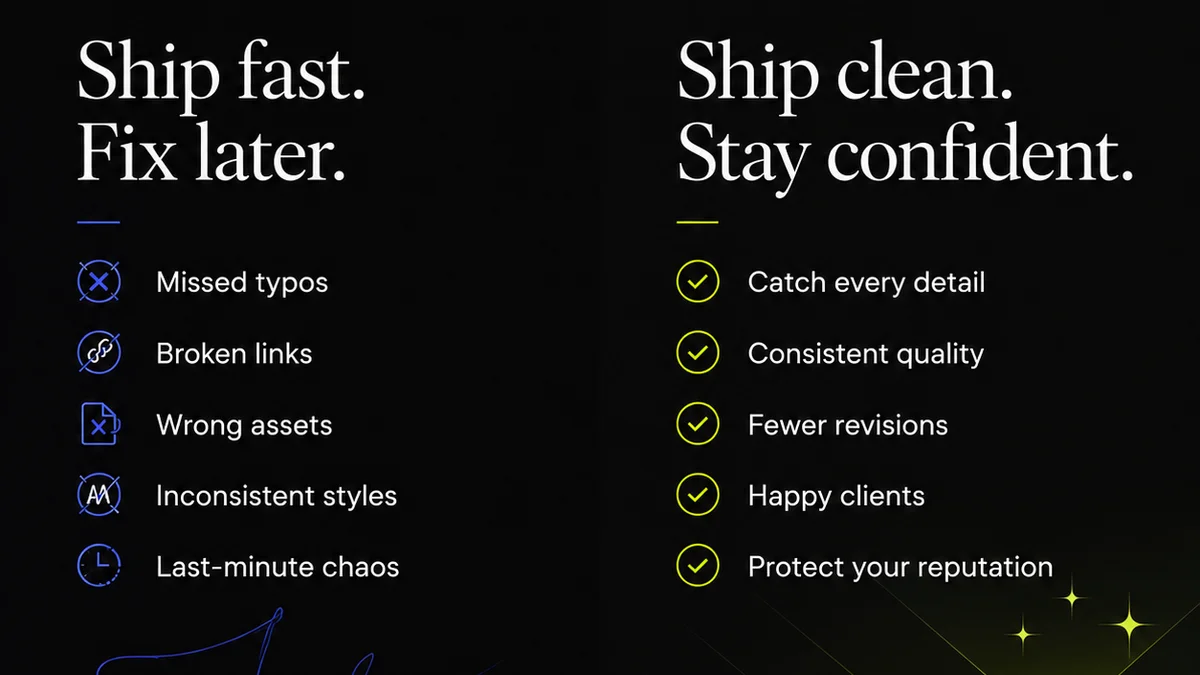
Everyone thinks their publication process is fine. It’s humming along. Clients are happy, deadlines are met, and the work ships on time. You’ve got the system down, right?
None of that is wrong. But it’s incomplete.
The hard truth? Most agencies and creative teams are winging it. They’re reacting to problems, not preventing them. They assume their workflow is efficient because the final output looks good. But what’s happening behind the scenes? Are you leaving money on the table? Are you burning out your team? Are you missing opportunities to do even better work?
A true audit isn't about finding fault. It's about finding clarity. It’s about understanding what’s working, what’s not, and what’s costing you.
1. Map Your Current State
Before you can fix anything, you need to see it. Really see it.
This means documenting every single step of your publication workflow. From the moment a project lands in your lap to the moment it’s live and archived.
Don't rely on memory. Don't ask people what they *think* they do. Watch them. Ask them to show you. Interview everyone involved.
Identify All Stages
Break down the process into discrete phases. Think:
- Briefing
- Research
- Content Creation (writing, design, video, etc.)
- Internal Review
- Client Feedback Collection
- Revisions
- Final Approval
- Production/Publishing
- Post-Publishing Analysis
Document Each Step Within Stages
For each stage, detail the specific actions, tools, and people involved. Be granular.
- Who is assigned what task?
- What software is used? (e.g., email, Slack, project management tool, specific design software)
- What are the typical inputs and outputs?
- How long does each step *actually* take? (Track this, don't guess.)
- What are the decision points?
- What are the potential bottlenecks?
This isn't just a flowchart. This is a living document of your reality.
2. Identify the Pain Points and Bottlenecks
Once you have your map, it's time to look for the friction.
Where does the process slow down? Where do mistakes happen? Where does frustration bubble up?
Talk to your team. They are on the front lines. They know where the system breaks.
Symptoms to Look For
A healthy workflow doesn't have these:
- Endless email chains about a single revision.
- Clients who say,
Frequently asked questions
What is a publication workflow audit?
A publication workflow audit is a systematic review of your entire process for creating and publishing content. It involves mapping out each step, identifying inefficiencies, bottlenecks, and areas for improvement to enhance efficiency, quality, and profitability.
Why should I audit my publication workflow?
Auditing your workflow helps you uncover hidden costs, reduce errors, improve team collaboration, speed up project delivery, and ultimately produce higher-quality work that satisfies clients and stakeholders.
How often should I audit my workflow?
It's beneficial to conduct a formal audit at least annually, or whenever you experience significant changes in team structure, client base, or technology adoption. Regular check-ins and minor adjustments should happen more frequently.
What are common bottlenecks in publication workflows?
Common bottlenecks include slow client feedback loops, unclear revision requests, inefficient internal review processes, lack of centralized asset management, and manual handoffs between team members or tools.
How can technology help with workflow audits?
Technology, like dedicated feedback and approval platforms, can centralize communication, provide clear audit trails, automate task management, and offer visibility into project progress, making the audit process more data-driven and effective.