You think your quality management process is solid. You’ve got checklists. You’ve got sign-offs. You’ve got a dedicated QA person (or a brave soul who wears that hat). None of that is wrong. But it’s incomplete.
The hard truth? A process isn’t a static document; it’s a living, breathing thing that needs constant attention. And if you’re not actively auditing it, you’re not just missing opportunities for improvement – you’re likely letting quality slip through the cracks, costing you time, money, and client trust.
1. What “Quality Management” Really Means (Beyond Just QA)
Most agencies hear “quality management” and immediately think of the final QA check. The last line of defense before a deliverable goes out the door. That’s a critical piece, sure. But it’s just one piece.
True quality management is baked into every stage of your workflow. It’s about preventing issues before they happen, not just catching them at the end.
It’s Proactive, Not Just Reactive
Think about it:
- Is your brief-taking process robust enough to capture all necessary information upfront?
- Are your creative concepts being reviewed against the brief early and often?
- Are your developers or production artists working from clear, unambiguous specs?
- Is client feedback being captured and disseminated accurately?
If the answer to any of these is shaky, your QA team is fighting an uphill battle. They’re being asked to fix problems that should have been addressed much earlier.
2. The Signs Your QM Process Needs an Audit
You’re busy. Auditing your own processes might seem like a luxury you can’t afford. But the signs of a failing QM process are already costing you.
Are you seeing any of these?
- A high number of revisions requested after the *final* review.
- Clients pointing out errors your team missed.
- Internal teams blaming each other for mistakes.
- Missed deadlines due to “unexpected” issues.
- Significant time spent fixing the same types of errors repeatedly.
- Client churn or negative feedback related to deliverable quality.
These aren’t just isolated incidents. They’re symptoms of a deeper systemic issue. Your QM process isn’t working as well as you think.
3. How to Conduct a Workflow Audit
An audit isn’t about assigning blame. It’s about understanding what’s working, what’s not, and why. You need to look at the entire lifecycle of a project.
Step 1: Map Your Current Process
Start by documenting everything. How does a project move from initial client contact to final delivery?
- Identify each stage: brief, concept, design, development, review, revision, approval, delivery.
- For each stage, list the key activities, deliverables, and the people involved.
- Note down the tools and systems used at each step.
Be brutally honest. Don’t document what you *wish* happened; document what *actually* happens.
Step 2: Identify Bottlenecks and Failure Points
Now, scrutinize your map. Where do things slow down? Where do mistakes tend to creep in?
- Briefing: Are briefs often incomplete? Is there a formal process for clarifying requirements?
- Creative Development: Are there clear internal review gates? Are creative teams working in silos?
- Client Feedback: Is feedback clear, consolidated, and actionable? Or is it a messy email chain?
- Revisions: Are revision requests tracked? Is scope creep managed effectively?
- Final QA: Is QA happening too late? Does the QA team have enough context?
- Handover: Is there a clear process for delivering final assets to clients or developers?
Talk to your team. They’re on the front lines and know where the real pain points are.
Step 3: Gather Data (Qualitative and Quantitative)
Gut feelings are useful, but data is better.
- Quantitative: Track metrics like the number of revisions per project, time spent on rework, bug reports, and project completion times.
- Qualitative: Conduct interviews or surveys with team members and even key clients (if appropriate) to understand their experience with the process. Ask about clarity, efficiency, and satisfaction.
Look for patterns. Are certain types of projects consistently problematic? Do specific team members struggle more? Are there particular stages where errors are most common?
Step 4: Analyze and Prioritize
Once you have your data, it’s time to analyze. What are the root causes of the issues you’ve identified?
For example, if you have many revision cycles, is it because the initial brief was poor, the creative missed the mark, or client feedback was unclear?
Prioritize the issues based on their impact on quality, efficiency, and client satisfaction. You can’t fix everything at once. Focus on the problems that yield the biggest improvements.
Step 5: Implement Changes and Measure
Based on your analysis, develop concrete solutions. This might involve:
- Updating briefing templates.
- Implementing new internal review checklists.
- Standardizing client feedback collection methods.
- Introducing new tools for project management or QA.
- Providing additional training to your team.
Crucially, don’t just implement and forget. Set up a system to measure the impact of your changes. Are the revision cycles decreasing? Is the number of bugs going down?
4. Where Revue Fits In
A robust quality management process relies on clear communication, organized feedback, and traceable revisions. This is where a tool like Revue becomes invaluable.
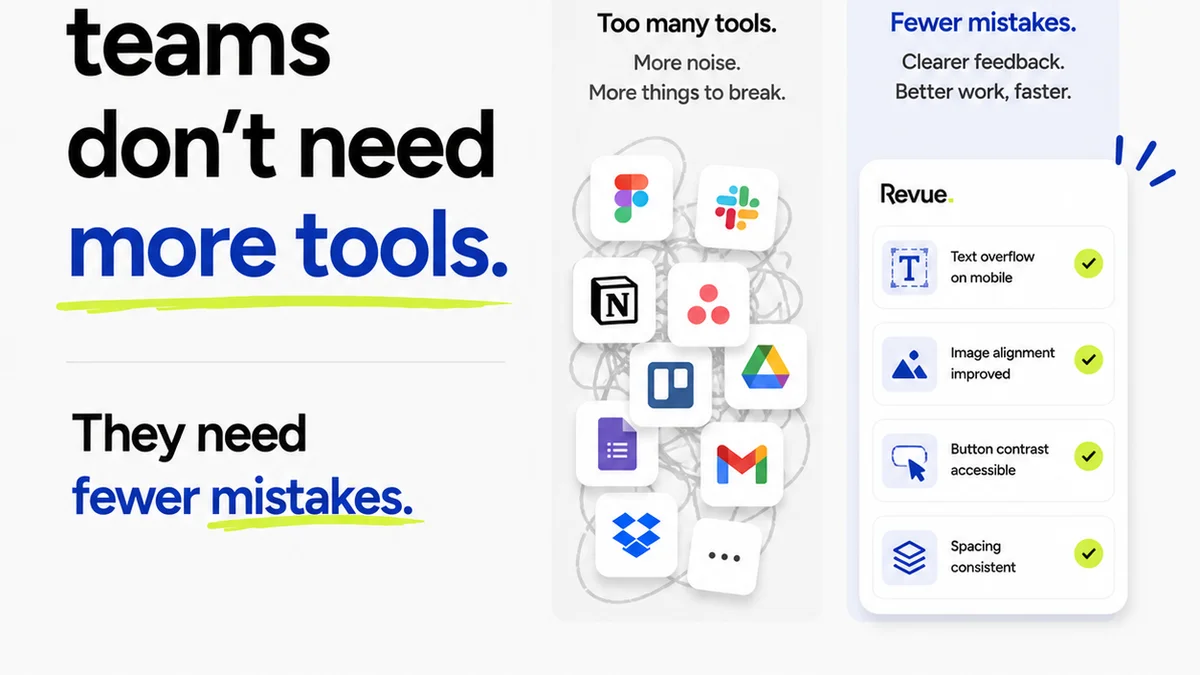
Revue helps centralize client feedback, making it easy to see exactly what’s being said, who said it, and when. No more digging through endless email threads or Slack messages to find that one crucial comment.
It provides a clear audit trail of revisions and approvals, ensuring everyone is on the same page and that scope creep is managed effectively. When your QA team can access a consolidated history of feedback and changes, they can perform more thorough and efficient checks.
By bringing structure and visibility to these critical areas, Revue helps you prevent issues before they escalate, streamline your revision process, and ultimately elevate the quality of your final deliverables.
5. Final Thought
Your quality management process isn't just a set of rules. It's a reflection of your agency's commitment to excellence. If you're not auditing it regularly, you're essentially flying blind. Are you prepared to let quality become a matter of luck?
Frequently asked questions
What's the difference between QA and Quality Management?
QA (Quality Assurance) is a part of Quality Management. QA focuses on the processes used to create a product or service, aiming to prevent defects. Quality Management is broader, encompassing all activities and strategies to ensure overall quality, including QA, quality control, continuous improvement, and strategic planning.
How often should I audit my QM process?
There's no one-size-fits-all answer, but a good rule of thumb is to conduct a formal audit at least annually. However, for dynamic environments or after significant workflow changes, more frequent, informal checks or audits might be necessary. Look for signs that your process is breaking down as a trigger for an audit.
What if my team resists the audit or changes?
Involve your team early in the process. Explain the 'why' behind the audit – focusing on shared benefits like reduced stress, fewer errors, and happier clients. Gather their input on pain points and solutions. When they feel heard and part of the solution, resistance is usually lower. Highlight successes and positive impacts clearly.
Can I audit my QM process myself, or do I need an external consultant?
You can absolutely audit your process yourself, especially if you have a clear understanding of your workflows. However, an external consultant can bring an objective perspective, identify blind spots, and offer best practices from other industries or agencies. For a first audit, doing it internally is often sufficient to identify major areas for improvement.