Everyone in the agency world talks about automation. Streamline this, cut that, speed up the other. And sure, you’ve probably implemented some tools. Maybe a project management system, a digital asset manager, or even a dedicated proofing tool.
You’ve automated *parts* of your review process.
None of that is wrong. But it’s incomplete.
The hard truth is that true review automation isn’t about plugging in a few apps. It’s about designing and constantly refining an entire *system* where feedback flows frictionlessly, revisions are tracked with surgical precision, and approvals are ironclad. Most agencies have built a Frankenstein’s monster of automation, not a streamlined machine.
It’s time to audit what you’ve actually built. Not just the tools, but the entire workflow.
1. Mapping Your Current State: The Reality Check
What's Actually Happening?
Before you can fix anything, you need to know what’s broken. Most teams *think* they know their process. They’re wrong.
Start by mapping every single touchpoint in your creative review and approval cycle. From the moment a piece of creative is ready for internal review to the final client sign-off.
- Who initiates the review?
- What format is the feedback given in? (Email, Slack, Word doc, sticky notes?)
- Where does that feedback go?
- Who is responsible for consolidating it?
- How are revisions tracked?
- How is the revised work presented for the next round?
- What does the client approval look like? (An email? A verbal OK? A signed PDF?)
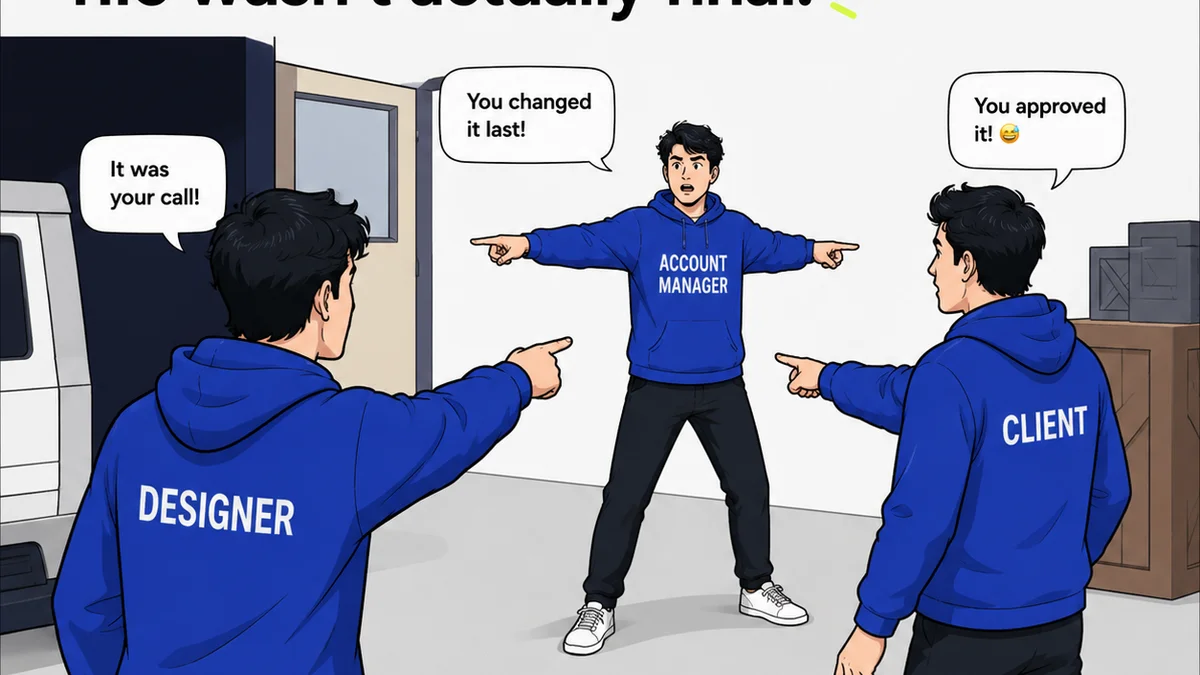
- What happens if there’s a disagreement?
- Where are the bottlenecks?
This isn't a theoretical exercise. Get your team in a room, whiteboard it, and be brutally honest. Document every step, every tool, every person involved.
The Hidden Costs of Manual Steps
Every manual step is a potential point of failure and a drain on resources.
Think about:
- Time spent copying and pasting feedback from emails into project management tools.
- Hours lost trying to decipher vague comments or conflicting stakeholder opinions.
- The cost of re-doing work because feedback was missed or misinterpreted.
- Delays caused by waiting for a specific person to manually forward a file or an approval.
- Risk of using outdated assets because version control is a mess.
These aren’t small inconveniences. They add up to significant financial and operational drag.
2. Evaluating Your Tool Stack: Are They Working Together?
The Illusion of Integration
You’ve bought the software. You’ve got the subscriptions. But are your tools actually talking to each other?
Most likely, they’re not. You’re probably juggling:
- Email for initial briefs and final approvals.
- Slack or Teams for ad-hoc discussions.
- A cloud storage solution (Dropbox, Google Drive) for file sharing.
- A project management tool (Asana, Monday) for task tracking.
- A separate proofing tool for annotations.
This creates information silos. Feedback gets trapped in email threads. Revisions are hard to track across multiple platforms. Approvals can be buried in chat logs.
The Single Source of Truth Myth
If you have to hunt for information across five different platforms, you don’t have a single source of truth. You have a disorganized mess.
Your automation efforts are failing if:
- Stakeholders have to log into multiple systems to get the full picture.
- There’s no clear, auditable trail of feedback and decisions.
- It’s difficult to see the history of revisions on a specific asset.
- Consolidating feedback requires manual aggregation.
The goal isn't just to *use* tools, but to have them *work together seamlessly* to create a unified workflow.
3. Analyzing Feedback Quality and Clarity
The Vague Comment Vortex
This is where most automation initiatives hit a wall. You can automate the *delivery* of feedback, but you can’t automate clarity.
What does
Frequently asked questions
What is a review automation process?
A review automation process is a system designed to streamline the feedback, revision, and approval cycle for creative work. It leverages technology to reduce manual steps, improve communication, and ensure clarity and accountability throughout the review stages.
Why is auditing my review automation important?
Auditing your review automation process is crucial to identify inefficiencies, bottlenecks, and breakdowns in communication. It helps ensure your tools and workflows are actually saving time and resources, rather than creating more work or confusion.
How can I improve feedback quality in my automation process?
Improve feedback quality by establishing clear guidelines for reviewers, using annotation tools that allow for precise feedback, and implementing a structured process for consolidating and clarifying comments before revisions begin. Centralizing feedback also helps prevent conflicting instructions.
What are the signs that my review automation isn't working?
Signs include inconsistent feedback formats, difficulty tracking revisions, missed deadlines due to communication delays, stakeholder confusion about the latest version, and a general feeling that the process is more manual than automated. Relying on email or chat for critical feedback is also a red flag.