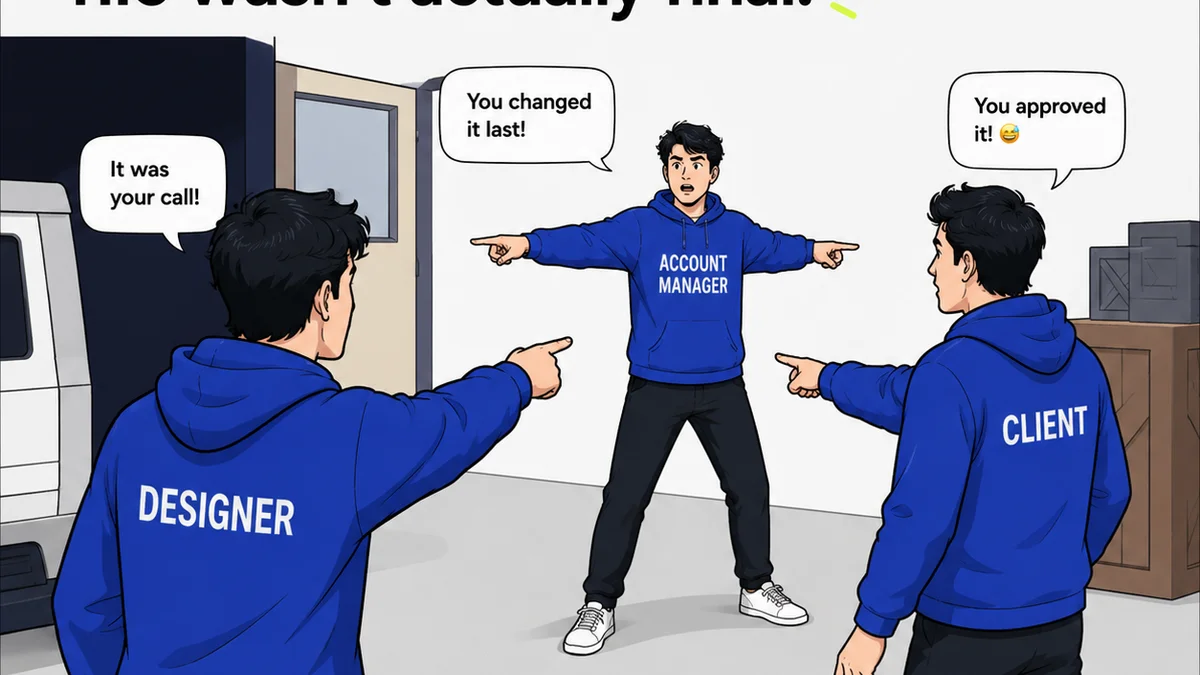
We’re told that automating design reviews is the holy grail. That AI can flag inconsistencies, check brand compliance, and speed up approvals. It sounds like magic, right?
None of that is wrong. But it’s incomplete.
The real hard truth about automated design reviews is this: automation is only as good as the process it’s automating. Without a solid foundation of clear feedback, defined workflows, and accessible context, automation becomes just another layer of complexity. It can even mask deeper problems, making you think you’re faster when you’re just more efficient at being confused.
1. The Illusion of Speed
The promise of automated design reviews is seductive. Imagine AI catching every pixel-perfect error, every stray hex code, every misplaced logo. It feels like it should slash turnaround times dramatically.
But what happens when the automation flags something that isn't actually an error?
Or when it misses a crucial piece of context that makes the
Frequently asked questions
What are automated design reviews?
Automated design reviews use software, often powered by AI, to check creative assets for specific criteria like brand compliance, technical specifications, or inconsistencies. This can include checking color palettes, logo usage, file formats, and even basic layout errors before human review.
Can automation replace human design review?
No, automation cannot fully replace human design review. While it can handle repetitive, rule-based checks efficiently, it lacks the creative judgment, strategic understanding, and nuanced feedback that a human reviewer provides. Automation is best used to augment, not replace, human oversight.
What are the biggest challenges with automated design reviews?
The main challenges include the initial setup and configuration, dealing with false positives (flagging non-issues), the inability to understand creative intent or strategic goals, and the risk of over-reliance that can lead to overlooking subjective or qualitative feedback. The effectiveness is heavily dependent on the underlying human-defined process.
How can I make my design review process faster without relying solely on automation?
Focus on establishing clear briefs, centralizing feedback in one place, setting clear review timelines, defining who reviews what and when, and ensuring reviewers have all necessary context. A well-defined manual process is the prerequisite for any successful automation.