Everyone talks about automation in agencies. They say it saves time. It cuts costs. It streamlines workflows.
And none of that is wrong. But it’s incomplete.
The real, hard truth is this: automation isn’t just about efficiency. It’s about elevating the client experience.
When you automate the grunt work, you free up your team to do the high-value, client-facing stuff. That’s where true satisfaction is built.
1. The Illusion of Personal Touch vs. The Reality of Responsiveness
Many agencies pride themselves on a “personal touch.” They think that means every email, every call, every update needs a human hand. This is a romantic notion, but it breaks down fast.
Clients don't want to wait three hours for a confirmation. They don't want to chase down status updates. They want to know what’s happening, when it’s happening, and what’s next.
This isn’t about being impersonal. It’s about being reliably informative.
The Symptoms of Manual Delays
- Delayed responses to simple queries.
- Inconsistent communication across team members.
- Clients having to repeatedly ask for updates.
- Missed internal handoffs leading to client confusion.
- A perception of your agency being disorganized.
These aren't minor annoyances. They chip away at client confidence. They breed anxiety.
Automation, however, can provide immediate, consistent acknowledgments. Automated status notifications keep clients informed without anyone on your team lifting a finger for that specific task.
This isn't replacing human connection. It's augmenting it. It ensures the client feels heard and informed, even when the team is deep in creative work.
2. Eliminating Errors: The Unseen Client Killer
What’s worse than a missed deadline? A deadline met, but with sloppy errors. Think about it from the client’s perspective.
They hired you for expertise. They expect polish. When mistakes slip through, it erodes their trust faster than anything.
Manual processes are rife with opportunities for error. A typo in a brief. A miscommunicated revision. A forgotten QC step.
Common Manual Error Points
- Transcription errors when taking notes during calls.
- Forgetting to include a specific piece of feedback in the next iteration.
- Misinterpreting instructions due to lack of a clear, documented trail.
- Incorrectly updating project status in a spreadsheet.
- Sending the wrong file version for approval.
These errors cost time and money to fix. But more importantly, they damage your reputation.
Automation introduces checks and balances. It enforces a structured process. For instance, requiring sign-off at each stage before moving forward prevents crucial feedback from being overlooked.
Automated checklists ensure every required step, from asset delivery to final QA, is completed and documented. This isn't about being rigid; it's about being rigorous.
3. Transparency: The Foundation of Trust
Clients are increasingly demanding transparency. They want to see the sausage being made, to a degree. They want to understand where their money is going and what progress is being made.
Manual tracking and reporting are a nightmare for this. Someone has to manually compile updates, chase down team members, and format reports. It's time-consuming and prone to inaccuracies.
This lack of visible progress breeds suspicion. Clients start to wonder if their project is even being worked on.
Automated systems provide a clear, real-time view of project status. When a client can log in and see exactly where a project is, what feedback has been incorporated, and what the next steps are, it builds immense trust.
This transparency extends to revisions and approvals. Automated workflows clearly show who needs to approve what, when it’s due, and whether it’s been done. No more guessing games.
Benefits of Automated Transparency
- Clients feel in control and informed.
- Reduces the need for constant client check-ins.
- Builds confidence in your agency's process.
- Helps manage client expectations proactively.
- Identifies bottlenecks early for both parties.
This level of insight is what separates good agencies from great ones. It’s about partnership, not just service provision.
4. Empowering Your Team to Focus on What Matters
Let’s be honest. Your creatives and account managers are not thrilled about spending hours updating spreadsheets, sending reminder emails, or manually tracking down approvals.
They joined an agency to be creative, to solve problems, to build relationships. Not to be administrative assistants.
When you automate the repetitive, administrative tasks, you unleash your team’s potential.
This isn't just about making them happier. It’s about making them more effective.
The Opportunity Cost of Manual Work
- Creative burnout from juggling too many non-creative tasks.
- Account managers spending less time on strategic client counsel.
- Missed opportunities for upselling or deepening client relationships.
- Increased staff turnover due to frustration with inefficient processes.
- Lower overall quality of creative output due to divided focus.
Automating tasks like feedback collection, revision tracking, and file version management frees up valuable hours. Those hours can be reinvested into strategic thinking, client brainstorming, and delivering exceptional creative work.
Your team’s expertise is your agency’s most valuable asset. Automation protects and amplifies that asset.
Where Revue Fits In
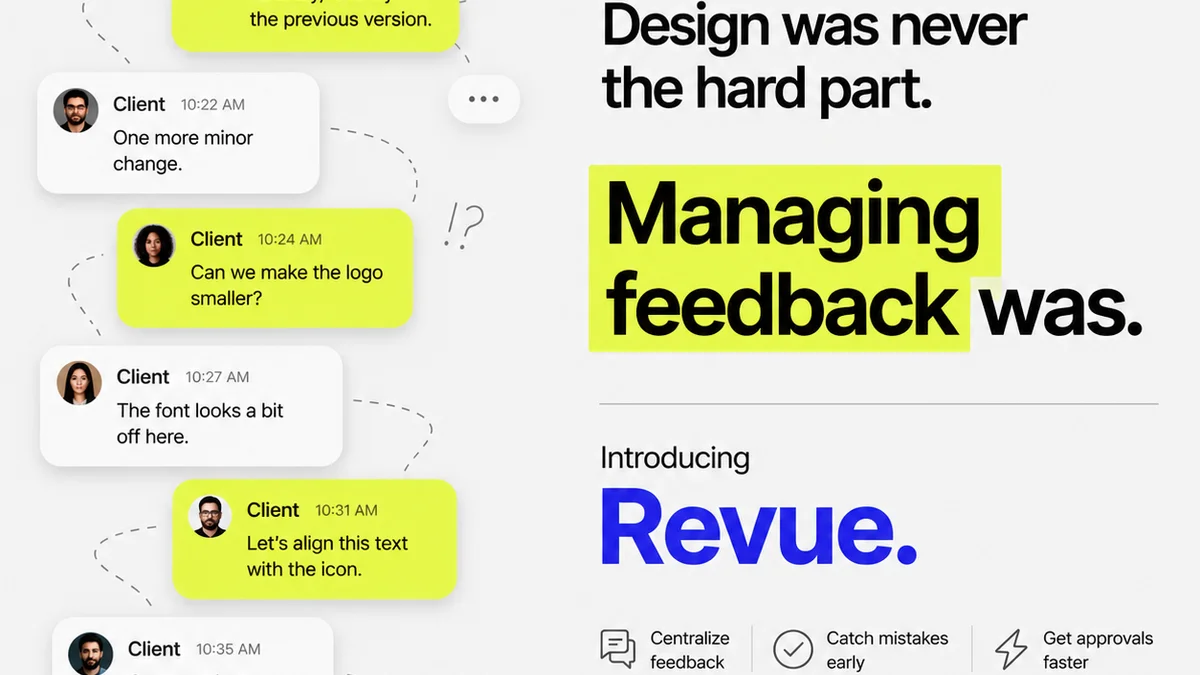
This is precisely why Revue was built. We saw agencies drowning in manual feedback loops, revision chaos, and unclear approval chains. It was killing client satisfaction and team morale.
Revue centralizes client feedback, making it impossible for comments to get lost or misinterpreted. Every piece of feedback is tied directly to the asset, with clear context.
Our system manages revisions and approvals with automated workflows. Clients get clear notifications, and your team gets clear visibility into what’s been signed off and what’s next. No more manual chase-downs.
And the quality checks? Revue’s structured process ensures that crucial steps aren't missed before final delivery, reducing errors and boosting client confidence.
It’s not about replacing your team. It’s about equipping them with tools that let them shine, and letting the clients see that brilliance clearly.
Final Thought
The future of agency-client relationships isn't about more personal touches; it’s about more precise, responsive, and transparent interactions. It’s about using technology not to distance yourself, but to create a more seamless, trustworthy, and ultimately satisfying experience.
Are you automating for efficiency alone, or are you automating for client delight?
Frequently asked questions
How does automating feedback improve client satisfaction?
Automating feedback collection ensures that all comments are captured in one place, with clear context, and are directly linked to the asset. This reduces misinterpretations, prevents feedback from getting lost, and provides clients with a clear record of their input, leading to a more transparent and less frustrating experience.
Can automation really reduce errors in client work?
Yes. Manual processes are prone to human error like typos, missed instructions, or sending the wrong file versions. Automated workflows enforce a structured process, use checklists, and require clear sign-offs at each stage, significantly minimizing the chance of errors slipping through to the client.
What is the link between transparency and client satisfaction?
Clients feel more satisfied when they have clear visibility into project progress. Automated systems provide real-time status updates, show who is responsible for approvals, and track revisions. This transparency builds trust and reduces client anxiety, as they always know where their project stands.
How does automation free up agency teams for better client service?
By automating repetitive administrative tasks like sending status updates, chasing approvals, or compiling reports, your team has more time to focus on high-value activities. This includes strategic thinking, creative problem-solving, and building stronger relationships with clients, which directly enhances the client experience.