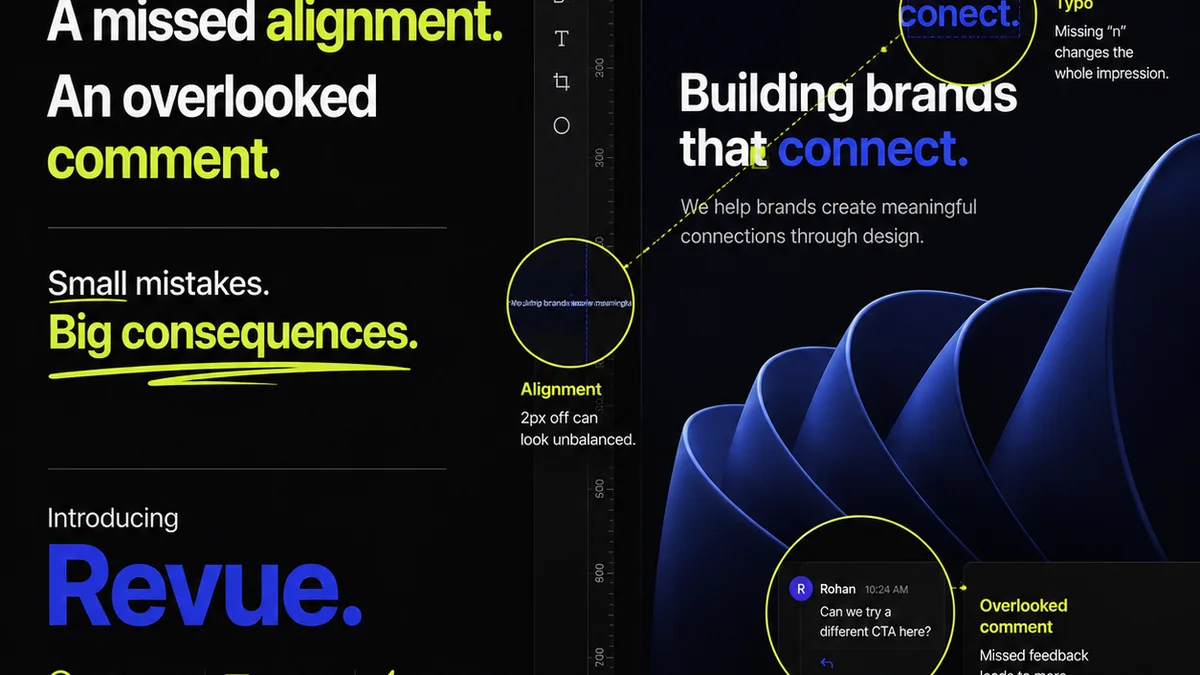
Everyone assumes automation in design means sacrificing creative control. That machines will sterilize your output, drain it of soul, and turn your agency into a soulless factory. None of that is wrong. But it’s incomplete.
The hard truth is this: Unchecked, human-led design processes are inherently prone to error. And it’s not a failing of your team; it’s a feature of human nature. We get tired. We miss details. We have off days. Automation isn't about replacing creativity; it's about building a bedrock of accuracy that frees creativity to do its best work.
1. The Illusion of Perfect Human Review
We like to think our eyes are sharp. That we catch every stray pixel, every misaligned element, every inconsistent brand color. We conduct multiple rounds of review, rely on experienced eyes. And sometimes, we do catch it.
But what about the times we don't?
Consider the sheer volume of assets produced daily. Social media graphics, banner ads, email headers, website elements, print collateral. Each requires precision. A single misplaced logo, a slightly off-brand shade of blue, a typo in a headline – these aren't just aesthetic blips. They’re brand integrity breaches. They erode trust. They cost time and money to fix, often late in the game.
The assumption is that human oversight is the ultimate safeguard. The reality is that human oversight, without robust systems, is a leaky sieve.
The Cost of
Frequently asked questions
Can automation really improve design accuracy without stifling creativity?
Absolutely. Automation handles repetitive, detail-oriented tasks, reducing human error. This frees up designers to focus on conceptualization and strategic creative thinking, rather than getting bogged down in meticulous checks. It builds a foundation of accuracy, allowing creativity to flourish.
What are the most common design errors that automation can prevent?
Automation excels at preventing errors like inconsistent spacing, incorrect file naming conventions, off-brand color usage, misplaced logos, incorrect typography, and repetitive formatting mistakes across multiple assets. It ensures adherence to brand guidelines and technical specifications.
How does automation impact the revision and approval process?
Automation can streamline revisions by ensuring that changes are applied consistently and accurately. It can flag potential conflicts or deviations from approved versions, providing clearer visibility into the revision history and reducing the chance of introducing new errors during the approval cycle.
Is implementing design automation expensive or complex for agencies?
The initial investment in tools and setup can vary. However, the long-term savings in reduced errors, faster turnaround times, and improved team efficiency often far outweigh the costs. Many modern tools are designed for user-friendliness, making implementation manageable.