The common narrative around automation in creative fields is simple: machines will take over. AI will design, code, and render, leaving human creatives to find new careers. It’s a compelling, if slightly dystopian, story.
But it’s not the whole story. In fact, it’s barely half of it.
The deeper truth is that automation, when implemented correctly, doesn’t replace designers. It empowers them. It frees them from the tedious, the repetitive, and the purely administrative, allowing them to focus on what humans do best: strategy, empathy, innovation, and true creative problem-solving.
1. The Illusion of Pure Creativity
Many assume that a designer’s job is 90% pure creative genius and 10% grunt work. This is a romanticized view, but it’s rarely the reality of agency life.
The truth is, a significant chunk of a designer’s time is consumed by tasks that have little to do with innovative thinking. Think about it:
- Manually resizing assets for multiple platforms.
- Chasing down feedback from scattered email threads.
- Organizing and exporting final files in various formats.
- Implementing minor, repetitive edits based on client comments.
- Managing project versions and ensuring everyone is looking at the latest iteration.
These aren’t creative acts. They are operational necessities. And they are precisely the kinds of tasks ripe for automation.
The Real Bottleneck Isn't Lack of Ideas
The bottleneck in most creative projects isn’t a shortage of brilliant concepts. It’s the friction in the workflow: the delays, the miscommunications, the endless rounds of small, time-consuming revisions that eat away at the schedule and budget.
When you automate the mundane, you don’t reduce the creative capacity of your team. You unlock it.
2. Redefining the Designer’s Role
Automation forces a re-evaluation of what a designer’s core value proposition is. It shifts the focus from execution to strategy and oversight.
Consider the rise of AI image generators. Many panicked, seeing them as direct competitors. But look closer. Who is guiding the AI? Who is crafting the prompts? Who is selecting, refining, and integrating the AI-generated assets into a larger campaign or brand identity?
The designer. The role evolves from being the sole creator of every pixel to being the conductor of the entire creative orchestra, leveraging tools – including AI – to achieve a vision.
From Pixel Pusher to Strategic Partner
Automation allows designers to elevate their contributions:
- Strategic Input: More time for understanding client objectives, target audiences, and market trends.
- Concept Development: Deeper exploration of ideas, not just surface-level execution.
- Client Collaboration: Focusing on high-level discussions rather than getting bogged down in micro-revisions.
- Quality Assurance: Ensuring the final output meets strategic goals, not just aesthetic preferences.
- Tool Mastery: Becoming expert users of new technologies that enhance, rather than replace, their skills.
This isn't about designers becoming obsolete. It’s about them becoming more strategic, more influential, and frankly, more valuable.
3. The Efficiency Paradox: More Output, Less Burnout
There’s a pervasive myth that efficiency tools and automation lead to unrealistic expectations and increased pressure. This can be true if implemented poorly, but the goal of smart automation is the opposite.
By streamlining repetitive tasks, you reduce the time spent on low-value activities. This means:
- Faster Turnarounds: Delivering projects to clients quicker without sacrificing quality.
- Reduced Overtime: Less need for designers to pull late nights on tedious tasks.
- Increased Capacity: Your team can handle more projects or more complex projects.
- Improved Morale: Designers feel more engaged when working on challenging, creative problems, not busywork.
The paradox is that by automating the predictable, you create space for the unpredictable brilliance that clients pay for.
Fighting Scope Creep with Structure
Automation isn't just about speeding up existing processes; it's about building in structure that prevents scope creep from the outset.
When feedback loops are automated and version control is clear, it’s easier to define the boundaries of a revision round. This protects both the agency and the client from endless, unfocused changes. It keeps the project on track and the creative team focused on the core objectives.
4. Where Revue Fits In
This is where tools like Revue become indispensable. We don’t automate the creative spark. We automate the chaos that surrounds it.
Revue is built to streamline the operational side of creative collaboration, directly addressing the pain points that automation is meant to solve:
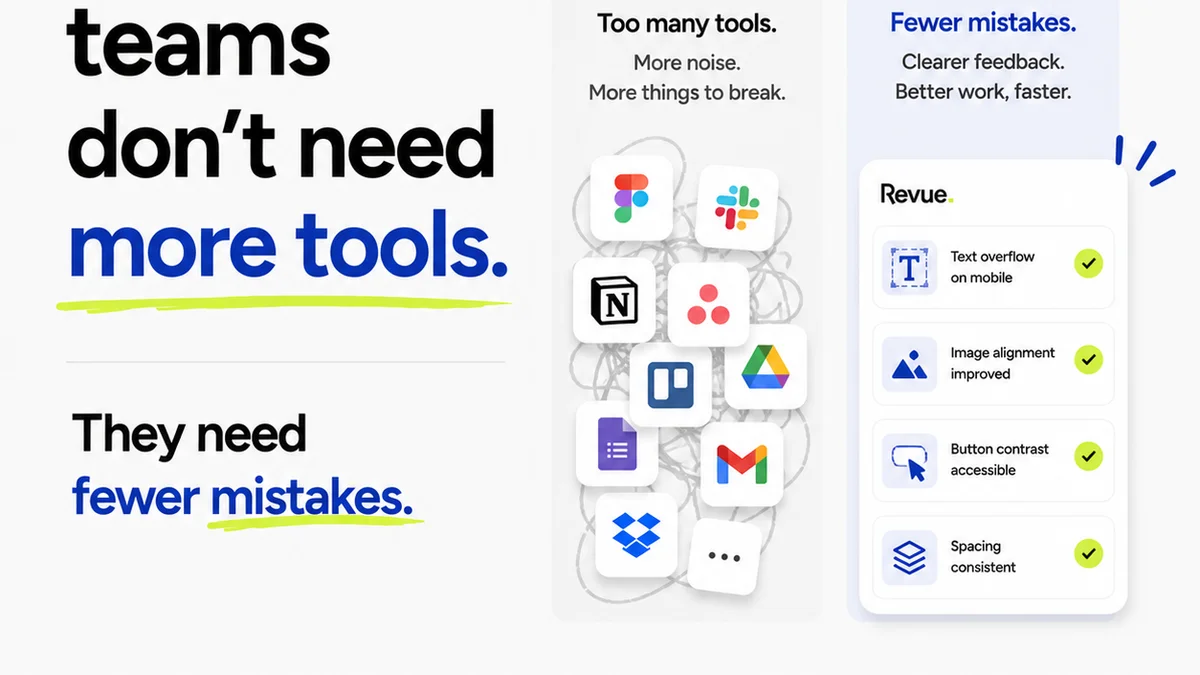
- Centralized Feedback: No more digging through emails or Slack messages. All client comments live in one place, attached to the specific asset or version.
- Revision & Approval Visibility: Track the entire history of feedback and approvals, ensuring transparency and accountability. Know exactly who approved what, and when.
- Quality Checks: Ensure that all feedback has been addressed and that the final output meets all requirements before final delivery.
By centralizing and automating these workflow elements, Revue frees up your design team. It allows them to spend less time managing feedback and more time acting on it strategically. It turns a messy, manual process into a clean, efficient one.
This isn't about replacing the designer’s skill. It’s about amplifying their impact by removing the operational drag.
5. The Future Belongs to the Integrated Creative
The fear of automation is understandable. Change is often unsettling. But clinging to outdated workflows in the face of technological advancement is a losing strategy.
The future isn't about humans versus machines. It's about humans *with* machines.
The most successful creative professionals and agencies will be those who embrace automation not as a threat, but as an opportunity. An opportunity to:
- Work smarter, not just harder.
- Focus on higher-value strategic contributions.
- Deliver exceptional work with greater efficiency.
- Build more resilient and less burnout-prone teams.
This shift requires a mindset change. It requires investing in tools and processes that support this evolution.
Final Thought
If automation is truly the enemy of the designer, then the problem isn't the automation itself, but the way we are choosing to implement it. Are we using it to cut corners and increase output at the expense of quality and well-being? Or are we using it to elevate the creative process, empower our teams, and deliver more strategic, impactful work? The answer to that question will define the future of creative work.
Frequently asked questions
Will AI and automation take my design job?
It's unlikely that AI and automation will completely replace designers. Instead, they are transforming the role. Automation handles repetitive tasks, freeing designers to focus on strategy, complex problem-solving, and creative direction. The demand will shift towards designers who can leverage these tools effectively.
How can automation improve a design agency's efficiency?
Automation can significantly boost agency efficiency by streamlining time-consuming tasks like asset resizing, feedback management, version control, and file exports. This allows teams to deliver projects faster, reduce errors, and handle more client work without increasing burnout.
What kind of tasks are best suited for automation in design?
Repetitive, rule-based, and time-consuming tasks are ideal for automation. This includes tasks like generating design variations, resizing images for different platforms, organizing files, managing client feedback across multiple channels, and implementing minor, consistent edits.
How does centralized feedback help designers?
Centralized feedback systems, like those offered by Revue, eliminate the chaos of scattered comments in emails or chats. Designers receive all feedback in one place, clearly linked to specific assets. This reduces miscommunication, speeds up revisions, and ensures accountability, allowing designers to focus on implementing feedback strategically.