Everyone thinks packaging design is about making things look good. A splash of color here, a cool font there, and boom – a product flies off the shelf. That’s the popular narrative, the one you see in glossy magazines and award show reels.
None of that is wrong. But it’s incomplete. Radically incomplete, in fact.
The hard truth? Great packaging design isn't just about aesthetics; it's a complex operational challenge that blends art, science, and sheer grit. It’s about solving problems before they even reach the consumer. It’s about logistics, material science, brand strategy, and consumer psychology, all wrapped up in one tangible object.
1. Beyond the Pretty Picture: The Strategic Core
Before a single pixel is placed or a Pantone color is chosen, there’s a mountain of strategic work to be done. This isn't the fun part for most designers, but it’s the bedrock of success. Ignoring it is like building a house without a foundation.
Understanding the Battlefield
Who are you selling to? Where will they see this package? What’s the competition doing? These aren't just questions; they’re operational parameters that dictate every design decision.
- Target Audience: Who is this for? A luxury buyer? A budget-conscious parent? A tech-savvy millennial? Their expectations, values, and visual language are paramount.
- Retail Environment: Will it be on a crowded shelf, a high-end boutique display, or sold online? Shelf presence is a tactical consideration. Online requires clear imagery and compelling descriptions.
- Competitive Landscape: What are competitors doing? You need to stand out, but also fit within category expectations. Blending in is sometimes the right strategic move.
Defining the Brand Voice
The package is often the first physical interaction a consumer has with your brand. It needs to speak the right language, visually and textually. This means aligning with the broader brand identity, not just the product itself.
Is your brand playful or serious? Innovative or traditional? Sustainable or performance-driven? The packaging must embody this consistently.
2. The Material World: Constraints and Opportunities
This is where many creative briefs fall short. They focus on the visual, forgetting the physical reality of the package. The materials you choose have massive implications for cost, sustainability, durability, and user experience.
Material Selection is Strategic
It’s not just about what looks good; it’s about what *works*. Cardboard, plastic, glass, metal – each has its own properties, costs, and environmental footprint.
- Cost: Budget is always a factor. High-end materials can elevate a brand, but they can also price you out of the market.
- Durability: Will it survive shipping? Will it protect the product? A crushed or damaged package is a failed package.
- Sustainability: This is no longer optional. Recycled content, recyclability, and biodegradable options are increasingly important to consumers and regulators.
- Functionality: Does the material allow for unique opening mechanisms? Does it provide a good grip? Is it easy to store?
Printing and Finishing: The Tactile Experience
The way a package is printed and finished adds layers of perception. Think beyond CMYK.
- Coatings: Matte, gloss, soft-touch. Each offers a different feel and visual effect.
- Embossing/Debossing: Adds tactile dimension and a premium feel.
- Foil Stamping: Creates metallic accents that catch the eye.
- Specialty Inks: UV spot, thermochromic, even scented inks. These can create memorable experiences.
Each of these adds cost and complexity. They need to be chosen deliberately, not as afterthoughts.
3. The Information Hierarchy: What Must Be Said
A package is a billboard, a user manual, and a legal document, all in one. Deciding what information goes where, and how prominently, is critical.
Essential vs. Secondary Information
Not all text is created equal. Some elements are legally mandated, others are crucial for purchase decisions, and some are nice-to-haves.
- Brand Name & Logo: The most prominent element.
- Product Name/Descriptor: What *is* it?
- Key Benefits/Selling Proposition: Why should I buy it?
- Usage Instructions: How do I use it?
- Ingredients/Nutritional Information: Required for food, cosmetics, etc.
- Warnings/Disclaimers: Safety and legal requirements.
- Barcode/SKU: For retail operations.
Visualizing Information
Good design makes complex information digestible. Bad design makes it overwhelming or invisible.
Consider the flow of information. What does the eye hit first? Second? Third? This requires careful layout and typography. A cluttered package confuses the consumer and can signal a lack of quality.
4. Structural Design: The Unsung Hero
Often overlooked by those outside the industry, structural packaging design is about the form, not just the graphics. It’s the engineering of the box, the bottle, the blister pack.
Form Follows Function (and Logistics)
A beautiful graphic design is useless if the structure can’t be manufactured, filled, shipped, or displayed efficiently. Structural designers are problem solvers.
- Manufacturability: Can this be produced at scale with existing machinery?
- Assembly: How easy is it to assemble at the factory? Does it require excessive glue or complex folding?
- Shipping Efficiency: How well does it stack? Does it waste space in transit?
- Retail Display: Does it stand up? Can it be hung? Does it fit standard shelving?
- Unboxing Experience: How does the consumer interact with it upon opening? Is it frustrating, or delightful?
Structural design often dictates the available real estate for graphics. The two disciplines must work hand-in-hand from the very beginning.
5. Legal and Regulatory Hurdles
This isn’t glamorous, but it’s non-negotiable. Packaging is heavily regulated, depending on the product and market.
Compliance is Key
Failure to comply can lead to fines, recalls, and severe brand damage.
- Food and Drug Administration (FDA): For food, drugs, and cosmetics. Strict labeling requirements.
- Consumer Product Safety Commission (CPSC): For general consumer products.
- Environmental Protection Agency (EPA): Increasingly relevant for material claims and disposal.
- Specific Industry Regulations: E.g., alcohol, tobacco, children’s toys.
- International Regulations: If selling globally, you need to comply with the laws of each target country.
Legal review of packaging artwork is a critical step that often gets rushed or skipped by less experienced teams.
Where Revue Fits In
Managing the sheer volume of feedback, revisions, and approvals across all these disciplines – creative, structural, legal, marketing – can become chaotic. This is where a centralized system becomes essential.
Imagine a client review where the marketing team focuses on the brand message, the legal team flags a compliance issue on the back panel, and the product manager questions the material choice – all on the same piece of artwork. Without a clear workflow, this feedback gets scattered across emails, Slack messages, and even phone calls.
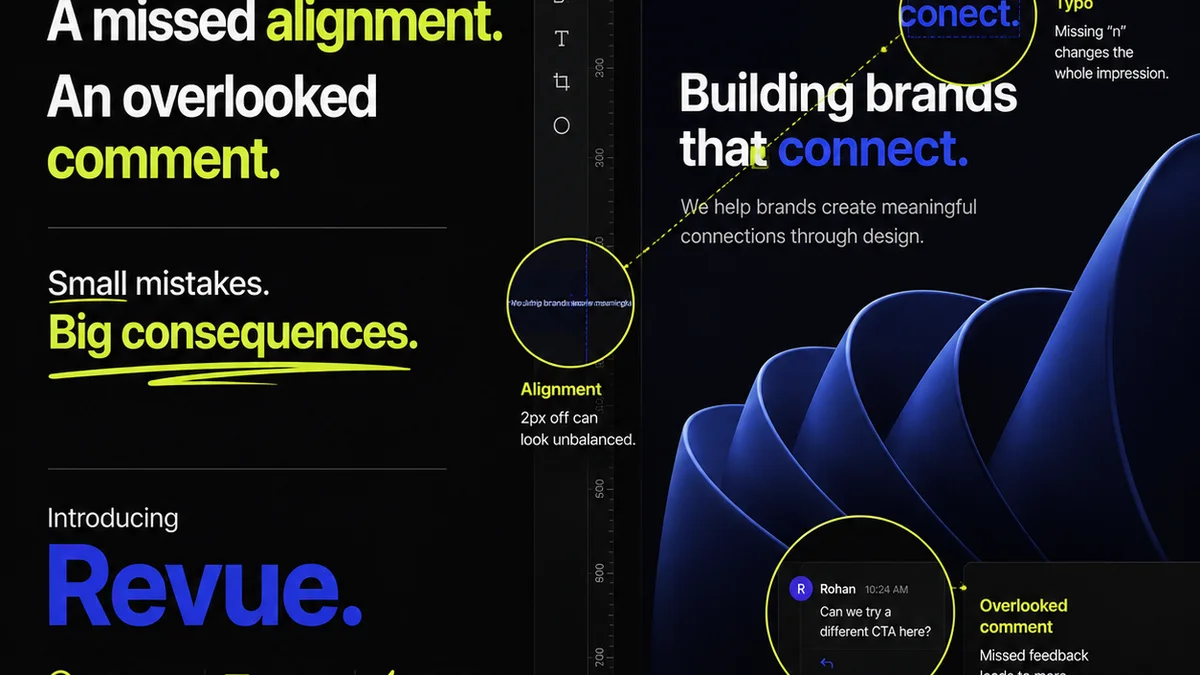
Revue provides a single source of truth. Stakeholders can leave precise, contextual feedback directly on the packaging artwork. Revisions are tracked, ensuring everyone is working from the latest version. Approval workflows can be customized, ensuring that legal signs off before marketing, or that structural engineers have the final say on die-lines. This streamlines the entire process, reducing errors and accelerating time-to-market. It turns a complex, multi-stakeholder process into a manageable, visible operation.
Final Thought
Packaging design is a discipline that demands both creative flair and rigorous operational discipline. It’s a physical manifestation of your brand’s promise, and its success hinges on a deep understanding of strategy, materials, information, structure, and regulation.
So, the next time you admire a beautifully designed package, remember the complex journey it took to get there. It’s far more than just a pretty box.
Frequently asked questions
What's the most common mistake beginners make in packaging design?
The most common mistake is focusing solely on aesthetics without considering the operational aspects. This includes material costs, manufacturing constraints, shipping logistics, and legal compliance. A beautiful design that can't be produced affordably or legally is a failure.
How important is sustainability in packaging design today?
Sustainability is no longer a niche concern; it's a critical factor. Consumers are increasingly aware of environmental impact, and regulations are tightening. Choosing recycled, recyclable, or biodegradable materials, and optimizing for minimal waste, is essential for brand reputation and market viability.
What is structural packaging design?
Structural packaging design refers to the physical form and construction of the package – the shape, the materials used for the container itself (not just the graphics), and how it's assembled. It focuses on functionality, protection, manufacturability, and the unboxing experience, working hand-in-hand with graphic design.
How do I ensure my packaging complies with legal requirements?
This depends heavily on the product and target market. Research relevant regulations (e.g., FDA for food/cosmetics, CPSC for consumer goods) and consult with legal experts specializing in labeling and packaging compliance. Always include a legal review of artwork before production.