Most people think designers need chaos to be creative. That messy desk, the last-minute scrambles, the “aha!” moments born from sheer panic. It’s a romantic notion, fueled by Hollywood and a misunderstanding of what truly fuels great design work.
None of that is wrong. But it’s incomplete.
The hard truth? Creative burnout isn't caused by too much structure. It's caused by the *wrong kind* of structure, or often, a complete lack of it. Designers aren't unhappy because they have to follow a process. They're unhappy because the processes they're forced into are broken, inefficient, and disrespectful of their time and talent.
1. The Myth of the Solitary Genius
We love the idea of the lone genius, the artist toiling away in their studio, emerging only with a masterpiece. This narrative is deeply ingrained in our culture.
But in the real world of agencies and in-house teams, design is rarely a solitary act. It’s collaborative. It involves clients, account managers, strategists, developers, and stakeholders.
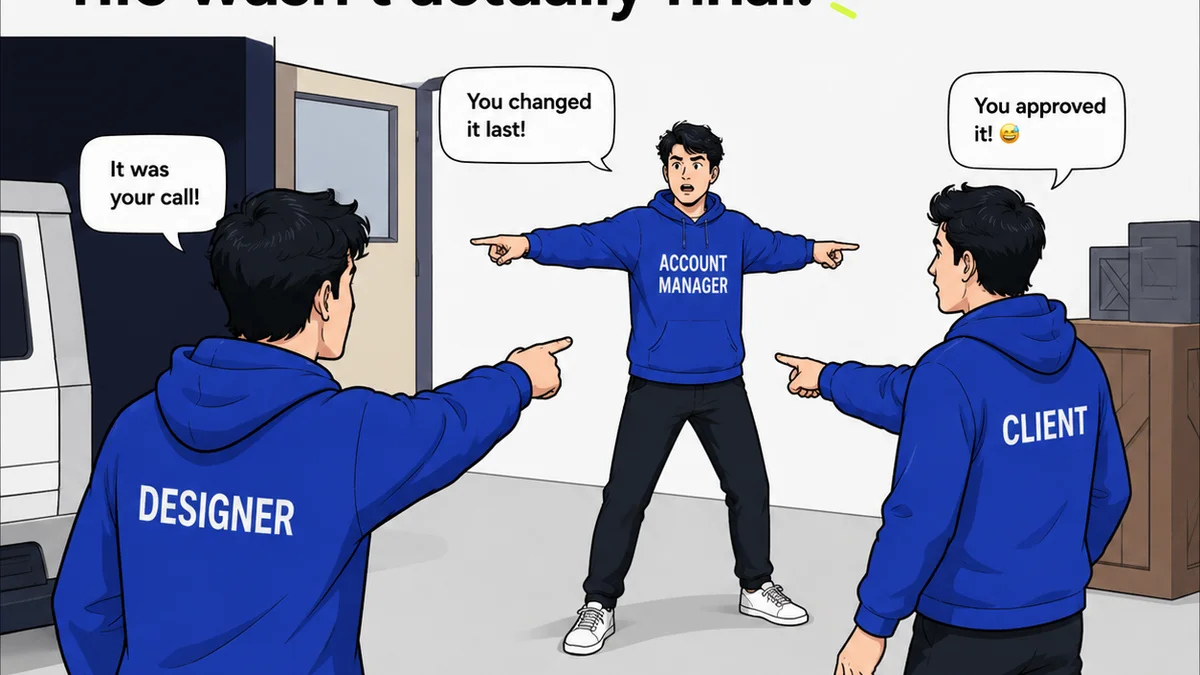
When processes break down, it’s usually at the seams of these collaborations. Feedback gets lost. Revisions are misinterpreted. Approvals get delayed. The supposed
Frequently asked questions
Does implementing processes stifle creativity?
No, quite the opposite. Well-designed processes eliminate the mundane administrative tasks and communication breakdowns that drain creative energy. They free up designers to focus on the creative work itself, leading to more innovative and fulfilling outcomes.
What are the biggest process failures that impact designers?
Common failures include unclear feedback loops, delayed approvals, scope creep without proper adjustment, poor asset management, and a lack of centralized communication. These issues create frustration, rework, and burnout.
How can agencies improve their design processes?
Start by mapping out your current workflow, identifying bottlenecks, and gathering feedback from your design team. Implement tools for centralized feedback, version control, and clear approval tracking. Prioritize clear communication and realistic timelines.
What's the role of technology in improving designer happiness?
Technology, like centralized feedback and project management platforms, plays a crucial role. It automates tedious tasks, provides a single source of truth for projects, and ensures everyone is working from the latest information, reducing errors and misunderstandings.