Everyone talks about book production workflows. They mention printing schedules, paper stock, binding types. They focus on the physical output.
None of that is wrong. But it’s incomplete.
The hard truth? By 2026, the real book production workflow isn't about the *how* of making the book. It's about the why and the when – and how you connect every step digitally, intelligently, and collaboratively.
1. The Myth of the Linear Workflow
The traditional view is linear: manuscript received, edited, designed, proofed, printed, shipped. A straight line.
This creates bottlenecks. It breeds miscommunication. It’s slow.
In 2026, this linear model is a relic. The future is iterative and interconnected.
The Illusion of Control
Teams often think they have control because they have a Gantt chart. They track tasks. They mark things 'done'.
But are they tracking the right things? Are they seeing the ripple effects of a delay in one area on another?
True control comes from visibility and real-time data, not just task management.
The Reality of Interdependence
Every stage of book production is deeply intertwined. A design change impacts layout. A content edit impacts page count. A print spec change impacts cost and timeline.
Ignoring these connections is a recipe for disaster. It leads to costly reprints, missed deadlines, and frustrated stakeholders.
2. Redefining 'Production' in the Digital Age
What does 'production' even mean when content can be fluid and distribution channels are diverse?
It means managing the entire lifecycle of the book, from initial concept to final delivery and beyond. This includes digital assets, metadata, and audience engagement.
Content as a Living Asset
Your manuscript isn't just text. It's a dynamic data set. Think structured content, not just prose.
This allows for easier repurposing across formats: print, ebook, audiobook, web articles, social media snippets.
The Rise of Automated Workflows
Repetitive tasks are the enemy of efficiency. By 2026, automation will be standard, not optional.
This includes:
- Automated typesetting and layout based on content structure.
- AI-assisted proofreading and copyediting.
- Automated metadata generation and optimization.
- Automated print-on-demand (POD) file preparation.
- Automated distribution to various retail channels.
Integrated Digital and Physical
The lines are blurring. A QR code in a print book can link to an exclusive online resource. An ebook can have interactive elements that reference physical pages.
Your workflow must accommodate this hybrid reality. It needs to manage both the physical object and its digital counterparts seamlessly.
3. Collaboration: The New Competitive Advantage
Book production is no longer a siloed activity. It demands cross-functional teamwork.
Think beyond the editorial and design teams. Involve marketing, sales, legal, and even customer support early on.
Breaking Down Silos
Traditional departmental structures create information gaps. This leads to assumptions and errors.
A truly integrated workflow encourages:
- Shared access to project status and assets.
- Clear communication channels for all stakeholders.
- Defined roles and responsibilities across teams.
- A culture of proactive problem-solving.
The Power of Centralized Feedback
Scattered feedback across emails, Slack messages, and Word comments is chaos. It's impossible to track, manage, and ensure all points are addressed.
Centralized feedback systems provide a single source of truth. They ensure every comment is seen, debated, and acted upon.
Real-Time Revision Management
Knowing who changed what, when, and why is crucial. Version control shouldn't be a manual headache.
Tools that track revisions transparently allow teams to move faster and with more confidence. They eliminate the 'which version is final?' panic.
4. Data-Driven Decisions for Smarter Production
Gut feelings and past experience are valuable, but they aren't enough. By 2026, data will steer production decisions.
This means tracking everything that matters and using that data to optimize.
Tracking Key Metrics
What should you be tracking?
- Time spent on each stage (editing, design, proofing).
- Number of revision cycles per project.
- Cost per stage.
- Error rates identified at each stage.
- Stakeholder response times.
- Print run success rates (e.g., returns, quality issues).
Predictive Analytics
With enough historical data, you can start to predict potential issues. Identify projects at risk of delays. Forecast resource needs more accurately.
This shifts you from reactive firefighting to proactive planning.
Audience Insights Integration
Understand what resonates with your audience. Use sales data, reader reviews, and engagement metrics to inform future content and design choices.
This feedback loop directly impacts the *value* of the book, which in turn influences production priorities.
5. Where Revue Fits In
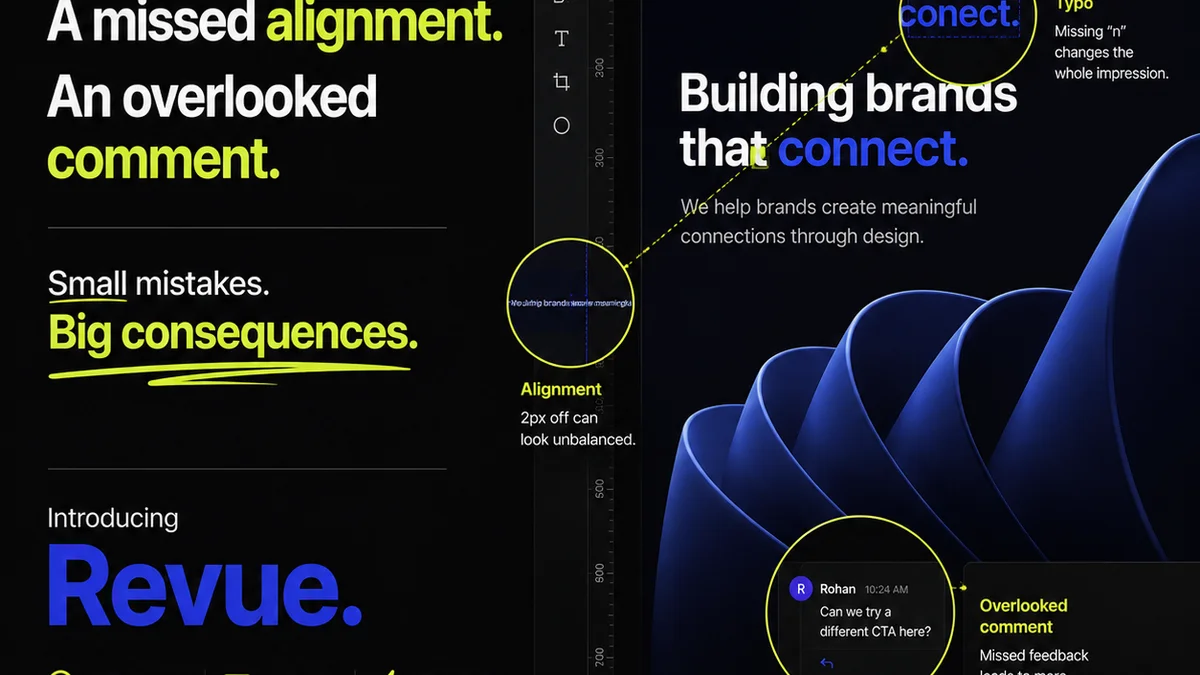
Managing a complex, interconnected book production workflow requires robust tools. Trying to wrangle feedback and revisions through email chains and spreadsheets is a guaranteed way to fall behind.
Revue offers a centralized platform designed for creative collaboration. It tackles the core challenges of modern production:
- Centralized Client Feedback: Consolidate all stakeholder comments in one place, eliminating confusion and ensuring nothing gets missed.
- Revision and Approval Visibility: Track every iteration and approval status clearly, providing transparency for the entire team and clients.
- Quality Assurance: Streamline the review process to catch errors and ensure the final product meets your high standards before it goes to print or digital distribution.
By bringing clarity and control to the feedback and approval stages, Revue empowers teams to move faster, reduce errors, and deliver exceptional books more efficiently.
6. Final Thought
The book production workflow of 2026 is less about the physical craft and more about digital orchestration. It’s about intelligent systems, seamless collaboration, and continuous learning.
Are you building for the past, or are you preparing for the future?
Frequently asked questions
What is the biggest shift in book production workflows by 2026?
The biggest shift is moving from a linear, physical-output-focused model to an integrated, digital-first approach. This means managing content as a living asset, automating repetitive tasks, and fostering seamless collaboration across all stakeholders, not just focusing on printing and binding.
How does automation impact book production?
Automation handles repetitive tasks like typesetting, proofreading, metadata generation, and print-on-demand file preparation. This frees up human resources for more complex creative and strategic work, speeds up the process, reduces errors, and lowers costs.
Why is centralized feedback crucial for modern book production?
Centralized feedback eliminates the chaos of scattered comments across emails and messages. It provides a single source of truth, ensures all feedback is captured and addressed, streamlines the revision process, and leads to faster approvals and fewer misunderstandings.
What role does data play in future book production?
Data is essential for making informed decisions. Tracking key metrics like time spent, costs, error rates, and stakeholder response times allows for optimization. Predictive analytics can identify potential issues early, and audience insights can guide content and design choices for greater market impact.