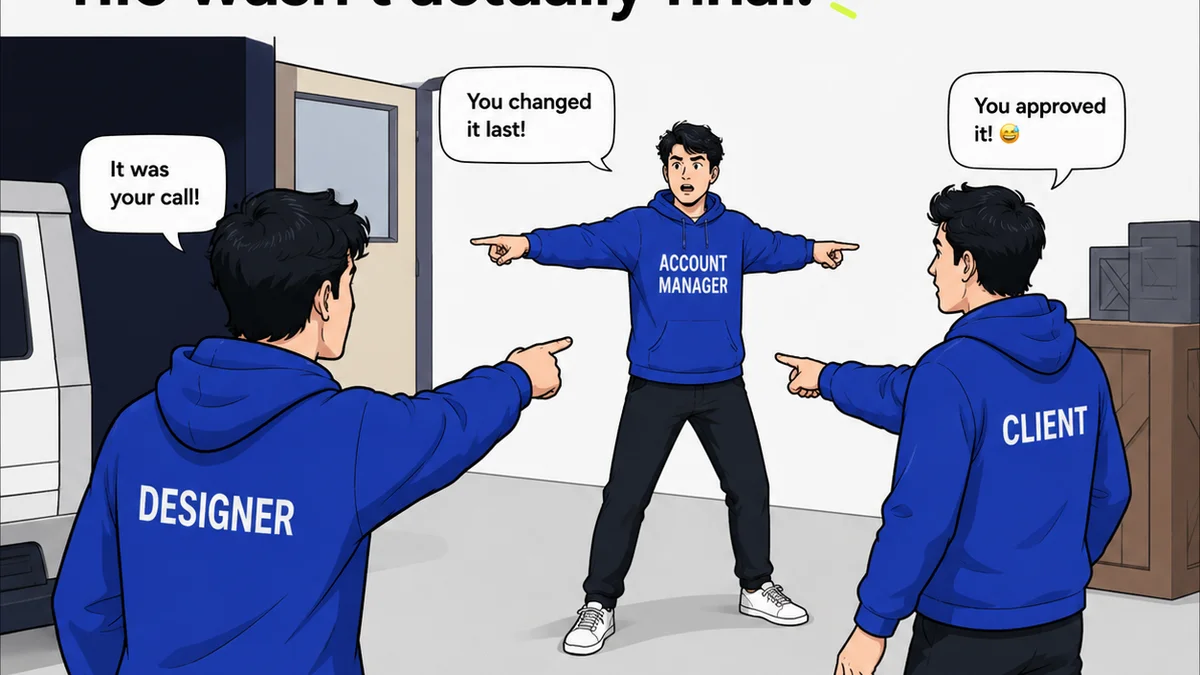
Most creative teams treat brand compliance like a speed bump. Something to deal with after the big ideas are approved, usually by a separate legal or marketing department. It’s seen as a gatekeeper, a killjoy, a necessary evil that slows down progress.
None of that is wrong. But it’s incomplete.
The hard truth is that if brand compliance isn't baked into your creative workflow from the start, you’re not just risking a legal headache. You’re risking brand dilution, inconsistent client experiences, and ultimately, wasted creative effort.
1. The Myth of the 'Creative' vs. 'Compliance' Divide
The common assumption is that creativity and compliance are opposing forces. One is about imagination and breaking rules; the other is about adhering to them. This creates a workflow where creatives invent, then someone else checks if it fits the rules. It’s a sequential, often adversarial process.
This divide is artificial and damaging.
Brand guidelines aren't handcuffs; they're guardrails. They exist to protect the brand's integrity and ensure consistency, which, ironically, strengthens the brand's impact and recognizability. When creatives understand the 'why' behind the guidelines, they can innovate *within* those boundaries, not in spite of them.
The Cost of Separation
- Re-work: Designs get rejected late in the process because they don't meet compliance standards.
- Inconsistency: Different teams or individuals interpret guidelines loosely, leading to a fragmented brand.
- Missed Opportunities: Creatives might shy away from bold ideas for fear of non-compliance, even if those ideas could be adapted.
- Brand Erosion: Over time, subtle deviations accumulate, weakening the brand's core identity.
Integrating compliance means shifting from a 'check-off' mentality to a 'build-in' approach.
2. Embedding Compliance: From Gatekeeper to Guide
Compliance shouldn't be an external audit. It needs to be an internal compass. This means making brand guidelines readily accessible, understandable, and actionable for every member of the creative team, at every stage of the project.
Think of it like this: a chef doesn't just follow a recipe; they understand the principles of flavor, texture, and presentation. Brand guidelines are the principles for your brand's visual and verbal communication.
Practical Integration Points
- Briefing: Include key compliance requirements directly in the creative brief. What are the absolute must-haves and must-nots?
- Ideation: Encourage teams to consider compliance during brainstorming. Can this concept be executed within the brand's parameters?
- Design Tools: Utilize templates, style guides, and design systems that enforce brand rules automatically.
- Review Process: Make compliance a standard check within internal creative reviews, not just a final legal sign-off.
This proactive approach transforms compliance from a roadblock into a foundational element of quality.
3. The Power of a Living Brand Guide
Many brands have static PDF guidelines gathering digital dust. These are rarely consulted, often outdated, and difficult to navigate. A truly effective brand guide is dynamic, accessible, and integrated into the tools your team uses daily.
It’s not just about listing colors and fonts. It’s about providing context, examples, and clear instructions.
What Makes a Guide 'Living'?
- Digital First: Accessible online, searchable, and easily shareable.
- Visual Examples: Show good and bad examples for clarity.
- Contextual Information: Explain the reasoning behind specific rules.
- Version Control: Easily updated and communicated when changes occur.
- Integrated Resources: Links to approved logos, imagery, and copy blocks.
When your brand guide is a practical, living resource, it empowers your team to make compliant decisions independently.
4. Compliance as a Quality Control Metric
At its core, brand compliance is a form of quality control. It ensures that every piece of creative output is on-brand, on-message, and aligned with the client's strategic goals.
When compliance is an afterthought, you’re essentially performing quality control *after* the product is built. This leads to costly fixes and compromises.
By embedding compliance checks throughout the workflow, you catch deviations early, when they are easiest and cheapest to correct.
Benefits of Early QC
- Reduced Errors: Fewer mistakes make it to client review.
- Faster Approvals: Clients are more likely to approve work that's already aligned with their brand.
- Increased Efficiency: Less time spent on revisions and rework.
- Stronger Client Relationships: Demonstrates professionalism and attention to detail.
This isn't about stifling creativity. It's about channeling it effectively.
Where Revue Fits In
Managing client feedback and revisions can be chaotic. Without a clear system, compliance checks often fall through the cracks, especially when feedback is scattered across emails, calls, and multiple documents.
Revue provides a centralized platform where all creative assets, feedback, and revision history live in one place. This visibility is crucial for ensuring brand compliance.
- Centralized Feedback: All comments and stakeholder input are logged against specific versions of the creative. No more hunting through email chains for that one crucial note about logo placement.
- Revision Tracking: See exactly what changed between versions, making it easier to spot deviations from brand guidelines or previous approvals.
- Clear Approval Status: Know precisely when and by whom a piece of work was approved, providing an audit trail.
- Quality Assurance Checkpoints: Integrate compliance review as a specific step within your project workflow, ensuring it's not overlooked.
By bringing clarity and control to the feedback and approval process, Revue helps ensure that creative work not only meets client expectations but also adheres to essential brand standards.
Final Thought
Is your team fighting compliance, or leveraging it? If brand consistency is a strategic goal, then the process for achieving it needs to be as deliberate and integrated as your most innovative creative thinking. What if the most 'creative' work is actually the work that best embodies and extends the brand's core identity?
Frequently asked questions
What is brand compliance?
Brand compliance refers to the adherence to a set of established guidelines that dictate how a brand's identity should be represented across all communications and marketing materials. This includes aspects like logo usage, color palettes, typography, tone of voice, and imagery.
Why is brand compliance important for creative agencies?
For creative agencies, brand compliance is vital for maintaining client brand integrity, ensuring consistency across all deliverables, building trust, and avoiding legal issues. It also helps streamline the review process by setting clear expectations.
How can I integrate brand compliance into my creative workflow?
Integrate compliance by including it in the initial brief, making brand guides easily accessible and understandable, using templates and design systems, and incorporating compliance checks into internal review stages, rather than just at the end.
What are the risks of ignoring brand compliance?
Ignoring brand compliance can lead to brand dilution, inconsistent messaging, client dissatisfaction, legal repercussions, and significant rework, ultimately damaging the client's brand equity and the agency's reputation.