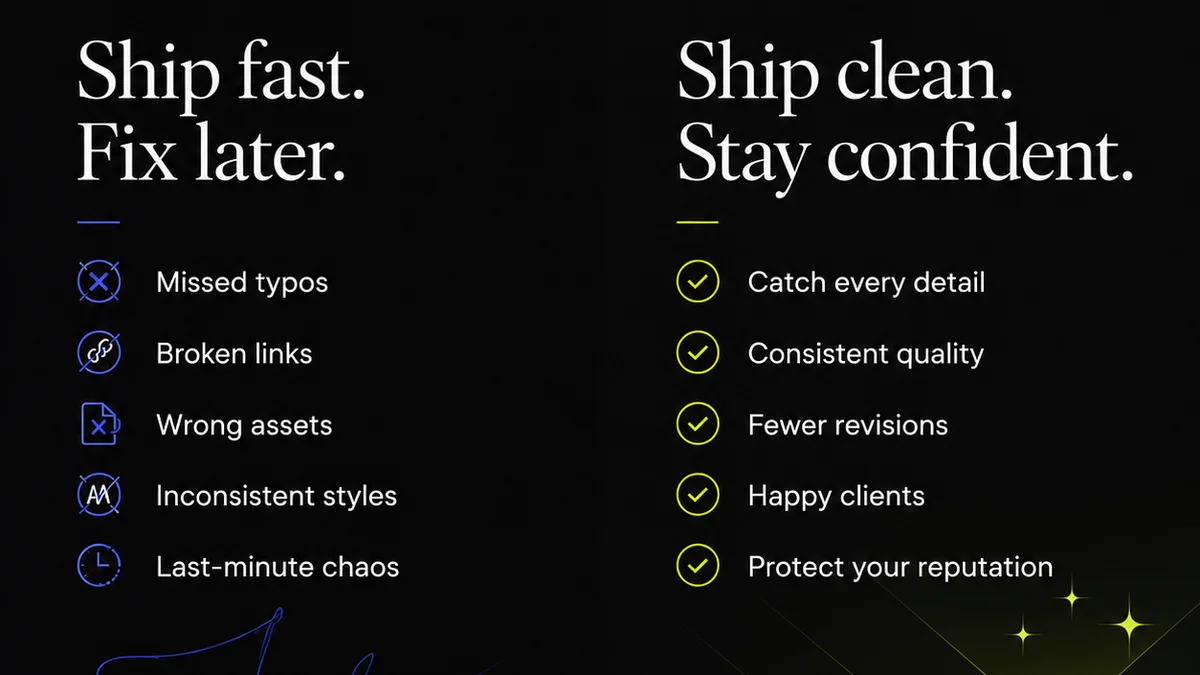
Everyone talks about brand consistency. It’s the holy grail of marketing. Get it right, and your brand sings. Get it wrong, and it’s a discordant mess. Clients nod. Creative directors nod. Marketing managers nod.
They all nod because they’ve heard it a million times. They nod because they know it’s true. But they’re nodding at the symptom, not the cause.
The assumption is that brand consistency is about having a style guide, a few approved logos, and maybe some pre-written copy blocks. That if everyone just sticks to the rules, the brand will magically present itself perfectly, every single time, across every single touchpoint.
None of that is wrong. But it’s incomplete.
The hard truth? Brand consistency isn't a deliverable. It’s an ongoing operational discipline. It’s not about the *what*; it’s about the *how*.
1. Beyond the Brand Guide: The Living Document
Your brand guide is essential. It's the blueprint. But a static PDF gathering digital dust is about as useful as a car manual for a car that’s already been crashed.
A truly effective brand guide is a living, breathing document. It’s accessible. It's up-to-date. And crucially, it’s integrated into your daily workflow, not just referenced during the initial kickoff.
The Problem with Static Guides
- They become outdated the moment they’re finalized.
- They’re often buried in shared drives, hard to find when needed most.
- They don't account for evolving brand needs or market shifts.
- They’re treated as a one-and-done deliverable, not an ongoing resource.
Think about it. A new campaign launches. A new social media platform emerges. A new product feature is announced. Does the brand guide reflect these changes immediately? Usually not.
This is where the breakdown starts. What looks consistent on Monday can look wildly out of sync by Friday if the guide hasn't kept pace.
2. The Feedback Loop: Consistency’s Unsung Hero
This is the part nobody wants to talk about. Because it’s messy. Because it involves people. And because it’s hard to standardize.
The feedback loop is where brand consistency lives or dies. Every piece of creative, every marketing message, every client interaction is a chance to reinforce or erode your brand.
If feedback is ad-hoc, subjective, or siloed, consistency crumbles. One stakeholder loves a bold new direction. Another hates it. Without a clear process to filter and synthesize these inputs, you end up with diluted, compromised creative that satisfies no one and represents the brand poorly.
Symptoms of a Broken Feedback Loop
- Inconsistent messaging across different channels.
- Visual elements that don’t align with established brand guidelines.
- Tone of voice that varies wildly from one piece of content to the next.
- Client confusion about what the *actual* approved brand direction is.
- Internal teams working off different versions of reality.
This isn't about having *bad* feedback. It’s about having an unmanaged one. A system that allows conflicting opinions to fly unchecked.
3. Revision Chaos: The Enemy of Cohesion
Revisions are inevitable. Creative work is iterative. But uncontrolled revisions are the death knell for brand consistency.
When revisions happen without clear tracking, without defined parameters, and without a central source of truth, you get chaos.
Suddenly, you have multiple versions of a logo floating around. Copy changes are made in one place but not another. Visual styles drift because there's no clear way to see what the *last* approved iteration looked like and why.
This isn't just about aesthetics. It’s about the integrity of the brand's message and identity.
The Revision Nightmare
- Endless back-and-forth emails with conflicting instructions.
- Loss of original creative intent due to piecemeal changes.
- Difficulty in identifying the final, approved version of any asset.
- Wasted time and resources chasing down inconsistencies.
- Team members second-guessing what’s actually been signed off.
Without a structured way to manage revisions, each iteration becomes an opportunity for the brand to drift further from its intended core.
4. Quality Control: The Final Gatekeeper
This is the last line of defense. And often, the most neglected.
A robust quality control process isn't just about catching typos. It’s about ensuring that every single output aligns with the established brand strategy, voice, and visual identity before it goes live.
This requires more than a quick glance. It requires a systematic check against defined brand standards.
What a QC Checklist Should Cover
- Visual Alignment: Does the logo placement, color palette, typography, and imagery adhere to brand guidelines?
- Tone of Voice: Is the language appropriate for the brand and the target audience? Does it match the established voice?
- Messaging Accuracy: Are all claims, product details, and calls-to-action correct and consistent with other communications?
- Legal & Compliance: Are there any potential legal issues or compliance concerns? (This often requires a specific legal review, but the creative team should flag potential areas).
- Technical Specs: Does the asset meet the technical requirements for the intended platform (e.g., file format, resolution, dimensions)?
Many teams skip this step, or treat it as an afterthought. They assume the designer or writer got it right. They assume the client’s feedback covered it. They’re wrong.
This is the point where a subtly off-brand color, a slightly too-casual tone, or a minor visual deviation can slip through and dilute the brand.
5. Where Revue Fits In
This is where the operational truth hits home. Brand consistency isn't a creative problem; it's a workflow problem.
You can have the most brilliant brand guide in the world, but if your process for feedback, revisions, and approvals is broken, your brand will be inconsistent.
Revue is built to solve this. It’s designed to bring order to the creative chaos.
- Centralized Feedback: All client and stakeholder feedback lives in one place, attached directly to the creative asset. No more hunting through endless email threads or Slack channels. Everyone sees the same comments, the same context.
- Revision Visibility: Track every version, every change, every approval. Understand the evolution of a piece of work and why certain decisions were made. This transparency is key to maintaining alignment.
- Streamlined Approvals: Formalize the approval process. Clearly define who needs to sign off on what, and when. Reduce ambiguity and ensure that only truly approved assets move forward.
- Built-in Quality Checks: While Revue doesn't replace a human QC review, its structured workflow ensures that all feedback and revisions are captured and addressed before final sign-off, minimizing the chance of inconsistencies slipping through.
By centralizing these critical touchpoints, Revue helps you operationalize brand consistency. It turns a nebulous concept into a tangible, manageable process.
Final Thought
Brand consistency isn't about rigid adherence to a set of rules. It's about intelligent, disciplined execution informed by clear communication and structured workflows.
It’s about building a system that allows your brand’s core identity to shine through, no matter who is working on it, no matter what the project is.
So, ask yourself: Is your brand consistency a matter of creative discipline, or is it a matter of operational integrity?
Frequently asked questions
What's the difference between a brand guide and brand consistency?
A brand guide is a document outlining brand rules. Brand consistency is the actual, ongoing practice of adhering to those rules across all touchpoints, which requires effective workflows for feedback, revisions, and approvals.
How can I ensure my brand guide stays up-to-date?
Treat your brand guide as a living document. Schedule regular reviews (quarterly or bi-annually) to incorporate new assets, campaigns, or strategic shifts. Make it easily accessible to everyone who needs it.
What are the biggest mistakes agencies make with brand consistency?
Treating consistency as a one-time deliverable, not managing the feedback loop effectively, allowing uncontrolled revisions, and skipping or rushing the final quality control step are common pitfalls.
Can technology really help with brand consistency?
Yes. Technology like Revue can centralize feedback, track revisions, and streamline approvals, turning an operational challenge into a manageable process. It enforces discipline through workflow.