Everyone talks about brand consistency. It’s the golden rule. Logos, colors, fonts – the usual suspects. None of that is wrong. But it’s incomplete.
The hard truth is that true brand consistency isn't about the assets themselves. It's about the messy human element: aligning every person, every process, and every piece of feedback across your entire marketing operation. That’s where most teams trip up.
1. The Myth of the Single Source of Truth
You’ve got brand guidelines. Maybe they're a PDF, a Figma library, or a dedicated microsite. You think that’s enough. It’s not.
A PDF doesn't manage feedback. A Figma library doesn't track revisions. A microsite doesn't tell you *why* a client pushed back on a specific shade of blue.
The Real Problem: Fragmented Communication
Brand assets live in a thousand places. Emails, Slack channels, random cloud folders, sticky notes on monitors. Everyone has *a* version, but rarely *the* version.
This leads to:
- Endless searching for the latest logo or approved copy.
- Inconsistent application of brand elements across different campaigns or channels.
- Wasted time correcting mistakes that should have been caught earlier.
- Frustration for designers, copywriters, and account managers.
- Clients seeing off-brand work and questioning your professionalism.
Your guidelines are only as good as the system that enforces them. And most systems are chaotic.
2. The Approval Black Hole
Getting client approval is critical for brand consistency. But how do you track it? How do you ensure the *right* person approved the *right* version?
Email chains are a nightmare. Slack messages get buried. Phone calls are undocumented. You’re left guessing who signed off on what.
The Cost of Unclear Approvals
This ambiguity breeds inconsistency. A junior designer might get conflicting verbal feedback from two different stakeholders. Without a clear audit trail, they’ll likely default to the loudest voice or the most recent instruction, often deviating from the established brand.
Consider the downstream effects:
- Marketing campaigns go live with unapproved copy or imagery.
- Website updates are deployed that don't match the current brand direction.
- Print collateral is produced with outdated logos.
- Legal reviews are missed, leading to compliance issues.
Every missed or unclear approval is a crack in your brand's armor.
3. Revision Chaos and Brand Drift
Revisions are inevitable. But how you manage them determines whether they strengthen or weaken your brand consistency.
Are you tracking every change? Do you know who requested it, why, and what the impact was on the original brief?
When Revisions Go Rogue
Without a structured revision process, brand elements start to drift. A small tweak here, a minor color adjustment there. Over time, these
Frequently asked questions
What are the biggest mistakes marketing teams make with brand consistency?
The biggest mistakes include relying solely on static brand guidelines, lacking a centralized system for feedback and approvals, and not having a clear process for managing revisions. This often leads to fragmented communication and brand drift.
How can I ensure all stakeholders understand and follow brand guidelines?
Implement regular training sessions, create easily accessible and dynamic brand resources, and establish clear communication channels for questions and clarifications. A system that centralizes feedback and approvals also helps ensure everyone is working from the same playbook.
What role does technology play in maintaining brand consistency?
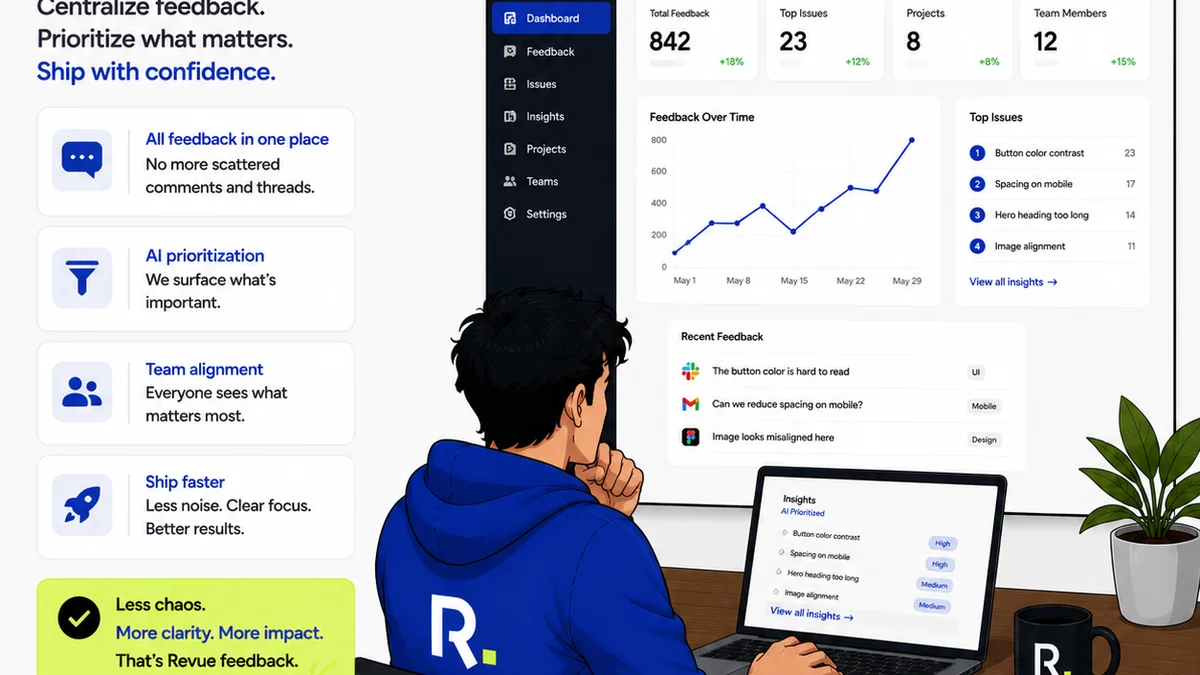
Technology plays a crucial role by centralizing assets, streamlining feedback and approval workflows, and providing an audit trail for all changes. Tools like Revue can help manage the entire creative process, ensuring consistency from brief to final delivery.
How do I measure the effectiveness of my brand consistency efforts?
Measure effectiveness through consistent brand perception in market research, reduced errors and rework in creative projects, positive client feedback regarding brand alignment, and the ease with which new team members or external partners can adopt brand standards.