Everyone agrees brand consistency is king. We’re told it builds trust, recognition, and loyalty. None of that is wrong. But it’s incomplete.
The real truth? Brand consistency isn't a final QA step. It’s an ongoing operational discipline. And most agencies and creative teams treat it like an afterthought, a quick visual sweep before delivery. That’s a recipe for disaster.
1. The Illusion of the Final Check
You’ve probably seen it. A designer finishes a batch of social media assets. The copywriter polishes ad copy. The account manager gives it a once-over. Then, someone (maybe the CD, maybe a dedicated QA person) opens a checklist. “Is the logo correct? Are the colors right? Is the font family consistent?”
This approach assumes consistency is a surface-level attribute. Something you can spot and fix in the last five minutes. It’s like checking if a car’s paint job is flawless before realizing the engine is sputtering.
The hard truth is that true brand consistency is baked into the entire creative process. It's not about catching errors; it's about preventing them. It requires a system, not just a sweep.
The Symptoms of a Weak QA Process
- Inconsistent logo usage across different platforms.
- Variations in brand colors, often subtle but noticeable.
- Typography that drifts from established guidelines.
- Tone of voice that shifts depending on who wrote it.
- Imagery styles that don't align with the brand’s visual identity.
- A general feeling that the brand is… fuzzy.
These aren’t just minor annoyances. They erode trust and dilute your brand’s impact.
2. Defining Your Brand’s DNA
Before you can ensure consistency, you need to know what you’re being consistent *with*. This means having a clear, accessible, and actionable brand guide.
This isn't just a PDF filled with pretty pictures. It’s the operating manual for your brand’s identity.
What Goes In a Real Brand Guide
- Logos: Primary, secondary, variations, clear space, minimum size, and incorrect usage.
- Color Palettes: Primary, secondary, accent colors, with HEX, RGB, CMYK, and Pantone values. Define usage rules (e.g., primary colors for headlines, secondary for body copy backgrounds).
- Typography: Font families, weights, sizes, line heights for different applications (headings, body text, captions, UI elements). Specify fallback fonts.
- Imagery Style: Photography guidelines (mood, subject matter, lighting, composition), illustration style, iconography.
- Tone of Voice: Brand personality, key messaging pillars, do’s and don’ts for language and tone.
- Layout Grids & Spacing: Rules for common layouts and consistent padding/margins.
Think of this as the source of truth. Everyone on the team—designers, copywriters, strategists, account managers—should know where to find it and how to use it.
3. Embedding Consistency into Workflow
This is where most teams stumble. They create the brand guide, then expect magic. But consistency isn't an outcome; it's a practice.
Design Systems & Component Libraries
For digital products, a robust design system is non-negotiable. Tools like Figma allow teams to build reusable components that inherently adhere to brand guidelines. When a button component is updated, that update propagates everywhere.
This drastically reduces the chance of visual drift. It’s consistency by default.
Content Style Guides
Similarly, for written content, a detailed style guide is crucial. It goes beyond basic grammar and spelling to dictate tone, voice, preferred terminology, and formatting rules. This ensures that whether a blog post, an email, or a social media update is being written, it sounds like it comes from the same brand.
Templated Workflows
Use templates for recurring assets—social posts, email newsletters, presentations. These templates should be pre-set with correct fonts, colors, and layouts. This provides guardrails for your team.
4. The Human Element: Training and Accountability
Technology and documentation only go so far. You need people who understand and champion brand consistency.
Onboarding and Training
Every new team member, regardless of role, must be thoroughly trained on the brand guidelines. This isn't a one-time lecture; it's an ongoing reinforcement.
Clear Roles and Responsibilities
Who is ultimately responsible for brand consistency? Is it the Creative Director? A dedicated QA specialist? The Project Manager? Define this clearly. Without clear ownership, consistency falls through the cracks.
Feedback Loops
Implement structured feedback loops at various stages of the project. This allows for early detection of inconsistencies, rather than waiting for the final review.
Empowerment, Not Just Enforcement
Train your team not just to follow rules, but to understand *why* the rules exist. When team members understand the strategic importance of consistency, they become proactive guardians of the brand.
5. Where Revue Fits In
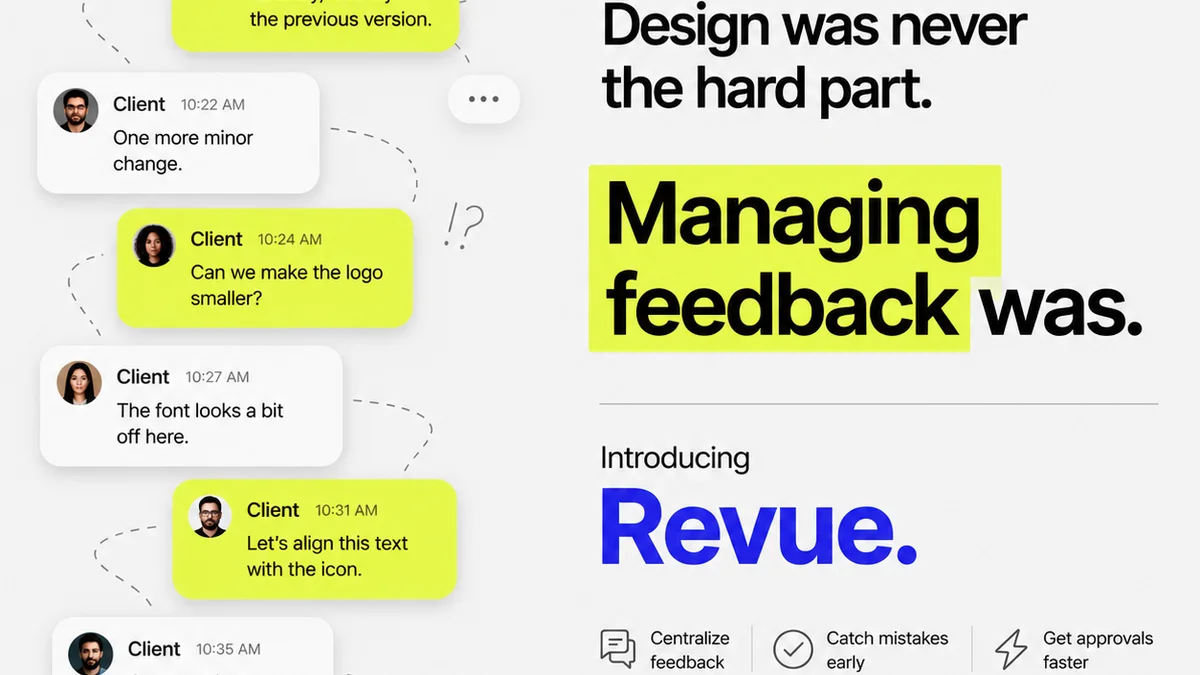
Managing the creative process, especially client feedback and revisions, can introduce inconsistencies. This is where a tool like Revue can be a game-changer.
Revue helps centralize all feedback and revisions for creative projects. Instead of scattered email threads or Slack messages, all comments are tied directly to the specific asset and version.
Visibility into Revisions
When you can clearly see the history of feedback and revisions, it’s easier to spot when a change might be deviating from the established brand guidelines. You can trace back the rationale for certain design choices or copy directions.
Centralized Feedback
Consolidating feedback in one place reduces misinterpretation and ensures that all stakeholders are working from the same, approved direction. This minimizes the chance of someone implementing a change based on outdated or misunderstood feedback, which can lead to inconsistencies.
Streamlined Approvals
Clear approval workflows mean that brand-aligned versions are signed off on before moving to the next stage. This acts as a built-in quality check for brand consistency.
Revue doesn't *do* your brand QA for you, but it creates the environment where consistent work is easier to produce and maintain.
6. The Myth of
Frequently asked questions
What is brand consistency QA?
Brand consistency QA is the process of ensuring that all creative outputs align with a brand's established identity, including visual elements, tone of voice, and messaging, across all touchpoints. It's about maintaining a unified brand experience.
Why is brand consistency important for agencies?
For agencies, brand consistency builds client trust and demonstrates professionalism. It ensures that the work delivered accurately reflects the client's brand strategy, leading to more effective marketing and stronger client relationships.
How can I ensure brand consistency in a remote team?
Remote teams can ensure brand consistency through clear, accessible digital brand guidelines, centralized feedback tools like Revue, regular training sessions, and defined roles for brand stewardship. Utilizing design systems and templates is also key.
What are the biggest challenges in maintaining brand consistency?
Common challenges include unclear or outdated brand guidelines, lack of team training, decentralized feedback processes, rapid project turnarounds, and the sheer volume of creative assets produced. Overcoming these requires a systematic approach.
How does a design system help with brand consistency?
A design system provides a library of reusable UI components and guidelines that are pre-approved and adhere to brand standards. By using these components, designers and developers inherently maintain visual and functional consistency, reducing errors and speeding up development.