Everyone talks about brand consistency. It’s the holy grail of creative work. Logos must be right. Colors must be exact. Typography must be on point. None of that is wrong. But it’s incomplete.
The deeper truth? Brand consistency isn't just about *what* you produce. It's about *how* you produce it. It’s an operational muscle, not just a final polish.
True brand consistency is a byproduct of a well-oiled creative workflow. It’s the result of clear processes, centralized communication, and rigorous quality assurance. Without that foundation, even the most vigilant designer can miss a beat.
1. The Assumption: Brand Guidelines Are Enough
This is where most agencies and teams get it wrong. They develop beautiful brand guidelines, full of do's and don'ts. They hand them over, assuming the work is done. The guidelines become a reference, not a rulebook enforced by process.
The reality is, brand guidelines are only as effective as the system that upholds them. A PDF document sitting on a shared drive doesn't prevent errors. It just lists them.
The Problem: Disconnected Feedback Loops
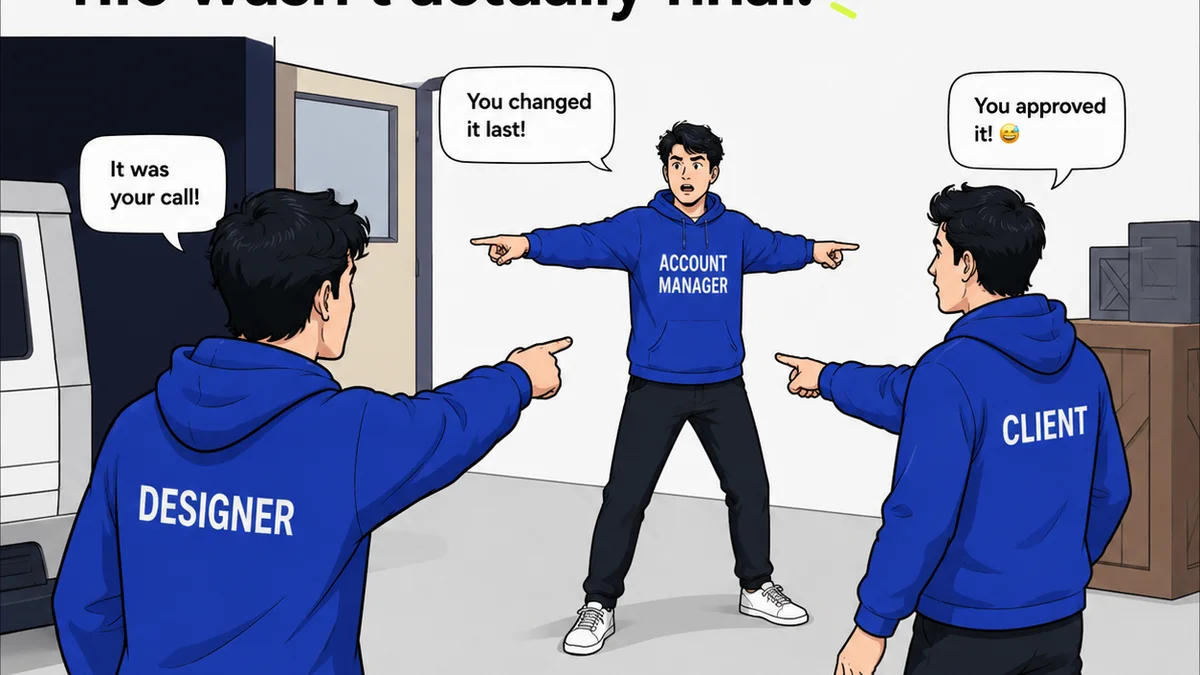
Think about a typical project. Multiple stakeholders provide feedback. Designers iterate. Approvals come in. Somewhere in that chain, a detail can slip through. Was that the right shade of blue? Did anyone check the kerning on that headline?
Without a centralized system, tracking these nuances becomes a manual, error-prone task. Each touchpoint is an opportunity for deviation.
- Client A mentions a slight color tweak in an email.
- Client B approves a layout via Slack.
- Your internal reviewer catches a typo on a PDF proof.
These aren't isolated incidents. They're symptoms of a fragmented process. And fragmentation is the enemy of consistency.
2. The Hard Truth: Consistency is an Operational Metric
Brand consistency should be treated like any other key performance indicator. It’s something you actively measure and manage through your operations. It’s not a happy accident.
This means building QA checks directly into your workflow. It means having a single source of truth for feedback and approvals. It means making consistency a non-negotiable part of your delivery process.
The Operational Shift
Moving from an assumption-based approach to an operational one requires a mindset shift. It’s about understanding that:
- Process dictates output. A messy process will always yield inconsistent results, no matter how talented the people.
- Visibility is crucial. Everyone involved needs to see the same feedback, the same version history, the same approval status.
- Accountability is key. When feedback is centralized, it’s clear who said what and when.
This isn’t about micromanaging. It’s about creating an environment where high-quality, consistent work is the standard, not the exception.
3. Building a Brand Consistency QA Framework
So, how do you operationalize brand consistency? It starts with a structured QA process. This isn't just a final check; it's integrated at multiple stages.
Stage 1: Briefing & Strategy
Consistency starts at the very beginning. Did the brief clearly articulate brand requirements? Was the strategy aligned with existing brand guidelines?
- Checklist Item: Brand requirements clearly documented in the project brief.
- Checklist Item: Key brand assets (logos, fonts, color palettes) linked or accessible.
- Checklist Item: Stakeholder alignment on brand voice and tone confirmed.
Stage 2: Creative Development
As assets are created, regular internal reviews are essential. These aren't about subjective aesthetic preferences; they're about adherence to the brief and brand standards.
- Checklist Item: Visual elements (logos, colors, typography) match brand guidelines.
- Checklist Item: Tone of voice and messaging align with brand personality.
- Checklist Item: File naming conventions and organization are consistent.
Stage 3: Feedback & Revisions
This is often the weakest link. Feedback needs to be consolidated, clear, and actionable. Revisions must be tracked against the original brief and approved brand standards.
- Checklist Item: All feedback consolidated in one place.
- Checklist Item: Revisions clearly linked to specific feedback points.
- Checklist Item: Final review confirms all requested revisions adhere to brand guidelines.
Stage 4: Final Approval & Delivery
The final check ensures everything is locked down. This is the last line of defense before the work goes live.
- Checklist Item: Final asset check against approved brand guidelines.
- Checklist Item: All required file formats and specifications met.
- Checklist Item: Version control confirmed – only the approved final version is delivered.
This framework turns brand consistency from an abstract concept into a series of concrete, actionable steps.
4. Where Revue Fits In
Managing this level of operational consistency across multiple projects and clients can feel overwhelming. That’s where a tool built for creative workflows comes in.
Revue provides a central hub for client feedback, revision tracking, and quality assurance. Instead of chasing emails and Slack messages, you have a clear, auditable trail.
- Centralized Feedback: All comments and markups live directly on the creative asset. No more digging through inboxes.
- Version Control: Easily track revisions and see exactly what changed between versions. This makes it simple to ensure brand elements haven't been inadvertently altered.
- Approval Workflow: Clearly defined approval stages ensure assets are reviewed against brand standards before they move forward.
When feedback is organized and accessible, your team can focus on execution, not administration. This directly impacts your ability to deliver consistently on brand, project after project.
5. The Cost of Inconsistency
Let’s be blunt. Inconsistent branding erodes trust. It makes a company look unprofessional, disorganized, and unreliable. For an agency, this is catastrophic.
Beyond the client's perception, think about the internal cost:
- Wasted time correcting errors.
- Frustrated team members.
- Damaged client relationships.
- Missed deadlines.
- Increased project costs.
These aren't small issues. They add up, impacting your bottom line and your agency’s reputation.
The Domino Effect
One missed detail can trigger a cascade of problems. A slightly off-brand color might lead to a campaign that doesn't resonate. A misaligned tone of voice could confuse the target audience. These aren't just aesthetic issues; they are business issues.
Your agency’s value proposition is built on delivering polished, effective creative work. Inconsistency undermines that value. It signals that you can’t be trusted with the client’s most important asset: their brand.
6. Final Thought
Brand consistency is often framed as a creative challenge. It’s not. It’s an operational one.
Are you building processes that ensure consistency, or are you relying on luck and last-minute checks? The answer reveals more about your agency’s operational maturity than any brand guideline ever could.
Frequently asked questions
What's the difference between brand guidelines and brand consistency?
Brand guidelines are a document outlining rules for brand representation. Brand consistency is the actual, ongoing practice of adhering to those rules across all communications and touchpoints. Guidelines are the map; consistency is the journey.
How can I ensure brand consistency with remote teams or multiple clients?
Centralize feedback and project communication in a dedicated platform. Use clear, standardized processes for reviews and approvals. Regular check-ins focused on brand adherence are also vital.
Is brand consistency only about visual elements like logos and colors?
No. While visuals are crucial, brand consistency also encompasses tone of voice, messaging, customer service interactions, and the overall user experience. It's the holistic perception of the brand.
What are the biggest operational pitfalls that lead to brand inconsistency?
Fragmented feedback channels (email, chat, calls), lack of clear version control, insufficient internal review processes, and treating brand guidelines as a static document rather than an active operational standard.