Everyone talks about brand governance. They point to the logo, the color palette, the typography. They talk about style guides and brand books.
None of that is wrong. But it’s incomplete.
The real challenge isn't documenting brand rules. It's enforcing them, consistently, across every single deliverable, for every client, on every project.
That’s the hard truth.
Brand governance isn't a creative department problem. It's an operational one. And leading agencies don't just *have* good brands; they have robust systems for *maintaining* them.
1. The Myth of Passive Brand Adherence
The common assumption is that if you give creatives a clear brand guide, they’ll follow it. End of story.
This is where most agencies get it wrong.
Creatives are brilliant. They're also busy. Deadlines loom. Client demands shift. The path of least resistance often leads away from the brand guide, especially if accessing and applying it is cumbersome.
Passive adherence — hoping people will just do the right thing — is a recipe for brand drift.
The Reality: Active Enforcement is Key
Leading agencies build systems that make brand adherence the *easiest* path, not the hardest.
This means:
- Integrating brand assets and guidelines directly into the workflow.
- Automating checks where possible.
- Establishing clear review processes that flag deviations early.
- Training not just designers, but account managers and project managers on brand standards.
It’s about creating an environment where the brand is always top of mind, not as a set of restrictions, but as a critical asset.
2. Operationalizing Brand Assets
Your brand guidelines are just documents. Your brand assets are files.
How are these assets managed? Where are they stored? Who has access? How are they updated?
If the answer is a shared drive, a Dropbox folder, or someone’s personal cloud storage, you have an operational gap.
The Single Source of Truth
Leading agencies treat their brand assets like any other critical project resource.
This involves:
- A centralized, organized digital asset management (DAM) system.
- Clear version control for logos, templates, and imagery.
- Permissions and access controls to ensure the right people use the right assets.
- Easy searchability so designers can find what they need, fast.
When everyone is pulling from the same, up-to-date library, consistency becomes almost automatic.
3. The Review and Approval Bottleneck
This is where brand governance often breaks down in practice.
A designer finishes a piece. It gets sent for review. Feedback comes in, often via email or Slack. Revisions are made. Another round of feedback. Somewhere in this chain, the brand guide gets forgotten.
This informal, fragmented process is a breeding ground for inconsistencies.
Structured Feedback Loops
Agencies that excel at brand governance implement structured review and approval workflows.
This means:
- Dedicated platforms for feedback, not scattered email threads.
- Clear roles and responsibilities for who reviews what.
- Standardized feedback formats that ensure all necessary information is captured.
- Automated notifications to keep the process moving and prevent delays.
When feedback is centralized and actionable, it’s far easier to ensure it aligns with brand standards.
4. Quality Control: The Last Line of Defense
Even with the best systems, mistakes happen.
A wrong shade of blue. A slightly skewed logo. A typo in the brand tagline.
These might seem like small errors, but they erode brand credibility.
Building in Checks and Balances
Leading agencies build quality control checkpoints into their processes.
This isn't about micromanaging; it's about having safety nets.
- Checklists for common brand compliance points.
- Peer reviews focused specifically on brand adherence.
- Automated pre-flight checks for digital assets.
- A final sign-off by someone with a deep understanding of the brand.
These steps ensure that even if something slips through the cracks earlier, it’s caught before it reaches the client.
5. Training and Culture: The Human Element
Technology and process are crucial, but they're only part of the equation.
Brand governance is also about culture.
Embedding Brand Stewardship
How do you make brand governance a shared responsibility?
- Regular training sessions that go beyond the basics.
- Onboarding processes that emphasize brand importance for all roles.
- Recognizing and rewarding adherence to brand standards.
- Leadership that consistently champions brand consistency.
When every team member understands their role in protecting the brand, governance becomes less of a rulebook and more of a shared value.
Where Revue Fits In
Maintaining brand governance across multiple clients and projects is a constant operational challenge. It requires visibility, control, and accountability.
Revue is built to address these very needs.
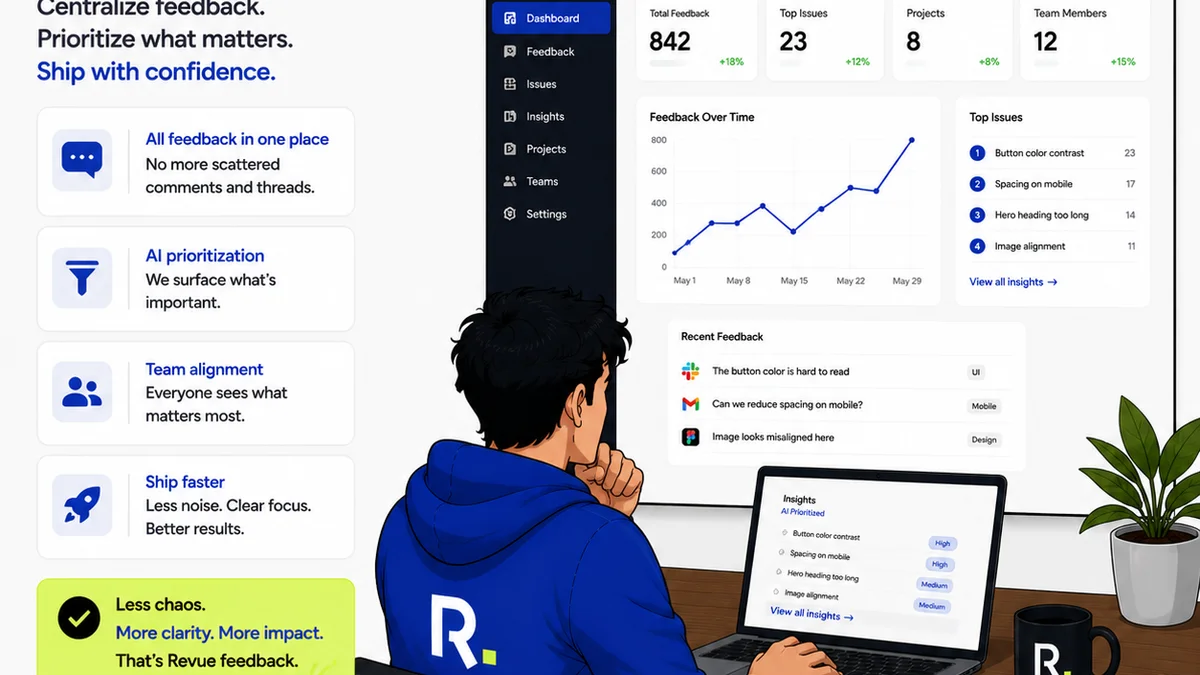
By centralizing client feedback and revision tracking within Revue, you gain a clear, chronological record of every change and approval. This eliminates the ambiguity of scattered email chains and ensures that decisions are documented and traceable.
When feedback is consolidated and comments are directly linked to specific creative elements, it’s far easier for your team to ensure revisions align with established brand guidelines. You can quickly see if a change deviates from the approved palette or typography, and address it proactively.
Furthermore, Revue’s structured approval workflows help establish clear checkpoints. This means you can bake in specific stages where brand compliance can be verified before a deliverable moves forward.
Ultimately, Revue helps operationalize brand governance by bringing clarity and control to the feedback and approval process, making it easier for your team to deliver consistent, on-brand work, every time.
Final Thought
Brand governance isn't just about looking good. It's about being reliable.
It's about building trust with clients by demonstrating that you understand and respect their most valuable asset.
How are you actively operationalizing brand governance today, rather than just documenting it?
Frequently asked questions
What's the difference between brand guidelines and brand governance?
Brand guidelines are the documents that define your brand's visual and verbal identity. Brand governance is the ongoing process, systems, and operational procedures put in place to ensure those guidelines are consistently applied across all outputs and communications.
How can I make brand governance easier for my team?
Centralize assets and guidelines in an accessible system, implement structured feedback and approval workflows, provide regular training, and foster a culture where brand stewardship is a shared responsibility.
Is brand governance only for large agencies?
No. While large agencies might have dedicated brand managers, the principles of operationalizing brand governance are crucial for agencies of all sizes to maintain consistency, build client trust, and protect brand equity.
How does technology help with brand governance?
Technology, like Digital Asset Management (DAM) systems and specialized feedback/approval platforms, automates processes, centralizes resources, improves version control, and streamlines communication, making consistent brand application more achievable.