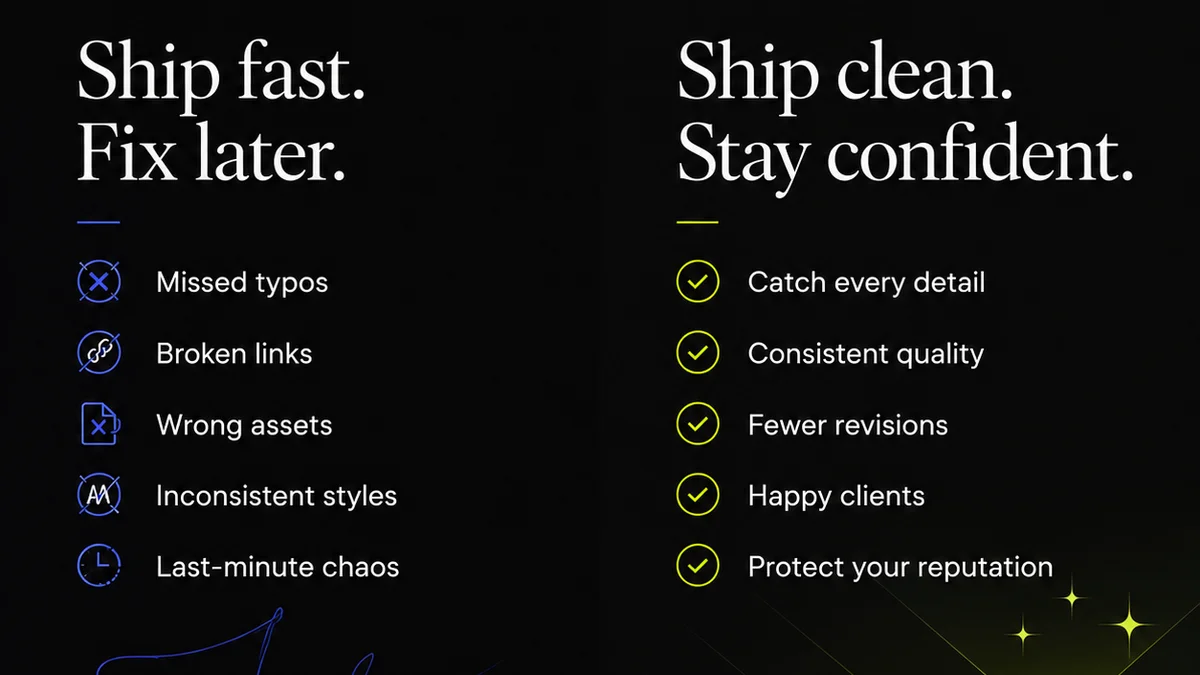
Everyone talks about brand guidelines. You know the drill: logos, color palettes, typography. They’re essential. But they’re not the whole story.
Many teams treat brand governance like a dusty PDF on a shared drive. A nice-to-have, not a must-have. That’s a mistake.
The hard truth? Effective brand governance is an active, ongoing process. It’s the operational bedrock that prevents brand drift and ensures every piece of creative work hits the mark, every single time. It’s about control, yes, but more importantly, it’s about clarity and consistency at scale.
1. Strategy First, Aesthetics Second
Before you even think about fonts, you need to define what your brand stands for. This isn’t just marketing fluff; it’s the operational blueprint.
1.1 Define Your Core Purpose and Values
What’s the fundamental reason your brand exists beyond making money? What principles guide your decisions and actions?
This clarity dictates everything. Without it, your visual identity is just decoration.
1.2 Identify Your Target Audience(s)
Who are you trying to reach? What are their needs, desires, and pain points? How do they perceive the world?
Your brand needs to resonate. That requires deep audience understanding, not just assumptions.
1.3 Articulate Your Unique Value Proposition (UVP)
What makes you different and better than the competition? What specific problem do you solve uniquely well?
Your UVP is the core message your brand must consistently communicate.
1.4 Establish Brand Personality and Tone of Voice
If your brand were a person, who would it be? What adjectives describe it? How does it speak?
- Are you playful or serious?
- Authoritative or approachable?
- Innovative or traditional?
This informs copy, visuals, and even customer service interactions.
2. The Visual Identity System: Beyond the Basics
This is where most people stop. But a strong visual system goes deeper than just the logo.
2.1 Logo Usage Guidelines
Clear rules on clear space, minimum size, color variations, and what *not* to do. No stretching. No recoloring. No placing on busy backgrounds without a container.
2.2 Color Palette
Primary, secondary, and accent colors. Define their usage context. Specify HEX, RGB, CMYK, and Pantone values.
Consistency here is non-negotiable.
2.3 Typography
Primary and secondary typefaces. Define weights, sizes, and usage for headlines, body copy, captions, etc. Specify web font licenses.
2.4 Imagery and Iconography
Style guides for photography, illustration, and iconography. What kind of imagery aligns with the brand? What’s the desired mood? What’s the illustration style?
- Authentic vs. staged photos.
- Abstract vs. literal illustrations.
- Consistent icon style.
2.5 Layout and Composition
Basic principles for creating balanced and on-brand layouts. Grid systems, spacing rules, and hierarchy guidance.
3. Operationalizing Brand Governance
A beautiful brand guide is useless if it’s not used. This is where the real work happens.
3.1 Centralized Asset Management
Where do people find the latest logo files? The approved color codes? The correct templates?
A single source of truth is critical. Think DAM systems or well-organized cloud storage.
3.2 Clear Roles and Responsibilities
Who owns the brand guidelines? Who approves deviations? Who trains new hires?
Define ownership and accountability. This prevents confusion and ensures adherence.
3.3 Training and Onboarding
How do new team members learn the brand standards? How are existing teams kept up-to-date?
Regular training sessions and accessible documentation are key.
3.4 Feedback and Approval Workflows
How is creative work reviewed against brand standards *before* it goes live?
Establish a clear process for feedback, revisions, and final approvals. This is where mistakes are caught.
3.5 Deviation Management Process
What happens when someone needs to break the rules? How is that request handled?
Have a defined process for evaluating and approving exceptions. This prevents ad-hoc rule-breaking.
3.6 Regular Audits and Updates
Brands evolve. Your guidelines need to reflect that. Schedule periodic reviews of your brand strategy and visual identity.
Are the guidelines still relevant? Are they still being followed? Are they still effective?
4. Where Revue Fits In
Managing creative feedback and approvals can quickly devolve into chaos without the right tools. This is precisely where brand governance efforts can falter.
Revue helps bridge that gap by providing a centralized platform for managing the entire creative review and approval process.
- Centralized Feedback: All comments, annotations, and discussions happen in one place, linked directly to the creative asset. No more hunting through emails or Slack messages for feedback.
- Revision Visibility: Track every version and revision history. See exactly what changed and who approved it, ensuring that feedback is incorporated correctly and brand standards are maintained throughout the iteration process.
- Streamlined Approvals: Define clear approval workflows and get explicit sign-offs. This minimizes ambiguity and ensures that only on-brand, finalized work moves forward.
- Quality Assurance: By having a clear record of feedback and approvals, you can easily perform quality checks against the original brief and brand requirements before final delivery.
Revue doesn't create your brand guidelines, but it makes enforcing them practical and efficient within your day-to-day creative operations.
5. Final Thought
Brand governance isn't a one-time project; it's a continuous discipline. It’s the difference between a brand that’s remembered and one that’s merely seen.
Are you building a brand, or just a collection of assets?
Frequently asked questions
What is the difference between brand guidelines and brand governance?
Brand guidelines are the documents detailing visual and verbal identity rules. Brand governance is the active system and process of ensuring those guidelines are consistently applied and enforced across all brand touchpoints and creative outputs.
How often should brand guidelines be updated?
Brand guidelines should be reviewed at least annually, or whenever there's a significant shift in brand strategy, market position, or target audience. Updates should be communicated clearly to all stakeholders.
Who is responsible for brand governance?
Responsibility for brand governance typically lies with a dedicated brand manager, marketing lead, or creative director. However, adherence is a shared responsibility across all teams creating or disseminating brand communications.
Can a small agency implement brand governance?
Absolutely. Even small agencies benefit from clear processes. Start with core visual elements and a simple feedback loop. As you grow, you can build out more complex governance structures.