Most people think brand governance is just a fancy name for a style guide. You know, the PDF that dictates font sizes, logo usage, and color palettes.
And that’s not wrong. It’s just… incomplete.
The real truth? Brand governance is the operational framework that keeps your brand from becoming a chaotic mess. It’s about how you actually *do* brand, day in and day out. It’s the engine that drives consistency, quality, and ultimately, brand equity.
1. What Brand Governance Really Is (Hint: It’s Not Just a Book)
Think of brand governance as the operating system for your brand. A style guide is just one app on that OS. Governance is the entire system: the rules, the processes, the people, and the technology that ensure your brand is executed consistently and effectively across all channels and touchpoints.
It’s about establishing clear standards and, more importantly, implementing reliable mechanisms to uphold them. Without it, even the best-designed brands can devolve into inconsistent, off-brand noise.
The Core Pillars of Governance
- Standards: The defined rules and guidelines (e.g., brand guidelines, messaging frameworks).
- Processes: The workflows for creating, reviewing, approving, and deploying brand assets.
- People: The roles, responsibilities, and training involved in brand execution.
- Technology: The tools and platforms that support governance (DAMs, project management, etc.).
This isn’t just for huge corporations. Agencies and in-house teams of any size need a robust system to manage their brand, whether it’s their own or their clients’.
2. The Operational Chaos of Poor Brand Governance
What happens when governance is weak? You see it everywhere.
It starts subtly. A slightly off-color logo here. A new tagline that contradicts the established voice there. A social media post that feels totally out of character.
Then it snowballs.
Symptoms of a Governance Breakdown
- Inconsistent Visuals: Different versions of logos, incorrect colors, varied typography across different materials.
- Off-Brand Messaging: Tone of voice shifts wildly depending on who’s writing. Key messages get muddled or lost.
- Fragmented Client Experience: Different departments or team members provide conflicting information or brand interpretations.
- Wasted Time & Resources: Constant back-and-forth on revisions because the initial brief or execution was unclear or off-brand.
- Eroded Trust: Clients and customers notice the inconsistencies, leading to a perception of unprofessionalism or unreliability.
- Brand Dilution: The core essence of the brand gets watered down, losing its distinctiveness and impact.
This isn't just an aesthetic problem. It's a business problem.
It costs you time. It costs you money. And it costs you credibility.
3. Building Your Brand Governance Framework
So, how do you build a system that actually works? It’s about moving from reactive fixes to proactive structure.
Step 1: Define Your Brand Foundation
Before you can govern anything, you need to know what you’re governing. This means crystal-clear definitions of:
- Brand Purpose & Values: The why behind the brand.
- Brand Promise: What you consistently deliver.
- Target Audience: Who you’re talking to.
- Brand Personality & Tone of Voice: How you sound.
- Visual Identity System: Logo, color, typography, imagery.
This is the bedrock. If this isn’t solid, your governance efforts will be built on sand.
Step 2: Document Your Standards (The Style Guide & Beyond)
This is where the traditional style guide comes in, but it needs to be more comprehensive.
- Visual Guidelines: Logo usage (clear space, minimum size, incorrect uses), color palettes (primary, secondary, digital vs. print), typography (fonts, hierarchy, web vs. print).
- Messaging Guidelines: Brand voice and tone, key messaging pillars, industry jargon (what to use, what to avoid), boilerplate copy.
- Content Strategy: How content aligns with brand goals and audience needs.
- Channel-Specific Guidance: How the brand manifests on social media, email, website, etc.
But documentation alone isn’t enough. It needs to be accessible and understood.
Step 3: Establish Clear Processes and Workflows
This is the operational heart of governance. How does work get done, and how is the brand protected at each stage?
- Briefing: How are projects initiated? What information is captured to ensure brand alignment from the start?
- Creation: Who creates assets? What tools are they using? How are they referencing guidelines?
- Review & Approval: This is critical. Who reviews for brand compliance? What’s the feedback loop? How are approvals tracked?
- Deployment: How are final assets distributed and used? How is ongoing usage monitored?
Think about the handoffs. Every transition is a potential point of failure.
Step 4: Assign Roles and Responsibilities
Who owns the brand? Who enforces the rules? Clarity here prevents confusion and accountability gaps.
- Brand Guardians: Individuals or a team responsible for overseeing brand consistency.
- Content Creators: Designers, copywriters, social media managers who execute brand elements.
- Approvers: Stakeholders who give final sign-off on brand-facing materials.
- All Employees: Everyone has a role in representing the brand. Training is key.
Ambiguity kills accountability. Make it clear who does what.
Step 5: Implement Supporting Technology
Manual processes break down quickly. Technology is your force multiplier.
- Digital Asset Management (DAM): Central repository for approved brand assets.
- Project Management Tools: To manage workflows, track progress, and assign tasks.
- Collaboration Platforms: For communication and feedback.
- Brand Compliance Software: Tools that can automatically check assets against guidelines (more advanced).
The right tools streamline everything. They make compliance easier.
4. Where Revue Fits In
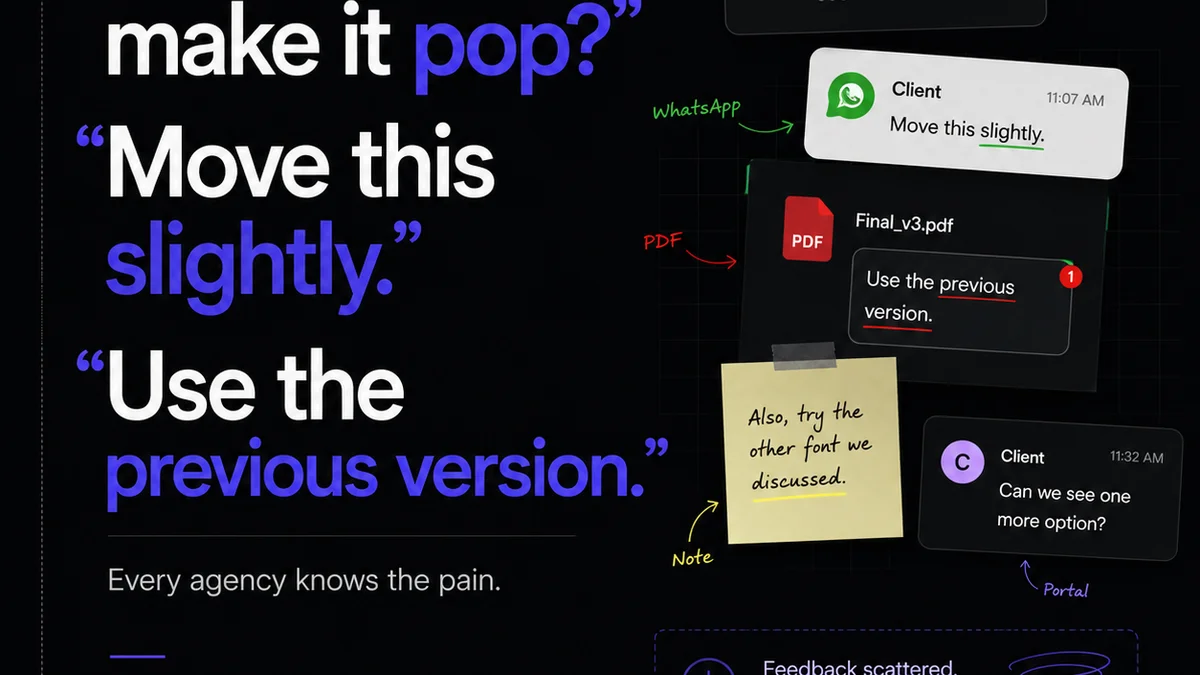
Managing brand governance, especially for agencies juggling multiple clients, can feel like herding cats. You’ve got briefs, feedback, revisions, approvals, and final delivery happening across different platforms and communication channels.
This is where a centralized system like Revue becomes invaluable.
Think about the review and approval process. Instead of digging through emails or Slack threads for feedback, Revue provides a single source of truth. Stakeholders can leave contextual comments directly on the creative assets.
This clarity eliminates ambiguity. You can see exactly what feedback pertains to which version of a design, and crucially, whether that feedback aligns with the core brand strategy.
Revision tracking is built-in. You can easily see the evolution of an asset, ensuring that changes are made according to spec and that no brand elements are inadvertently altered or removed during the back-and-forth.
For agencies, this means:
- Faster Approvals: Clear, consolidated feedback reduces back-and-forth.
- Reduced Errors: Contextual comments minimize misinterpretations.
- Improved Client Communication: A transparent, organized process builds client confidence.
- Better Quality Control: Ensuring every final asset meets brand standards before delivery.
Revue helps operationalize your brand governance by bringing visibility and control to the creative review and approval lifecycle.
5. The Future of Brand Governance: Agility and Intelligence
The landscape is always shifting. New channels emerge, consumer expectations evolve, and brands need to adapt without losing their core identity.
The most effective brand governance isn’t rigid; it’s agile. It provides guardrails, not handcuffs.
It empowers teams to be creative and responsive, while ensuring that everything still feels distinctly like *your* brand.
The future also involves more intelligent tools that can help automate checks, provide insights into brand performance, and even suggest optimal brand applications.
But the foundation remains the same: a clear understanding of your brand, robust processes, and the right support systems to make it all happen consistently.
Final Thought
Is your brand governance a rigid rulebook, or a dynamic system that enables your team to deliver consistently brilliant work? The answer reveals a lot about your operational maturity.
Frequently asked questions
What's the difference between brand guidelines and brand governance?
Brand guidelines are a document outlining brand standards (visuals, voice, etc.). Brand governance is the entire operational system – the processes, people, and technology – that ensures those guidelines are consistently applied and the brand is managed effectively across all touchpoints.
How can agencies manage brand governance for multiple clients?
Agencies can manage multi-client brand governance by establishing clear internal processes for each client's brand, using centralized tools like Revue for feedback and approvals, and ensuring dedicated team members understand and enforce each client's specific brand standards.
Is brand governance only for large companies?
No, brand governance is crucial for businesses and agencies of all sizes. Smaller teams benefit from clear processes to maintain consistency as they grow, preventing costly mistakes and brand dilution down the line.
What are the key components of a brand governance framework?
A robust framework includes clearly defined brand standards (visuals, messaging), established processes for creation and approval, assigned roles and responsibilities, and supporting technology (like DAMs or project management tools) to streamline execution and ensure compliance.