Everyone thinks they know what a brand quality assurance (QA) checklist is for. It’s about making sure the logo is the right color. That the typography is consistent. That the messaging aligns with the brand guidelines. None of that is wrong. But it’s incomplete. It’s a surface-level view of a much deeper operational challenge.
The hard truth? A brand QA checklist is less about *what* you check and more about *how* you ensure the checks actually happen, are done correctly, and lead to actionable improvements. It’s about process, not just pixels.
1. The Illusion of Consistency
Agencies and in-house teams often assume brand consistency is a given. They believe that once guidelines are set, everyone will follow them. This is a dangerous assumption.
Why? Because the reality of creative production is messy. Deadlines loom. Communication breaks down. People make mistakes. Even the most talented designers can have an off day or miss a subtle detail.
The Root Causes of Inconsistency
- Lack of clear ownership for brand assets.
- Insufficient training on brand guidelines.
- Tools that don't enforce brand rules automatically.
- Fragmented feedback loops leading to misinterpretations.
- Pressure to deliver quickly, bypassing thorough checks.
A robust brand QA checklist needs to account for these human and systemic factors, not just the visual output.
2. Beyond Visuals: The Functional Brand Audit
Most brand QA focuses on the aesthetic. Is the blue the right hex code? Is the typeface 10pt? This is necessary, but insufficient.
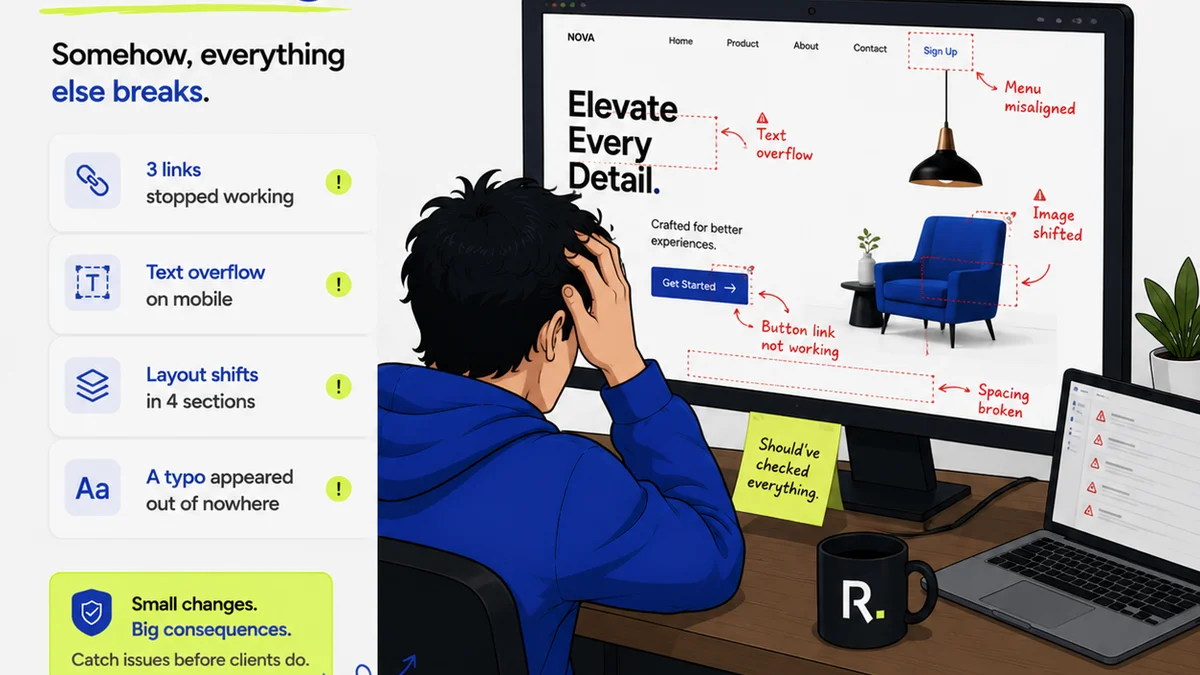
True brand QA extends to functionality. Does the website load quickly? Is the user experience intuitive and aligned with brand values? Are the calls to action clear and effective?
Think about it: a beautifully designed button that doesn't work is a brand failure. A confusing navigation system that frustrates users is a brand failure.
Key Functional Areas to Audit
- Performance: Page load speeds, mobile responsiveness.
- Usability: Ease of navigation, clarity of information architecture.
- Accessibility: Compliance with WCAG standards, ensuring inclusivity. WCAG guidelines are a baseline.
- Interactivity: Functionality of forms, animations, and interactive elements.
- Content Accuracy: Up-to-date information, correct grammar and spelling across all touchpoints.
Your checklist must reflect these functional imperatives.
3. The Feedback Loop: Bottleneck or Accelerator?
How is feedback collected and actioned? This is where many brand QA processes falter.
A common scenario: clients or stakeholders provide feedback via scattered emails, Slack messages, and even verbal notes. This feedback is then collated manually, often leading to lost context, missed comments, and subjective interpretations.
The result? Inconsistent application of feedback, endless revision cycles, and ultimately, a diluted brand output.
Symptoms of a Broken Feedback Loop
Frequently asked questions
What is the primary goal of a brand QA checklist?
The primary goal is to ensure that all creative deliverables consistently adhere to established brand guidelines, maintaining visual and messaging integrity across all touchpoints. However, a truly effective checklist also addresses functional aspects and the process of feedback and approval.
How often should a brand QA checklist be updated?
A brand QA checklist should be reviewed and updated whenever brand guidelines evolve, new project types are introduced, or inefficiencies are identified in the current QA process. Regular audits (e.g., quarterly or bi-annually) are recommended.
Can a brand QA checklist prevent all brand inconsistencies?
While a comprehensive checklist significantly reduces inconsistencies, it cannot eliminate them entirely due to the human element in creative processes. It's a tool to minimize errors and standardize quality, not a foolproof guarantee.
What are the key differences between visual and functional brand QA?
Visual brand QA focuses on aesthetic elements like logos, colors, typography, and imagery. Functional brand QA assesses aspects like website performance, user experience, accessibility, and the correct operation of interactive elements.