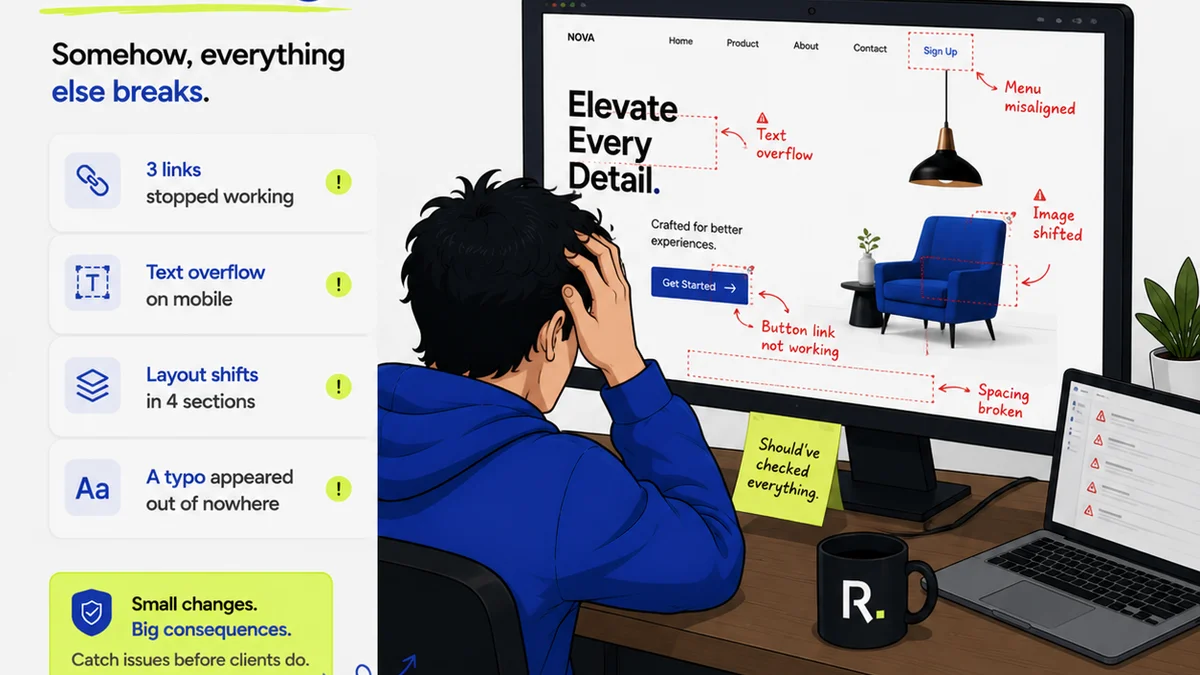
Everyone thinks they know what a brand Quality Assurance (QA) checklist is for. It’s for catching typos. It’s for making sure the logo is the right color. It’s for checking that the client’s name is spelled correctly.
None of that is wrong. But it’s incomplete. Dangerously so.
The hard truth? A brand QA checklist is not just a final gate. It’s a strategic tool for preserving brand integrity, driving client satisfaction, and ultimately, protecting your agency’s reputation and bottom line. And in 2026, with the pace of creative production accelerating and brand touchpoints multiplying, a flimsy checklist won't cut it.
1. Beyond the Obvious: What Brand QA Really Means
Most agencies treat brand QA as a perfunctory step. A quick glance before hitting send. This approach is a relic of simpler times.
Today, brand consistency isn't just about visual assets. It's about the entire customer experience, across every channel. Your QA process needs to reflect this complexity.
A true brand QA checklist ensures that every piece of creative output aligns with the brand's strategic objectives, its established voice, and its visual identity, no matter where or how it's deployed.
The Scope Creep of Brand Identity
Think about it. A brand today lives everywhere:
- Websites and landing pages
- Social media (organic and paid)
- Email marketing campaigns
- Mobile apps
- Video content (short-form, long-form, ads)
- Print collateral (brochures, ads, packaging)
- Internal communications
- Product interfaces
- Even AI-generated content variations
Each touchpoint is an opportunity to reinforce or dilute the brand. A superficial QA process misses the nuances that build trust.
2. The Cost of Inconsistent Branding
What happens when brand QA is an afterthought? The consequences can be severe.
Client Dissatisfaction: Clients invest in their brand. When your agency fails to protect it, you erode their confidence. They hired you for your expertise, not to be their proofreader.
Reputational Damage: Inconsistent branding looks unprofessional. It suggests carelessness. This reflects poorly on both the client's brand and your agency's capabilities.
Wasted Resources: Catching errors late means costly revisions. This eats into your margins and delays project timelines.
Brand Dilution: Over time, small inconsistencies accumulate. They weaken the brand's overall impact and recognition. This is the opposite of what clients pay for.
Common Blind Spots in Current QA Processes
Where do agencies typically fall short?
- Over-reliance on visual checks: Ignoring tone of voice, messaging alignment, or functional consistency.
- Manual, ad-hoc reviews: Prone to human error and inconsistent application across teams.
- Lack of clear ownership: Who is *truly* responsible for the final sign-off?
- Ignoring context: Not considering the specific channel or audience for the creative.
- Outdated brand guidelines: Using guidelines that don't reflect current brand strategy or digital realities.
3. Building a Future-Proof Brand QA Framework
A robust brand QA framework isn't built overnight. It requires process, technology, and a shift in mindset.
3.1 Define Your Brand Pillars
Before checking anything, you need clarity. What are the non-negotiables for your clients' brands?
This goes beyond a logo and color palette. It includes:
- Core Messaging: The fundamental value proposition and key talking points.
- Tone of Voice: The personality and linguistic style of the brand.
- Visual Identity System: Logo usage, typography, color systems, imagery style, iconography.
- Accessibility Standards: Ensuring designs meet WCAG guidelines or similar.
- Platform Specifics: Understanding constraints and best practices for different channels (e.g., social media aspect ratios, email client rendering).
These pillars form the foundation of your checklist.
3.2 Standardize Your Checklist Components
Your checklist should be a living document, adapted to each project but built on a solid, standardized core. Think of it as a master template with project-specific modules.
A comprehensive checklist might include sections for:
- Strategic Alignment: Does this asset serve the campaign objective? Does it resonate with the target audience?
- Messaging & Copy: Accuracy, grammar, spelling, tone of voice, clarity, call-to-action effectiveness.
- Visuals: Logo usage, color accuracy, typography, image quality, layout, composition, adherence to brand style guide.
- Technical Specs: File formats, dimensions, resolution, code snippets (if applicable), link integrity.
- Accessibility: Color contrast ratios, alt text, keyboard navigation, semantic HTML.
- Legal & Compliance: Disclaimers, trademark symbols, regulatory adherence.
- Channel Optimization: Is it formatted correctly for the intended platform?
3.3 Integrate Technology for Efficiency
Manual checklists are prone to error and slow down production. Technology can automate and streamline the process.
Consider tools for:
- Automated Visual Checks: Software that can flag incorrect logo usage or color deviations.
- Grammar & Style Checkers: Tools like Grammarly or custom style guides.
- Link Checkers: Ensuring all URLs are functional and correct.
- Accessibility Scanners: Tools that test color contrast and other accessibility metrics.
- Version Control & Audit Trails: Systems that track changes and approvals.
This isn't about replacing human judgment. It's about freeing up your team to focus on the strategic aspects of QA, not the tedious ones.
3.4 Establish Clear Roles and Responsibilities
Who signs off? This needs to be unambiguous.
Define clear roles:
- Creator: The designer or writer who produced the asset.
- Reviewer: A peer or lead who performs an initial check against the checklist.
- Approver: The senior team member or client representative with final sign-off authority.
Each role has specific responsibilities and a defined point in the workflow for their input.
3.5 Train and Educate Your Team
A checklist is only as good as the people using it. Ensure your team understands:
- The importance of brand QA.
- How to use the checklist effectively.
- The specific brand guidelines for each client.
- The implications of errors.
Regular training sessions and knowledge-sharing can keep everyone aligned.
4. Where Revue Fits In
Managing feedback, revisions, and approvals across multiple clients and projects can be chaotic. This is precisely where a tool like Revue becomes indispensable for maintaining brand QA.
Revue provides a centralized hub for all client feedback and creative assets. This eliminates the fragmented communication that often leads to QA breakdowns.
Centralized Feedback: Instead of scattered emails and Slack messages, all comments and annotations are consolidated in one place, linked directly to the specific version of the asset. This ensures reviewers are working from the latest context and that no feedback gets lost.
Revision and Approval Visibility: Track the entire revision history. See who approved what and when. This creates an auditable trail, crucial for accountability and for understanding how a final asset evolved. It makes the approval process transparent and less prone to miscommunication.
Streamlined Quality Checks: By having all assets and feedback in a single platform, you can build your QA process directly into the workflow. Final checks become more efficient because the necessary information is readily accessible, and the history of changes is clear.
This structured approach minimizes the risk of overlooking critical brand elements during the final review, ensuring consistency and adherence to brand guidelines across all deliverables.
5. The Future of Brand QA: AI and Beyond
Looking ahead to 2026 and beyond, AI will play an increasingly significant role in brand QA.
Expect AI tools to assist with:
- Automated brand guideline enforcement: AI that can scan assets and flag deviations from established visual and tonal rules.
- Predictive error detection: Identifying potential issues before they arise based on historical data.
- Personalized content generation QA: Ensuring AI-generated content remains on-brand.
- Accessibility compliance at scale: Automated checks for a wider range of accessibility standards.
However, AI will augment, not replace, human oversight. Strategic judgment, nuanced understanding of brand perception, and client relationship management will remain firmly in human hands.
6. Final Thought
Is your current brand QA process merely a gatekeeper, or is it a strategic guardian of your clients' most valuable asset? The difference impacts everything from client retention to your agency's long-term viability. In 2026, excellence in brand QA isn't optional—it's the bedrock of trust and a competitive advantage.
Frequently asked questions
What are the key components of a comprehensive brand QA checklist?
A comprehensive brand QA checklist should cover strategic alignment, messaging and copy, visual identity, technical specifications, accessibility standards, and legal compliance, tailored to the specific project and client.
How can technology improve brand QA processes?
Technology can automate repetitive checks (like grammar, link integrity, and basic visual consistency), provide audit trails, centralize feedback, and ensure accessibility standards are met, freeing up human reviewers for strategic tasks.
Who should be responsible for final brand QA sign-off?
Final sign-off responsibility should be clearly defined and assigned to a senior team member or a designated client approver, ensuring accountability and preventing miscommunication. This role is distinct from the creator and initial reviewer.
How often should a brand QA checklist be updated?
A brand QA checklist should be reviewed and updated at least annually, or whenever there are significant changes to brand guidelines, client strategies, or industry best practices, to ensure it remains relevant and effective.