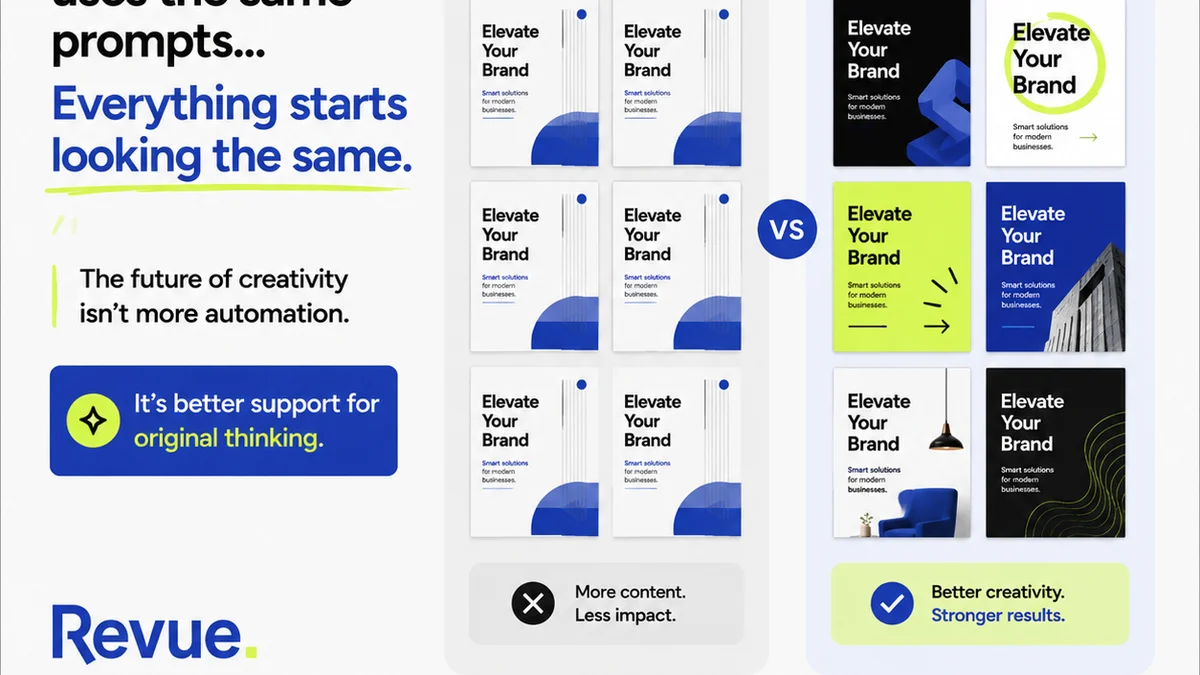
Everyone agrees brand consistency is king. You spent time and money creating beautiful brand guidelines. You’ve distributed them far and wide. So why does every new piece of marketing material look like it came from a different company?
You probably think it’s because people don’t read the guidelines. Or maybe they don’t care. Or perhaps the brand is just too complex.
None of that is wrong. But it’s incomplete.
The hard truth? Maintaining brand standards isn't a knowledge problem. It’s an operational one.
Your brand guidelines are a map. But they don’t tell you anything about the terrain. Or the traffic. Or the fact that half your drivers don’t have a working compass.
1. The Myth of the Single Source of Truth
We love to talk about a “single source of truth” for brand assets. Usually, this means a DAM (Digital Asset Management) system. Or a shared drive. Or a folder buried three levels deep on a server.
The intention is noble: one place for everything. Logos, fonts, colors, templates.
But here’s the reality:
- Most people don’t use the DAM. They grab the logo from the last project. Or from Google Images.
- Templates get outdated the moment they’re downloaded. Who’s going to check if everyone’s using the *latest* version?
- Brand guidelines themselves are static documents. They don't update automatically when a new palette variation is approved.
Your “single source of truth” is often just a dusty archive. It’s not a living, breathing system that guides daily work.
2. The Feedback Loop From Hell
Marketing campaigns involve a lot of cooks. You’ve got internal stakeholders, external agencies, legal reviewers, product marketers, sales enablement teams.
Each one has an opinion. And a way of communicating it.
This is where brand standards really start to fray:
- Scattered Feedback: Comments arrive via email, Slack DMs, Google Docs, scribbled notes on PDFs, and even verbal instructions.
- Version Control Nightmares: Which version of the design are they even commenting on? Which feedback is the *final* feedback?
- Misinterpretation: “Make the logo bigger” can mean many things. So can “make it pop.” Without context, these edits often deviate from brand guidelines.
- The “Just This Once” Syndrome: A stakeholder asks for a minor tweak that technically breaks a rule. It seems harmless. But it sets a precedent.
Trying to consolidate and action feedback from a dozen different sources, across multiple revisions, is a recipe for inconsistency. It’s easy for a small color change or a slightly off-brand font to slip through.
3. The Speed vs. Standards Trade-Off
Marketing moves fast. Sometimes, impossibly fast.
Deadlines loom. Campaigns need to launch yesterday.
In this environment, what usually gives?
- Creative Exploration: Designers might stick to safe, known patterns instead of pushing creative boundaries that might risk brand compliance.
- Rigorous Review: The final sign-off might be rushed. “Looks good enough” becomes the standard.
- Asset Creation: Marketers might pull a stock photo that’s *almost* right, or use a quick graphic element because they don’t have time to find the approved one.
The pressure to deliver *now* often overrides the discipline required to maintain brand integrity. It’s easier to bend a rule than to push back and risk a delay.
4. The Unseen Operational Friction
Think about the actual process of creating marketing collateral.
A designer needs a specific logo variation. They search the DAM. It’s not there. They ask a brand manager. The brand manager is busy. They email a designer. The designer is on a call. Eventually, the logo is found, maybe slightly modified to “fit.”
That’s friction.
Every step of the way, there’s friction:
- Searching for assets.
- Waiting for approvals.
- Re-explaining brand rules.
- Correcting unintended deviations.
- Chasing down feedback.
- Managing multiple file versions.
This friction doesn’t just slow things down; it actively undermines brand standards. When the path of least resistance leads away from the brand, that’s the path most people will take.
5. The Illusion of Control
Many organizations believe they have brand control because they have:
- A brand book.
- A DAM.
- Brand police (often a single, overworked person).
This creates an illusion of control. It feels like the system *should* work.
But these tools and roles often operate in silos. The DAM doesn’t talk to the feedback process. The brand manager can’t easily track every piece of collateral being produced.
The real problem isn't a lack of guidelines or assets. It's the lack of a connected system that makes following the guidelines the *easiest* path.
Where Revue Fits In
Revue isn’t just another DAM. It’s a workflow solution built for creative teams.
It tackles the operational chaos that erodes brand standards.
- Centralized Feedback: All comments, on all versions, live in one place, attached directly to the creative asset. No more chasing emails or deciphering Slack messages.
- Clear Revision History: See every iteration, every decision, and every piece of feedback that led to the final approved version. This context is crucial for understanding *why* a design is on-brand.
- Streamlined Approvals: Define clear approval workflows. Ensure the right eyes sign off at the right time, with full visibility into the feedback process.
- Quality Assurance Gates: Build checks into your process. Ensure that before final delivery, assets meet all brand and technical requirements.
By bringing structure and visibility to the feedback and approval process, Revue helps ensure that brand standards aren't just documented—they're consistently applied. It makes the *right* way the *easy* way.
Final Thought
Brand guidelines are essential. But they are only the beginning.
The real challenge lies in building operational systems that embed brand consistency into the daily workflow of your marketing and creative teams. It’s about making it easy to do the right thing, even when the pressure is on.
How much friction exists in your current creative review process? And what’s it costing your brand?
Frequently asked questions
What are the main reasons marketing teams struggle with brand consistency?
The primary reasons are operational, not educational. These include a lack of a true single source of truth for assets, chaotic and scattered feedback loops, the pressure to deliver quickly overriding standards, significant unseen operational friction in the creative process, and an illusion of control rather than a robust system.
How does scattered feedback impact brand standards?
When feedback comes from multiple sources via email, Slack, and other channels, it's easy to misinterpret, lose context, and miss crucial instructions. This leads to version control nightmares and designs that inadvertently deviate from established brand guidelines.
Can a DAM system alone solve brand consistency issues?
A DAM is a critical tool for asset management, but it typically doesn't address the workflow and communication challenges. Brand consistency issues often stem from how feedback is gathered, revisions are managed, and approvals are handled, which a DAM doesn't inherently solve on its own.
How can marketing teams improve brand consistency?
Improve consistency by implementing structured workflows for feedback and approvals, centralizing all communication around creative assets, establishing clear quality assurance gates, and choosing tools that reduce operational friction, making adherence to brand standards the path of least resistance.