Everyone wants a high-performance creative team. The kind that churns out award-winning work, delights clients, and makes the agency look brilliant. The common advice? Hire a few star players. Find those rare individuals with a perfect blend of talent, experience, and attitude.
That’s not wrong. But it’s incomplete. It’s like saying a Formula 1 team wins because they have a great driver. They do. But they also win because of the pit crew, the engineers, the data analysts, the car itself, and the seamless integration of it all.
The hard truth about high-performance creative teams is this: individual brilliance is a bonus, not the foundation. The real engine is a robust system that amplifies talent, minimizes friction, and ensures consistent quality, project after project. It’s about process, not just people.
1. Define Performance Beyond the ‘Big Win’
What does ‘high-performance’ actually mean for your agency? It’s easy to get caught up in the idea of the occasional ‘big win’ – the campaign that goes viral, the client that becomes a case study. But that’s not sustainable performance. That’s luck amplified by talent.
Sustainable performance is about:
- Consistent delivery of high-quality work, on time and on budget.
- Client satisfaction that leads to repeat business and referrals.
- Team members who are engaged, growing, and not burning out.
- Efficient workflows that allow for creative exploration without chaos.
- Adaptability to changing client needs and market trends.
You need to define these metrics for your team. Make them visible. Make them the goal, not just the occasional byproduct.
2. Systematize the ‘Creative Spark’
Talent shows up differently. Some people are idea generators. Others are brilliant executors. Some are masters of detail, others see the big picture. A high-performance team doesn’t just hire these people; it creates an environment where their diverse strengths can thrive and complement each other.
The Briefing Black Hole
One of the biggest drains on creative energy is a weak brief. If the input is fuzzy, the output will be too. This isn’t the client’s fault. It’s yours. You need a system for extracting clarity.
This means:
- Standardized briefing templates that force key questions.
- Mandatory client debriefs, not just brief handoffs.
- Internal review of briefs *before* creative work begins.
- Tools that allow for collaborative brief refinement.
A clear, concise, and inspiring brief is the bedrock of efficient, high-quality creative work. Don’t let your team waste hours guessing what the client *really* wants.
The Feedback Feedback Loop
Client feedback is the lifeblood of any project. But it’s also a notorious bottleneck and a source of frustration. Unstructured, contradictory, or vague feedback can derail even the best creative.
Your system needs to manage this:
- Establish clear channels for feedback.
- Define who gives feedback and who synthesizes it.
- Implement version control for revisions.
- Train clients (gently) on how to give constructive feedback.
This isn't about controlling clients; it's about creating a framework for productive collaboration. It’s about ensuring feedback is actionable, not just noise.
3. Build for Resilience, Not Just Brilliance
Your star designer gets sick. Your project manager leaves. A key client relationship sours. These aren’t ‘what ifs’; they are ‘when happens’. A high-performance team is built to withstand these shocks.
The Knowledge Silo Problem
Too much critical information lives in one person’s head. When that person is unavailable, the project stalls. This is a systemic failure.
Combat this with:
- Centralized project documentation.
- Cross-training team members on key processes.
- Regular knowledge-sharing sessions.
- Using tools that create a single source of truth for project assets and communications.
Your agency’s collective knowledge should be its greatest asset, not a liability tied to individual employees.
The Revision Rodeo
Endless revisions are a productivity killer and a profit drain. They happen when the scope isn't clear, feedback is poor, or there’s no defined approval process.
Your system needs to:
- Clearly define the number of revision rounds included in the scope.
- Use clear milestones for approval gates.
- Track all feedback and revisions in one place.
- Empower project managers to push back (politely) on scope creep.
This requires discipline. It requires a process that protects both the creative integrity and the agency’s profitability.
4. Foster a Culture of ‘Good Enough’ (Done Right)
This sounds heretical, I know. But perfectionism can be the enemy of progress and profitability. High-performance teams understand the difference between striving for excellence and getting bogged down in unnecessary detail.
It’s about:
- Understanding the client’s definition of ‘done’.
- Prioritizing tasks based on impact.
- Knowing when to stop iterating and move forward.
- Building in quality checks at key stages, not just at the end.
A rigid adherence to an unattainable standard of perfection leads to burnout and missed deadlines. A pragmatic approach to excellence, focused on delivering value and meeting objectives, is far more effective.
5. Where Revue Fits In
Building and maintaining a high-performance creative team is an operational challenge. It requires more than just talented individuals; it demands a robust system for managing the creative lifecycle.
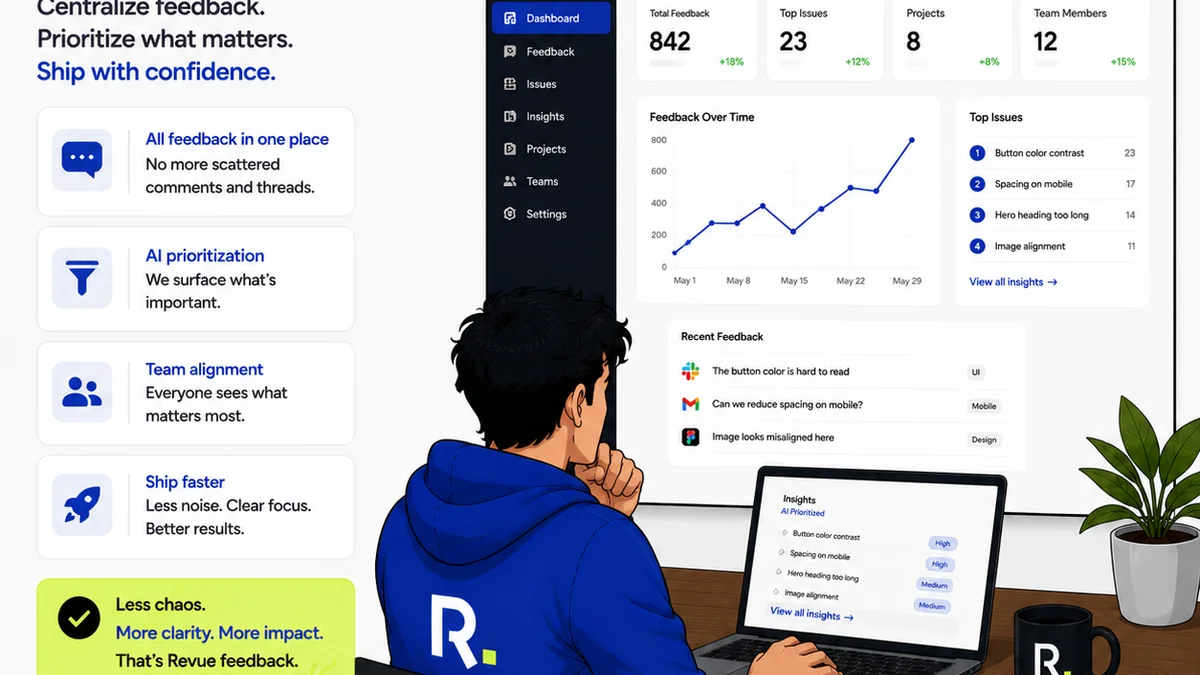
Revue is designed to be that system. It centralizes client feedback, making it clear, actionable, and trackable. This eliminates the guesswork and reduces the back-and-forth that plagues so many projects.
With Revue, you gain visibility into the revision and approval process. Everyone – the team, the client, stakeholders – can see the project’s status, understand the feedback given, and track changes made. This transparency fosters accountability and speeds up decision-making.
Furthermore, Revue helps enforce quality checks by providing a clear audit trail of feedback and approvals. It ensures that creative work meets the agreed-upon objectives before final delivery. It’s the operational backbone that allows your creative talent to perform at its peak, consistently.
Final Thought
Are you building a team of brilliant individuals, or are you building a brilliant *system* that happens to employ talented people? The shift in perspective is subtle, but the impact on your agency’s performance is profound. Focus on the system. The results will follow.
Frequently asked questions
What's the biggest mistake agencies make when trying to build a high-performance creative team?
The biggest mistake is focusing solely on hiring 'rockstar' talent without building a robust system to support and amplify their work. Individual brilliance is a great asset, but it's not a sustainable strategy for consistent high performance. A strong operational framework is essential.
How can I improve the quality of client feedback?
Improve client feedback by establishing clear channels, defining who provides feedback, and implementing a structured process for revisions and approvals. Use tools that centralize feedback and create a single source of truth. Gently educating clients on providing constructive input also helps.
What's the role of process in creative team performance?
Process is the foundation. It ensures consistency, efficiency, and quality. A well-defined process for everything from briefing to final delivery minimizes bottlenecks, reduces errors, manages scope, and allows creative talent to focus on creative tasks rather than administrative overhead.
How does centralized feedback help a creative team?
Centralized feedback eliminates confusion and lost communication. When all comments and revisions are in one place, the team can easily track what needs to be done, understand the context, and avoid working on outdated versions. This speeds up revisions and improves client satisfaction.