Everyone thinks campaign design is about making things look good. About killer visuals, slick typography, and maybe a catchy tagline. That’s the surface-level stuff.
None of that is wrong. But it’s incomplete.
The hard truth? Effective campaign design is about strategic problem-solving. It’s about translating client objectives into tangible creative executions that deliver measurable results. It’s an operational discipline, not just an aesthetic one.
Let’s break down what that really means.
1. Defining the Real Goal: Beyond 'Brand Awareness'
Clients often say they want 'brand awareness.' That’s a vague starting point. What does it *actually* mean for their business? More leads? Higher conversion rates? Increased customer loyalty? A successful product launch?
Your job isn't to just design a beautiful ad. It's to design an ad that *achieves* something specific for the client's bottom line.
The Problem with Vague Briefs
- Leads to generic creative work.
- Makes measuring success impossible.
- Creates friction between agency and client.
- Wastes everyone's time and money.
A truly effective campaign design process starts with unpacking these fuzzy objectives. You need to ask the hard questions, dig into the client's business, and define what success looks like in concrete terms. Before a single pixel is placed.
2. Understanding Your Audience: The Unseen Foundation
You can’t design a compelling campaign without knowing who you’re talking to. This isn’t just about demographics. It’s about psychographics, behaviors, pain points, and aspirations.
What keeps them up at night? What are their media habits? Where do they hang out online and offline? What language resonates with them?
Deeper Audience Insights
- Psychographics: Values, attitudes, lifestyles.
- Behavioral Data: Purchase history, online activity, engagement patterns.
- Pain Points: Problems your client's product/service solves.
- Aspirations: What your audience wants to achieve.
This deep understanding informs every creative decision, from the tone of voice to the visual style, to the channels you choose. Without it, your 'pretty pictures' are just shouting into the void.
3. The Creative Brief: Your Operational Blueprint
The creative brief is the single most important document in any campaign. It’s not a suggestion; it’s the operational blueprint. If it’s weak, the entire campaign is compromised from the start.
A strong brief is clear, concise, and actionable. It outlines the problem, the objective, the target audience, the key message, the deliverables, the budget, and the timeline.
Elements of a Killer Brief
- Objective: What specific business goal are we aiming for?
- Target Audience: Who are we trying to reach, and why?
- Key Message: What is the single most important thing we need to communicate?
- Mandatories: Brand guidelines, legal disclaimers, required elements.
- Deliverables: Specific assets needed (e.g., social ads, banner ads, landing page).
- Budget: Production and media spend.
- Timeline: Key milestones and deadlines.
- Success Metrics: How will we measure if the campaign worked?
Treat the brief as a contract. Get sign-off. Refer back to it constantly. It’s your anchor in the turbulent seas of creative production.
4. Channel Strategy: Where 'Good Design' Meets 'Good Sense'
Campaign design isn't a one-size-fits-all proposition. The channels you use dictate the format, the tone, and the execution of your creative.
A stunning hero image for a billboard won't translate directly to a 6-second pre-roll ad. The constraints and opportunities of each platform must be considered during the design phase, not as an afterthought.
Channel Considerations
- Social Media: Highly visual, short attention spans, platform-specific aspect ratios and best practices.
- Paid Search: Text-heavy, keyword-driven, focus on clear calls-to-action.
- Video: Storytelling, pacing, sound design, platform optimization (YouTube vs. TikTok).
- Email Marketing: Personalization, clear CTAs, mobile-first design.
- Out-of-Home (OOH): Bold visuals, minimal text, high impact at a distance.
Designing for multiple channels requires a modular approach. You need core creative concepts that can be adapted efficiently, ensuring consistency while respecting the nuances of each platform.
5. Iteration and Feedback: The Engine of Improvement
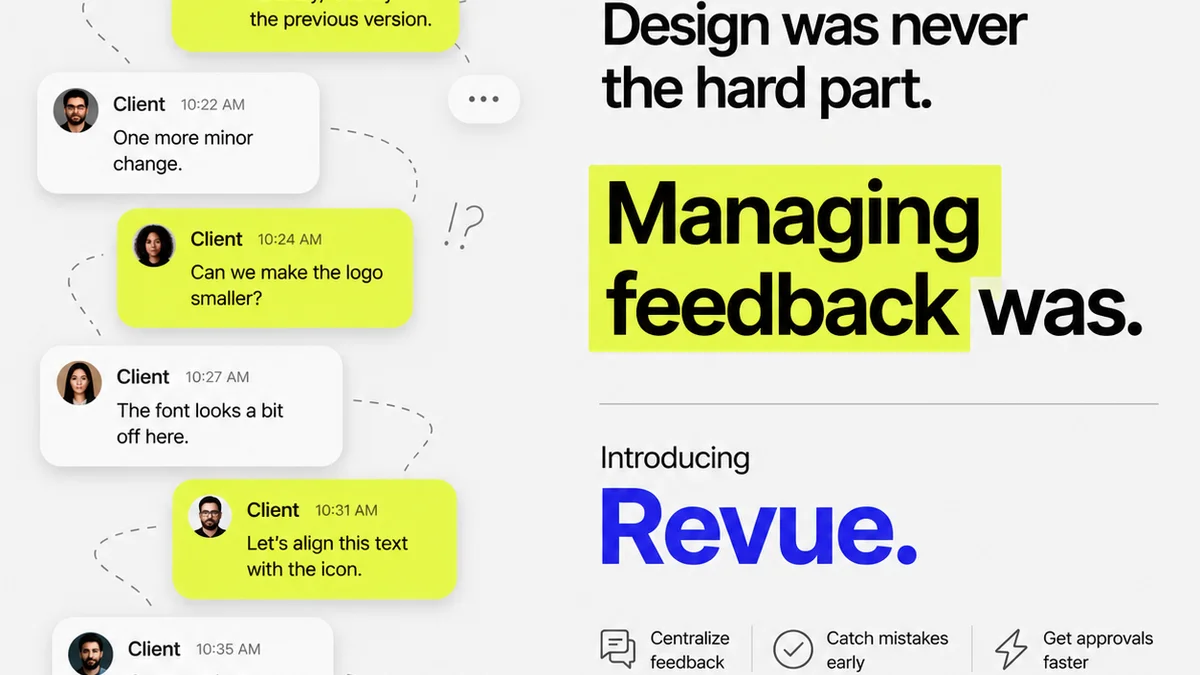
No campaign is perfect on the first try. The design process is inherently iterative. Feedback is crucial, but *how* you manage it is everything.
Unstructured, subjective feedback is the enemy of progress.
Frequently asked questions
What's the difference between campaign design and graphic design?
Graphic design focuses on visual communication for a specific asset or brand identity. Campaign design is broader, encompassing the strategic planning, creative execution, and channel adaptation of visuals and messaging to achieve specific marketing objectives over a defined period.
How can I ensure my campaign design is effective?
Start with a clear, measurable objective. Deeply understand your target audience. Develop a robust creative brief. Design with specific channels in mind. And crucially, implement a structured feedback and iteration process.
What are the most common mistakes in campaign design?
Designing without a clear objective, failing to understand the audience, creating a weak brief, treating all channels the same, and mishandling feedback are common pitfalls. These often lead to ineffective or wasted creative efforts.
How does client feedback impact campaign design?
Feedback is essential for refinement, but it must be constructive and aligned with the campaign objectives. Unstructured or subjective feedback can derail the process. A system for collecting, organizing, and acting on feedback is vital.