We often hear that great campaign design hinges on a single, brilliant concept. The "aha!" moment. The game-changer. It sounds simple, almost magical.
None of that is wrong. But it’s incomplete.
The hard truth is that a campaign’s success isn't just about the spark of genius. It’s forged in the fires of execution. It’s built on a foundation of disciplined process, clear communication, and relentless problem-solving. The operational grind is where the magic actually happens.
1. The Vague Brief: Designing in the Fog
You've received the brief. It's a collection of buzzwords and vague aspirations. "We want something disruptive." "It needs to feel authentic." "Target millennials, but also Gen Z." Sound familiar?
This isn't just annoying; it's a direct impediment to effective design. You can't hit a target you can't see.
The Symptom: Scope Creep and Guesswork
When the brief lacks clarity, the design process devolves into endless iterations. Every stakeholder has a different interpretation of "disruptive" or "authentic." What you thought was a slam dunk, they saw as a swing and a miss.
- Client asks for "more energy" without defining what that looks like visually.
- Project scope balloons as designers chase phantom requirements.
- Deadlines slip because of constant back-and-forth on fundamental direction.
- Team morale plummets under the weight of perceived futility.
The Fix: Interrogation, Not Interpretation
Don't just accept the brief. Interrogate it. Push back early and often.
Your job isn't to guess what the client *might* want. It's to understand what they *need* and why.
- Schedule a kickoff meeting specifically to deconstruct the brief.
- Ask clarifying questions: "When you say 'disruptive,' what specific outcome are you hoping to achieve? Can you give an example of a campaign you feel achieved that?"
- Define tangible KPIs and success metrics that the design should support.
- Document everything. Get sign-off on a clarified brief before any creative work begins.
This front-loaded effort saves countless hours and prevents the dreaded "it's not what I envisioned" conversation down the line.
2. The Siloed Team: Disconnected Visions
Campaign design isn't a solo sport. It involves copywriters, art directors, designers, strategists, account managers, and clients. When these groups operate in silos, their individual contributions, however brilliant, can clash.
A stunning visual might be let down by weak copy, or vice-versa. The strategists' insight might be lost on the creatives. The client's feedback arrives late, after major decisions have been made.
The Symptom: Inconsistent Messaging and Wasted Effort
Silos create friction. They breed misunderstandings and lead to duplicate work.
- Copy doesn't align with visual tone or campaign objectives.
- Designers create assets that don't serve the strategic goals.
- Account managers are left trying to bridge gaps they don't fully understand.
- Clients feel like they're talking to different agencies depending on who they speak to.
The Fix: Integrated Workflow and Shared Understanding
Break down those walls. Foster a truly collaborative environment from day one.
This means ensuring everyone is working from the same playbook and has visibility into each other's progress.
- Implement cross-functional kickoff meetings where all key players discuss the brief and objectives together.
- Use a central platform for all project communication and asset management.
- Encourage informal check-ins between disciplines (e.g., copywriter and designer discussing a headline's visual treatment).
- Establish clear roles and responsibilities, but emphasize shared ownership of the campaign's success.
When everyone understands the complete picture, they can make more informed decisions and contribute more effectively.
3. The Feedback Loop from Hell: Endless Revisions
This is the classic agency pain point. You deliver a concept. The client provides feedback. You revise. They provide more feedback. Repeat, ad nauseam.
It feels like you're on a hamster wheel, burning hours and budget with no clear end in sight. Often, the feedback itself is contradictory or superficial.
The Symptom: Scope Creep, Budget Burn, and Creative Fatigue
The endless revision cycle is toxic for both the agency and the client.
- Designers become disengaged, feeling their expertise is ignored.
- Budget is consumed by rework, leaving less for strategic initiatives.
- Client relationships become strained due to perceived lack of progress.
- The final output suffers, diluted by too many compromises.
The Fix: Structured Feedback and Clear Approval Gates
You need to bring order to the chaos of feedback. This requires setting expectations and establishing clear processes.
- Define the number of revision rounds included in the project scope upfront.
- Establish clear deadlines for feedback submission.
- Centralize all feedback to avoid conflicting comments from different stakeholders.
- Train clients on how to provide constructive, actionable feedback. Focus on objectives, not just aesthetics.
- Implement a formal sign-off process at key milestones.
Treat feedback not as an open-ended suggestion box, but as a structured input mechanism with defined boundaries.
4. The Unseen Quality Check: Slipping Standards
You've got the concept, the client's happy (mostly), and the assets are ready to go. But are they *really* ready? Are they on-brand? Do they meet technical specs? Are there typos?
Skipping the final quality check is a gamble. It's a shortcut that can lead to embarrassing errors, brand damage, and lost client trust.
The Symptom: Embarrassing Errors and Brand Inconsistency
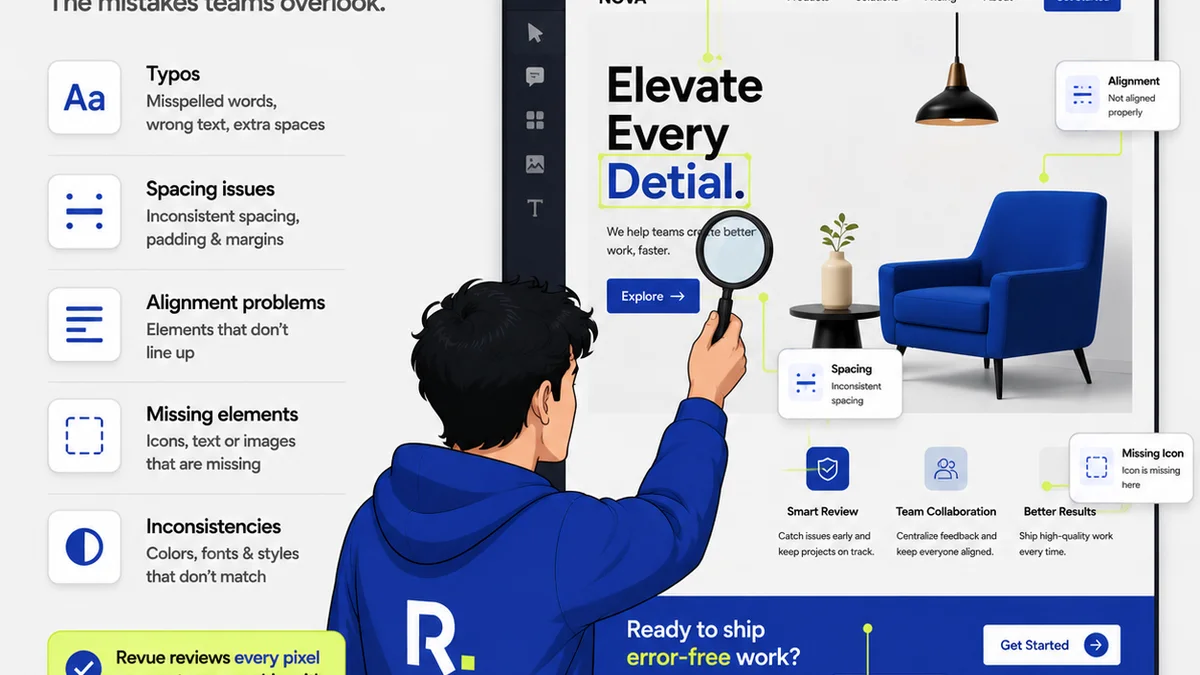
A missed typo, a misaligned logo, or an off-brand color can undermine even the most brilliant campaign.
- Inconsistent application of brand guidelines across different assets.
- Technical errors: incorrect file formats, low-resolution images, broken links.
- Copy errors: typos, grammatical mistakes, factual inaccuracies.
- Assets that don't render correctly on different devices or platforms.
The Fix: A Rigorous, Multi-Point Checklist
Implement a non-negotiable quality assurance process before any campaign element goes live.
- Develop a comprehensive checklist tailored to the campaign's deliverables.
- Assign a dedicated person or small team to conduct QA – ideally someone not directly involved in the creative execution.
- Check for:
- Brand guideline adherence (logos, colors, typography, tone of voice)
- Technical specifications (file types, dimensions, resolution, accessibility standards)
- Content accuracy (spelling, grammar, factual correctness, legal disclaimers)
- Functional testing (links, forms, interactive elements)
- Cross-device and cross-browser compatibility
- Get final sign-off on the QA report before launch.
This isn't about micromanagement; it's about professional diligence. It's about protecting your agency's reputation and ensuring the client's investment is represented flawlessly.
Where Revue Fits In
You can see how these challenges are all interconnected. A vague brief leads to unclear feedback, which leads to endless revisions, and often, a rushed or incomplete quality check.
The common thread? A lack of centralized visibility and control over the entire campaign design process.
Revue is built to address this operational friction.
- Centralized Feedback: Instead of chasing down emails and Slack messages, all client comments live directly on the creative asset. No more deciphering who said what or when.
- Revision Visibility: Track every iteration. See the history of changes, understand the evolution of the design, and easily revert if needed. This transparency is crucial for managing scope and client expectations.
- Streamlined Approvals: Define clear approval stages. Clients can approve or request changes directly within the platform, creating a documented audit trail.
- End-to-End Quality Control: Ensure every asset has gone through the necessary checks before it gets to the client or goes live. Maintain consistent standards across all your projects.
By bringing clarity and control to the feedback and revision process, Revue helps your team spend less time on administrative headaches and more time on creating great work.
Final Thought
The brilliance of a campaign often lies not just in its initial concept, but in the rigor of its execution. Are you building your campaigns on a foundation of operational excellence, or are you leaving them vulnerable to the chaos of the workflow?
Frequently asked questions
What's the biggest mistake agencies make in campaign design?
The biggest mistake is focusing solely on the 'big idea' without establishing a robust operational process to execute it. This leads to issues with vague briefs, chaotic feedback loops, and missed quality checks, ultimately undermining the initial concept.
How can I get clearer feedback from clients?
Shift from subjective aesthetic comments to objective, actionable feedback tied to campaign goals. Train clients to explain *why* something isn't working and what specific outcome they're aiming for. Centralizing feedback in a platform like Revue also prevents conflicting comments.
How many revision rounds should be included in a campaign design project?
This should be defined in the initial scope and contract. Typically, 2-3 rounds of revisions are standard, but it depends on the project's complexity. Clearly communicating this upfront manages client expectations and prevents scope creep.
Why is a quality check so important before launching a campaign?
A thorough quality check (QA) prevents embarrassing errors like typos, broken links, or brand inconsistencies that can damage your agency's reputation and the client's brand. It ensures all assets meet technical specifications and brand guidelines before they go live.