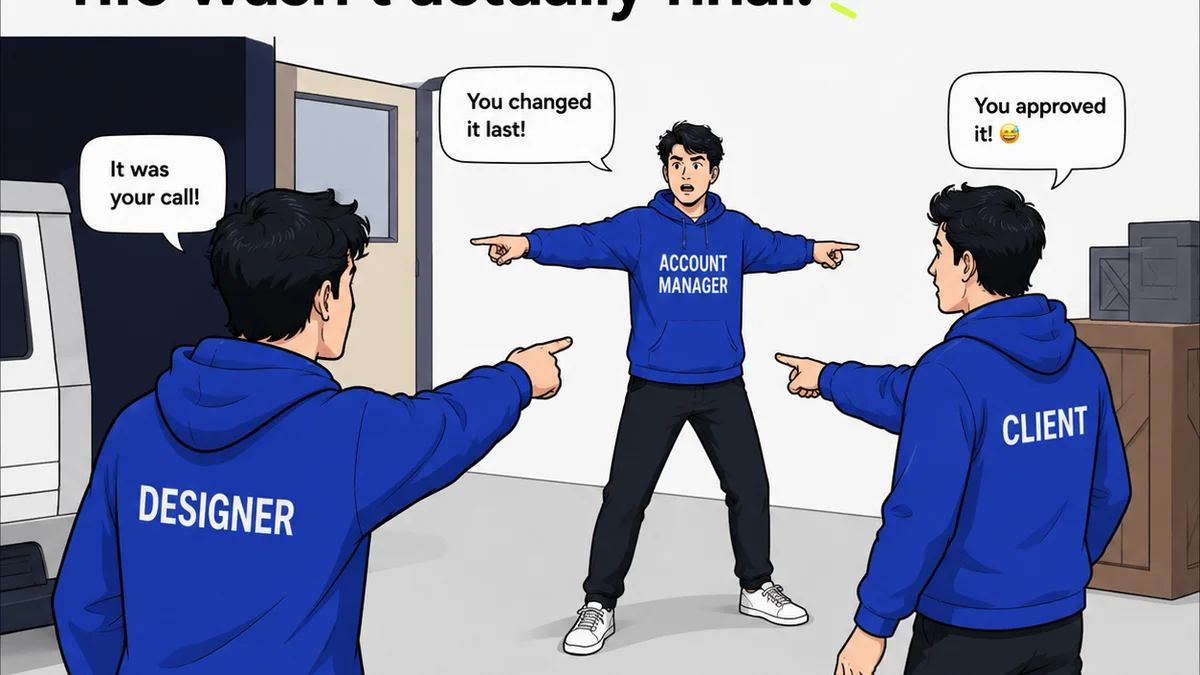
Everyone thinks campaign review is the final hurdle. The last check before launch. A simple sign-off. None of that is wrong. But it’s incomplete.
The hard truth? Campaign review is often where good ideas go to die. Or worse, get mangled into mediocrity. It’s not just about catching typos; it’s about ensuring the work actually lands. And that requires a process, not a panic.
1. The Illusion of 'Final' Approval
Creative agencies and in-house teams often treat campaign review like a gatekeeper. A single moment where everything is deemed 'ready.' This perspective is fundamentally flawed. It implies a linear process: create, review, launch. But creativity, especially in campaigns, is rarely that clean.
The reality is iterative. Feedback loops are essential. And the 'final' review is just one point in a much longer, messier journey. If you’re only reviewing for surface-level errors at the end, you’ve already lost the battle for impact.
The Cost of a Stale Review Process
What happens when review is an afterthought?
- Missed strategic misalignments.
- Inconsistent brand messaging across deliverables.
- Technical issues discovered too late to fix easily.
- Client confusion and frustration from last-minute changes.
- Damaged client relationships due to perceived sloppiness.
- Campaigns that underperform because the core idea was diluted.
This isn’t about blame. It’s about a broken system. A system that prioritizes speed over substance when it matters most.
2. Defining 'Good' Campaign Review
A true campaign review isn't just about catching errors. It’s about safeguarding the campaign's integrity and effectiveness. It’s a strategic checkpoint. It’s where you confirm the creative actually solves the business problem.
This means moving beyond a simple 'yes/no' approval. It requires a structured approach that evaluates:
Key Evaluation Pillars
- Strategic Alignment: Does this campaign element still serve the original brief?
- Brand Consistency: Is the voice, tone, and visual identity uniform across all assets?
- Message Clarity: Is the core message easily understood by the target audience?
- Technical Execution: Are there any functional or formatting errors?
- Call to Action: Is the desired next step for the audience clear and compelling?
- Audience Resonance: Will this connect with the intended recipients?
This isn't a checklist for a junior designer. It’s a framework for seasoned professionals. It requires critical thinking, not just compliance.
3. Embedding Review Throughout the Workflow
The biggest mistake agencies make is front-loading all the creative heavy lifting and then tacking on review at the end. This creates a bottleneck and a pressure cooker environment.
Effective campaign review is not a single event. It's a continuous thread woven through the entire project lifecycle.
Phased Review Strategy
Think in stages, not just a final pass.
- Concept Review: Early feedback on strategic direction and core ideas. Is the big idea sound?
- Creative Development Review: Mid-stage feedback on drafts and early executions. Are we on the right track visually and tonally?
- Asset-Specific Review: Detailed checks on individual pieces (ads, social posts, landing pages) for accuracy, consistency, and technical soundness.
- Pre-Launch Final Review: The actual 'sign-off' stage, but by now, major issues should have been addressed. This is about final polish and confirmation.
Each stage has a different objective. Each stage involves different stakeholders. And each stage reduces the risk of catastrophic failure at the eleventh hour.
The Role of Stakeholders
Who should be involved? It depends on the project, but a typical review might include:
- Creative Director
- Account Manager
- Strategist
- Copywriter
- Art Director
- Client (at appropriate stages)
- Legal/Compliance (if applicable)
- Technical specialists (e.g., QA for digital assets)
Trying to get all these eyeballs on a single document the day before launch is a recipe for disaster. Distribute the review load. Make it manageable.
4. Common Pitfalls and How to Avoid Them
Even with the best intentions, review processes can derail. Recognizing these common pitfalls is the first step to fixing them.
The 'Too Many Cooks' Syndrome
When everyone has an opinion, and those opinions conflict, the work suffers. This often happens when feedback isn't structured or when too many people are involved at the wrong time.
Fix: Clearly define roles and responsibilities for feedback. Establish a primary point person for consolidating feedback. Use a centralized platform where feedback is visible and can be discussed constructively.
Vague or Subjective Feedback
Comments like 'make it pop' or 'I don't like it' are useless. They don't provide direction and can lead to endless, aimless revisions.
Fix: Train your team and clients on giving actionable feedback. Encourage them to tie comments back to the brief, strategic goals, or specific elements. Frame feedback constructively.
Lack of Version Control
Working off outdated proofs is a classic mistake. It leads to wasted effort and confusion.
Fix: Implement a strict version control system. Use a tool that automatically tracks revisions and makes the latest version the single source of truth.
Ignoring Technical Constraints
A beautiful design might fail if it can't be implemented correctly within budget or platform limitations. Review needs to consider feasibility.
The 'Client Knows Best' Fallacy
While client buy-in is crucial, blindly following every client request can dilute the campaign's effectiveness. The agency's role is to guide based on expertise.
Fix: Educate clients on the strategic rationale behind creative decisions. Use data and insights to support your recommendations. Be prepared to push back constructively when a request undermines the campaign goals.
5. Where Revue Fits In
Managing campaign review effectively requires visibility, structure, and clear communication. This is precisely where a tool like Revue becomes invaluable.
Instead of juggling endless email chains, scattered file versions, and confusing verbal feedback, Revue centralizes the entire process. You can upload proofs, gather comments directly on the asset, and manage revisions all in one place.
This means:
- Centralized Feedback: All comments, annotations, and discussions live on the specific asset. No more hunting for that one email.
- Version Control: Every revision is tracked. You and your clients always see the latest version, eliminating confusion.
- Clear Approval Workflows: Define who needs to review and approve at each stage. Get clear sign-offs, reducing ambiguity.
- Visibility for All: Stakeholders can see the feedback history, understand the rationale behind changes, and track progress. This builds trust and alignment.
- Streamlined Quality Assurance: Use the platform to conduct detailed checks against project requirements and brand guidelines before final delivery.
Revue transforms campaign review from a chaotic endpoint into a controlled, efficient, and collaborative part of the creative workflow. It ensures the final output is not just approved, but truly ready to perform.
Final Thought
Campaign review isn't a task to be rushed through. It's a critical discipline that separates agencies that merely produce work from those that deliver results. Are you reviewing your campaigns, or are you just approving them?
Frequently asked questions
What is the primary goal of campaign review in a creative agency?
The primary goal is to ensure the campaign is strategically sound, on-brand, clearly communicated, technically flawless, and ultimately effective in meeting business objectives. It's about safeguarding the work's integrity, not just catching typos.
How can agencies avoid the 'too many cooks' problem during review?
Define clear roles for feedback, assign a primary point person to consolidate comments, and use a centralized platform like Revue. This ensures feedback is structured, visible, and can be managed constructively, preventing conflicting directives.
What makes feedback actionable during a campaign review?
Actionable feedback is specific, constructive, and tied to the project brief or strategic goals. Instead of 'make it pop,' effective feedback might be, 'This headline doesn't clearly communicate the offer; can we rephrase it to highlight the 20% discount?'
Why is version control crucial in campaign review?
Version control prevents confusion and wasted effort by ensuring everyone is working with and reviewing the latest iteration of the creative asset. It eliminates the risk of approving outdated content.
How does a tool like Revue help with campaign review?
Revue centralizes feedback, manages version control, streamlines approval workflows, and provides visibility to all stakeholders. This transforms review from a chaotic endpoint into an organized, efficient part of the creative process.