Everyone thinks the best client approval software is about speed. Get feedback faster, get sign-off quicker. That’s the sales pitch. None of that is wrong. But it’s incomplete.
The real problem isn’t the speed of feedback, it’s the chaos surrounding it. The hard truth is that the best client approval software doesn't just speed up a broken process; it fixes the process itself. It brings clarity to the noise, control to the chaos, and accountability where it’s often missing.
1. The Illusion of 'Faster' Feedback
You’ve seen it. Emails flying back and forth. Slack messages lost in the ether. Stakeholders leaving feedback in a dozen different places – email, Slack, a shared Google Doc, even scribbled on a PDF screenshot. This isn’t efficient. It’s a recipe for miscommunication and missed revisions.
The assumption is that more channels mean faster feedback. The reality is, more channels just mean more places to look for feedback. And more places to get it wrong.
The Bottleneck Isn't Time, It's Clarity
What truly slows down approvals isn't the time it takes for a client to respond. It’s the time it takes for you to:
- Gather all feedback in one place.
- Decipher ambiguous comments.
- Identify conflicting feedback from different stakeholders.
- Track which feedback has been actioned and which hasn't.
- Prevent scope creep disguised as urgent revisions.
This is where dedicated client approval software shines. It centralizes everything. It provides a single source of truth for all creative assets and all feedback related to them.
2. Beyond Simple File Sharing
Many tools offer file sharing. Dropbox, Google Drive, even email attachments. They let you send a file. They might even let someone scribble on it. But that’s not approval software. That’s just file storage with a comment feature bolted on.
True client approval software is built around the workflow of creative production. It understands that feedback needs context. It knows that revisions need to be tracked. It anticipates the need for clear sign-off.
Key Features That Matter
Look for tools that offer more than just a link:
- Version Control: Easily track and compare different versions of an asset. No more 'final_final_v3.psd'.
- In-Context Annotation: Feedback directly on the visual element. Precise and unambiguous.
- Centralized Dashboard: See all projects, all assets, all feedback, and all approval statuses in one view.
- Automated Notifications: Keep clients and internal teams informed without manual chasing.
- Role-Based Permissions: Control who can view, comment, and approve.
- Audit Trails: A clear record of who said what, when, and who approved what, and when.
This isn’t about making clients click a button faster. It’s about making the entire process transparent and manageable for everyone involved.
3. Managing Revisions and Scope Creep
The approval process is often where scope creep hides. A client asks for a small tweak. Then another. And another. Before you know it, what was a simple revision request has turned into a significant project add-on.
Without a structured approval system, it’s easy for these creeping changes to get lost in the shuffle. You might implement them without realizing the cumulative impact on your timeline and budget.
The Power of the Audit Trail
Good client approval software provides an indisputable record. Every comment, every revision, every approval is logged. This has several benefits:
- Accountability: Clients see the history of changes. You can easily point to specific requests and their implementation.
- Scope Management: If a requested change falls outside the original brief, it's immediately apparent. You can then have a clear, data-backed conversation about additional costs or timeline adjustments.
- Dispute Resolution: In the rare case of a disagreement, the audit trail is your best friend. It shows exactly what was agreed upon and when.
This level of transparency protects both your agency and your client. It ensures everyone is on the same page, preventing misunderstandings that can damage relationships.
4. Ensuring Quality Control
Approvals aren't just about client sign-off. They're a critical checkpoint for quality control. This is where you catch errors, inconsistencies, and deviations from the brief before the work goes live or to print.
Relying on scattered feedback means critical quality issues can slip through. A typo missed in an email chain. A brand guideline violation buried in a Slack thread.
Integrating QC into the Workflow
Client approval tools can be configured to include quality control steps:
- Internal Review Stages: Before final client review, route the asset through your internal QA process.
- Checklists: Integrate specific quality checklists for different asset types (e.g., web banners, print ads, video edits).
- Stakeholder Alignment: Ensure all internal stakeholders (e.g., account managers, project managers) have signed off before client delivery.
This structured approach ensures that what the client sees is already vetted. It reduces back-and-forth and elevates the final output.
Where Revue Fits In
This is precisely why Revue was built. We saw agencies drowning in endless email threads, scattered feedback documents, and unclear revision histories. The 'best' client approval software needed to address the operational reality, not just the fantasy of instant sign-offs.
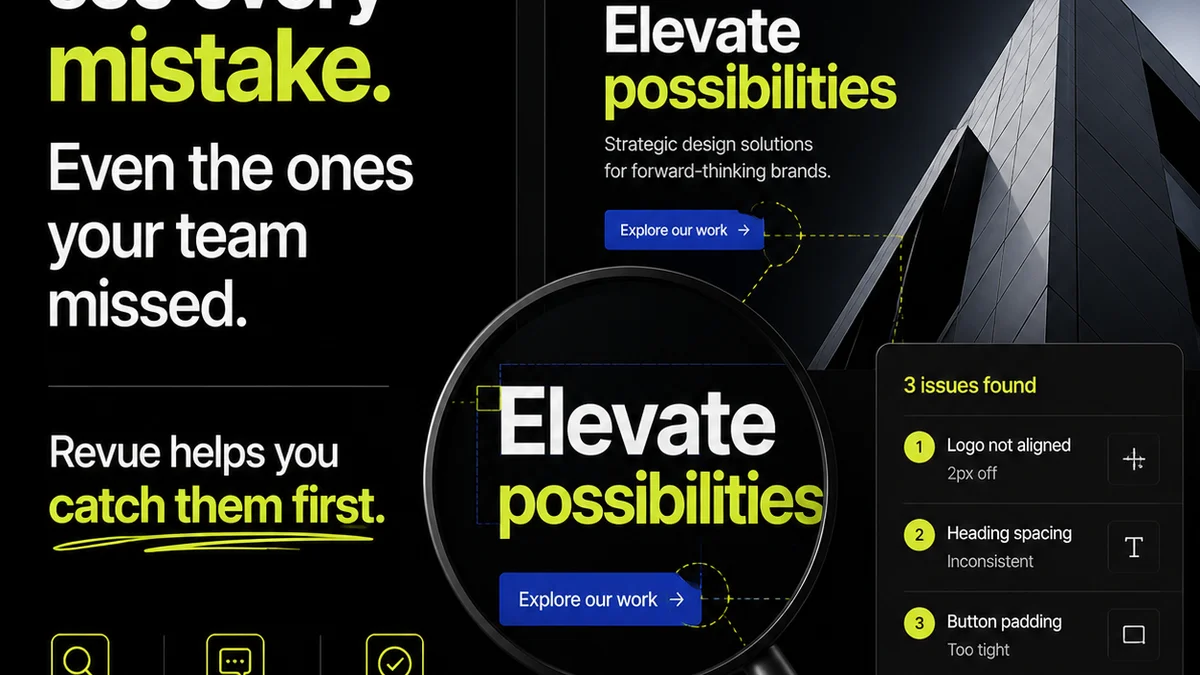
Revue acts as your central hub for creative collaboration and client approvals. It consolidates all feedback, provides clear version tracking, and offers a transparent audit trail for every asset. This means less time spent chasing feedback, deciphering comments, or managing version control, and more time spent on creative work.
We empower you to:
- Centralize Feedback: All comments and annotations live on the asset itself, eliminating ambiguity.
- Manage Revisions Seamlessly: Track every iteration with clear version history.
- Gain Approval Visibility: Understand exactly where each project stands at a glance.
- Streamline Quality Checks: Integrate review stages to ensure only polished work reaches the client.
It’s about bringing order to the creative process, ensuring clarity, and protecting your agency’s time and profitability.
Final Thought
The quest for the 'best' client approval software often leads agencies to chase features. More integrations. More automation. But the real innovation isn't in adding more layers to a chaotic system. It's in building a system that inherently brings clarity, control, and accountability.
Are you focused on speeding up feedback, or fixing the underlying workflow that makes feedback so painful in the first place?
Frequently asked questions
What is client approval software?
Client approval software is a tool designed to streamline the process of gathering feedback and obtaining sign-off on creative work from clients. It centralizes communication, tracks revisions, and provides an audit trail, moving beyond simple file sharing to manage the entire approval workflow.
Why is version control important in client approval software?
Version control is crucial because it ensures everyone is referring to and commenting on the latest iteration of an asset. It prevents confusion, reduces errors from outdated feedback, and provides a clear history of changes, eliminating the risk of using files like 'final_final_v3.pdf'.
How can client approval software help prevent scope creep?
By providing a clear audit trail of all feedback, revisions, and approvals, client approval software makes it easy to identify when requested changes fall outside the original project scope. This allows agencies to have informed conversations with clients about additional costs or timeline adjustments.
Is client approval software only for large agencies?
No, client approval software is beneficial for agencies of all sizes. Smaller teams can gain significant efficiency by centralizing feedback and reducing miscommunication. For larger agencies, it's essential for managing complex projects with multiple stakeholders and ensuring consistent quality control.