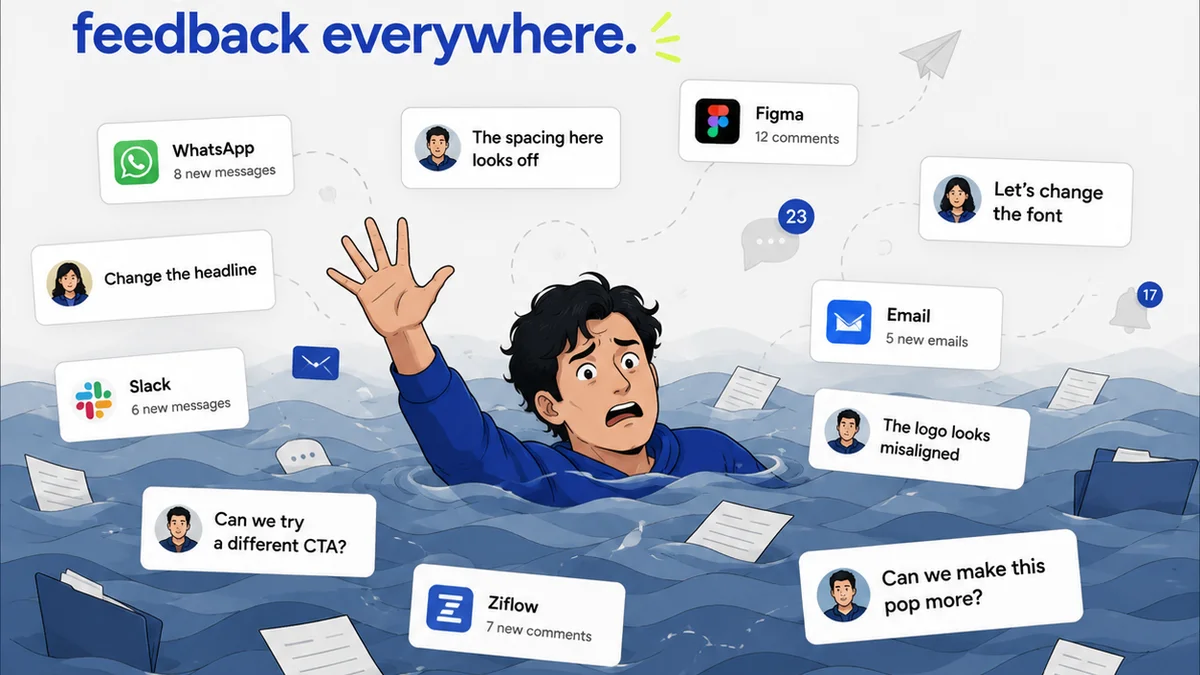
Everyone thinks client approval delays are the enemy. That clients are slow, indecisive, or just plain difficult. That if only they'd sign off faster, your projects would run smoother.
None of that is wrong. But it’s incomplete.
The hard truth? Your internal client approval workflow is likely the real choke point. Not the client's speed, but your process for gathering, managing, and acting on their feedback. This is where projects truly get stuck.
1. The Illusion of 'Final' Feedback
You send a design. You get feedback. You make changes. You send it again. This cycle, repeated ad nauseam, feels like progress. It feels like you’re moving the project forward.
But often, you're just rearranging deck chairs.
The real problem isn't that the client is asking for more revisions. It's that the feedback loop itself is broken. Each round introduces new opportunities for misinterpretation, lost context, and duplicated effort.
Common Symptoms of a Broken Feedback Loop:
- Endless 'one more thing' requests.
- Conflicting feedback from different stakeholders.
- The same comments reappearing after revisions.
- Designers feeling like they're guessing what the client *really* wants.
- Project managers drowning in email threads.
This isn't about blaming anyone. It's about recognizing that the *system* is failing, not the people in it.
2. The Email Avalanche: Your Approval Workflow's Worst Enemy
Let's be honest. Most agencies manage client feedback through email. Maybe a shared spreadsheet. Perhaps a project management tool that's barely used for creative reviews.
This is a recipe for disaster. Email chains get long. Attachments get lost. Different versions are hard to track. Who saw what? Who approved what? It’s a guessing game.
This chaos directly impacts your client approval workflow.
When feedback is scattered across dozens of emails, it's impossible to get a clear, consolidated view. You might spend hours piecing together comments, trying to decipher intent, and hoping you haven't missed a crucial detail.
This leads to:
- Wasted time hunting for information.
- Increased risk of errors and misinterpretations.
- Frustration for both your team and the client.
- Projects that drag on far longer than they should.
Your team deserves better tools than a crowded inbox to manage critical client decisions.
3. Revision Chaos: The Unseen Cost
Every revision round isn't just a new file version. It's a potential spiral of inefficiency.
Think about it:
- Does your team have a clear, single source of truth for the latest feedback?
- Is it easy to see exactly what changed between versions and why?
- Can stakeholders easily compare different options side-by-side?
Without clear answers, revisions become a black box. Designers are often working off outdated notes or assumptions. The client might not even remember what they approved last week. This leads to rework, scope creep, and ultimately, unhappy clients and eroded profit margins.
A structured client approval workflow means each revision is documented, justified, and easily trackable.
4. The 'Sign-Off' Mirage
What does 'approved' even mean in your agency?
Is it a verbal 'looks good'? An email reply? A signed PDF? Each method carries different levels of accountability and clarity.
A flimsy approval process is a ticking time bomb. It leaves you vulnerable when disputes arise or when a client later claims they never agreed to a particular direction.
A robust client approval workflow requires clear, auditable sign-offs at key stages. This protects your team, manages client expectations, and ensures everyone is aligned.
5. The Quality Control Blind Spot
When feedback is chaotic and approvals are murky, quality inevitably suffers.
Your team might be rushing to implement unclear feedback, skipping crucial checks, or simply missing details buried in long email threads.
This isn't about a lack of talent. It's about a lack of process.
A well-defined client approval workflow integrates quality control checkpoints. It ensures that feedback is not just implemented, but implemented correctly, and that the final output meets both client expectations and your agency's standards.
Where Revue Fits In
Managing client feedback and approvals doesn't have to be a chaotic free-for-all. Tools designed for creative workflows can transform this process.
Revue provides a centralized hub for all your creative assets and client feedback. Instead of digging through emails, your team can see all comments, revisions, and approvals in one place.
- Centralized Feedback: All client comments are captured directly on the creative asset, eliminating scattered email threads.
- Clear Revision History: Track every version, every change, and every approval, creating an undeniable audit trail.
- Streamlined Approvals: Make it simple for clients to review, comment, and formally approve work, reducing ambiguity.
- Enhanced Quality Control: Ensure feedback is addressed and approved before moving to the next stage, catching issues early.
This structured approach turns a potential nightmare into a predictable, manageable part of your project lifecycle.
Final Thought
Stop assuming the problem lies solely with your clients. Look inward. How can you refine your internal client approval workflow to be more transparent, efficient, and less prone to error?
The solution isn't just about getting faster approvals; it's about building a better system for feedback and collaboration that benefits everyone involved.
Frequently asked questions
What is the biggest mistake agencies make with client approvals?
The biggest mistake is assuming the problem is solely the client's speed. Most often, the internal workflow for gathering, managing, and acting on feedback is inefficient, leading to delays and confusion.
How can I reduce endless revision cycles?
Implement a structured feedback process where all comments are centralized and tracked. Ensure clear communication about what needs to be revised and why, and establish clear approval stages to prevent scope creep.
Why is email a bad tool for client feedback?
Email chains become long and disorganized, making it hard to track versions, consolidate feedback, or identify who approved what. This leads to lost information, misinterpretations, and significant wasted time.
What makes a 'good' client approval process?
A good process is clear, documented, and auditable. It provides a single source of truth for feedback and decisions, makes it easy to compare versions, and requires explicit sign-offs at key milestones.