Everyone says client feedback is slow. That clients are indecisive. That they don’t know what they want. That they’re busy. None of that is wrong. But it’s incomplete.
The hard truth? The bottleneck isn't just the client. It's your agency's process for managing that feedback. The real reason client feedback takes forever is often rooted in how you collect, organize, and act on it.
1. The Illusion of Clarity: What Clients *Think* They're Saying
Clients aren't designers. They don't speak in CMYK, hex codes, or kerning. They speak in feelings, in analogies, in vague directives.
“Make it pop more.”
“It feels a bit… flat.”
“Can we try something more… premium?”
This isn't a failing on their part. It's a communication gap. And how you bridge that gap is critical.
The Problem: Unstructured Input
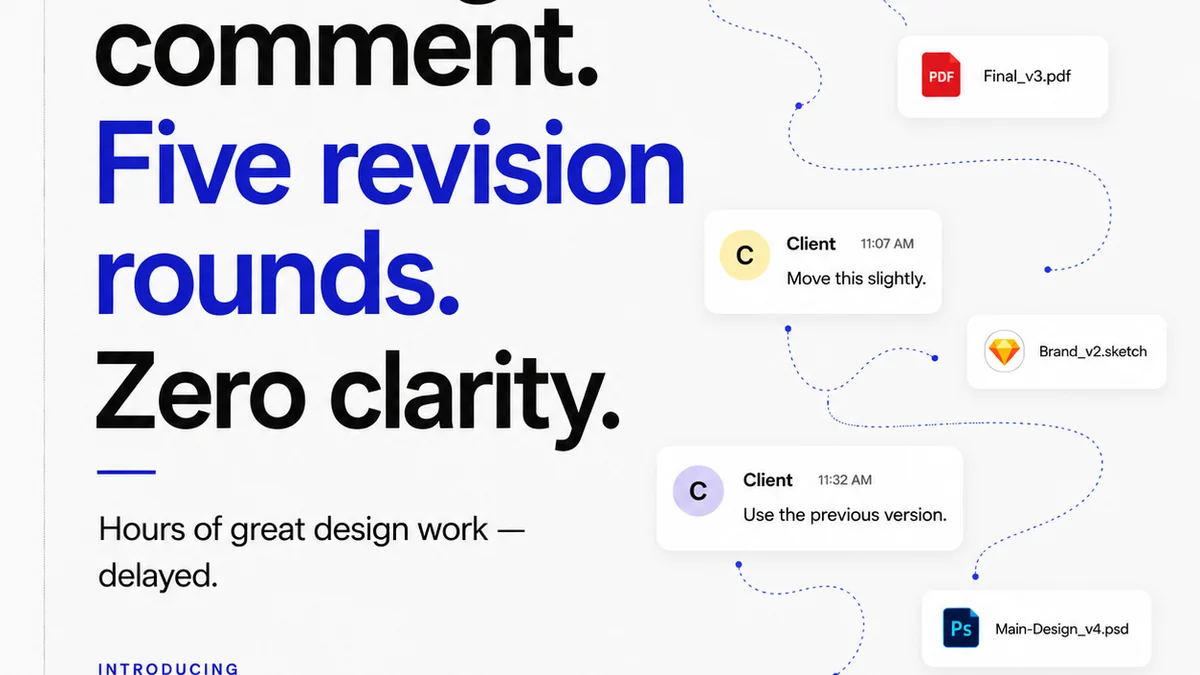
When feedback comes in unstructured – a jumble of emails, Slack messages, and verbal notes – it becomes a game of telephone. Key details get lost. Nuances are misinterpreted. What one person meant as a minor tweak can morph into a major overhaul by the time it reaches the designer.
The Fix: Structured Feedback Channels
You need a system that forces clarity. A place where feedback lives in context, tied to the specific asset and the specific comment. This isn't about making clients work harder; it's about making their input actionable for your team.
- Implement a dedicated feedback tool.
- Require specific, actionable comments.
- Ask clarifying questions *before* diving into revisions.
2. The Revision Rabbit Hole: Uncontrolled Iteration
You’ve probably heard the phrase “endless revisions.” It’s a common pain point. But is it truly endless, or just… poorly managed?
Most agencies operate on a reactive revision model. A client asks for a change, you make it. Then they ask for another. And another. Without a clear scope, a defined number of revision rounds, or a way to track what's been done, you can spiral.
The Problem: Scope Creep and Lack of Visibility
When revisions aren't tracked, they become a black hole. Did we already try that blue? Was that suggestion from last week or the week before? This lack of visibility leads to wasted time, duplicated effort, and client frustration when they see familiar
Frequently asked questions
What's the biggest reason client feedback takes so long?
While clients can be busy, the primary reason for delays often lies in inefficient internal processes for collecting, organizing, and acting on feedback. Unstructured input and lack of clear revision tracking lead to confusion and wasted time.
How can I get more specific feedback from clients?
Use structured feedback tools that allow comments tied to specific elements of the design. Train clients (gently) to provide actionable input, focusing on 'what' needs to change and 'why,' rather than vague subjective statements.
What is scope creep in client feedback?
Scope creep occurs when the project's requirements expand beyond the original agreement due to unmanaged feedback and revisions. This often happens when feedback isn't clearly defined, tracked, or approved, leading to endless iteration.
How can a Creative Director improve feedback turnaround time?
A Creative Director can improve turnaround time by implementing clear feedback processes, utilizing centralized tools for communication and version control, defining revision limits upfront, and fostering better communication protocols with clients.