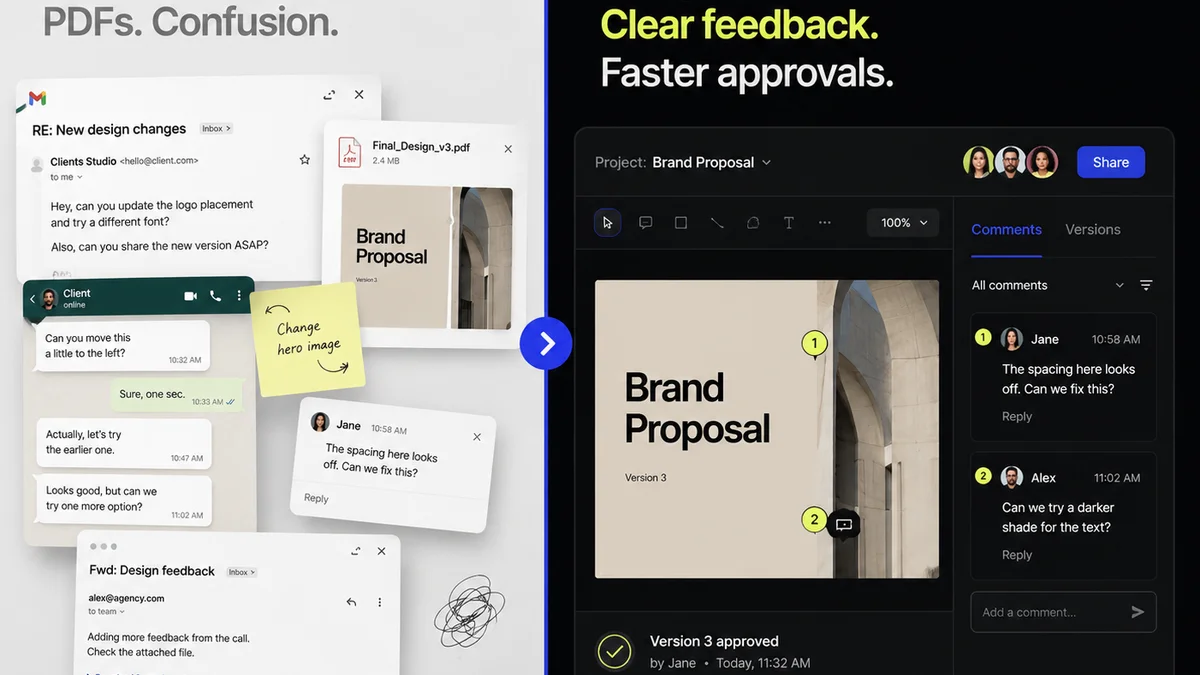
Everyone knows you need client feedback. It’s the lifeblood of any creative project. Most agencies think their current system – a mix of emails, Slack messages, and maybe a quick call – is good enough. It’s not.
The hard truth? Inconsistent, unstructured feedback is a project killer. It leads to endless revisions, frustrated teams, and clients who feel unheard. A well-designed client feedback form isn't just about collecting comments; it's about managing expectations and streamlining the entire creative process.
1. Why Your Ad-Hoc Feedback System is Failing
You’ve seen it before. A client sends a single email with a dozen points, some clear, some vague. “Make it pop more.” “I don’t love the blue.” “Can we try something else for the headline?”
Where do you even start?
This is the reality when you don’t have a centralized system for feedback. You’re left guessing, chasing down context, and hoping you’ve interpreted their wishes correctly. It’s a recipe for scope creep and team burnout.
The Hidden Costs of Vague Feedback
- Endless, unproductive revision cycles.
- Misinterpretation leading to work that misses the mark.
- Team members wasting time on unclear instructions.
- Difficulty tracking what’s been approved and what’s still in flux.
- Clients feeling like their input isn't being properly addressed.
This isn't just about being organized. It's about operational efficiency and protecting your project margins.
2. The Power of a Structured Client Feedback Form
A client feedback form is your first line of defense against project chaos. It forces clarity from the outset and provides a single source of truth for all input.
Think of it as a filter. It catches ambiguity before it infects your workflow.
When designed correctly, a feedback form doesn't just collect comments; it guides the client's thinking and prompts them to provide actionable insights. This is crucial for any creative deliverable, from website designs to marketing campaigns.
Key Components of an Effective Feedback Form
- Clear Project Context: Remind the client what they are reviewing (e.g.,
Frequently asked questions
What is the main benefit of using a client feedback form?
The main benefit is gaining clarity and structure in client communication. It reduces ambiguity, prevents scope creep, and ensures everyone is on the same page regarding feedback, leading to more efficient revision cycles and better project outcomes.
Can a client feedback form help prevent scope creep?
Yes, absolutely. By requiring specific, actionable feedback within defined project stages, a form helps document what's being asked for and distinguishes between necessary revisions and new requests that might expand the project scope.
What information should I include in a client feedback form?
Key information includes clear project context, specific questions about the work being reviewed, a section for general comments, a way to indicate approval or request revisions, and a deadline for submission. It should also prompt for specific areas of focus.
How often should I use a client feedback form?
Ideally, you should use a client feedback form at key project milestones where client review is required. This typically includes after initial concepts, after design mockups, after development builds, and before final delivery.