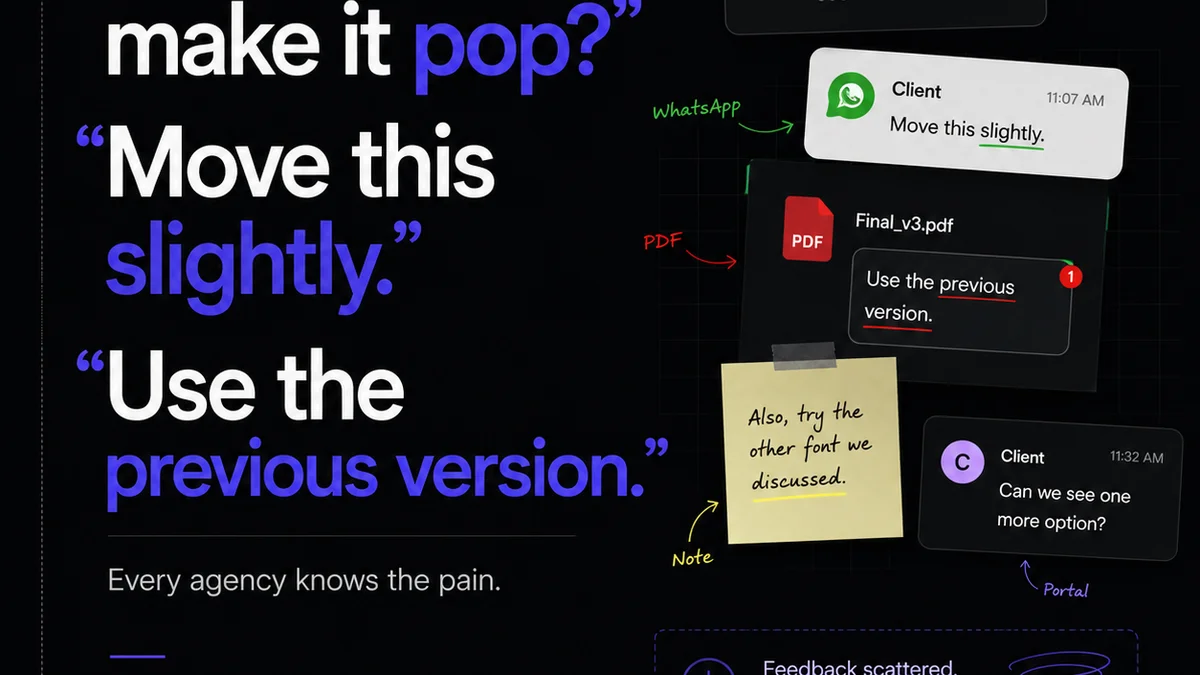
Everyone knows you need a client feedback form. It’s the standard operating procedure for creative agencies. Send it out, get comments, make changes. Simple, right?
None of that is wrong. But it’s incomplete.
The real truth? A basic feedback form is often just another step in a broken process. It’s a band-aid on a systemic issue of unclear communication, scope creep, and wasted hours. The *right* client feedback form is a strategic tool. It’s designed to elicit actionable input, protect your team from vague critiques, and keep projects on track – and profitable.
1. The Flawed Assumption: Forms Are Just for Collecting Comments
Most agencies treat feedback forms as a passive data-collection device. You send it, they fill it out, you get a jumble of subjective opinions. This is where the breakdown starts.
A feedback form isn’t just a place to dump comments. It's a structured conversation starter. It’s your first line of defense against feedback that’s:
- Vague: “I don’t like it.”
- Subjective: “Make it pop more.”
- Contradictory: “It needs to be bolder, but also more subtle.”
- Outside scope: “Can we add a new feature here?”
When you treat it as just a collection tool, you set yourself up for frustration. Your team gets unclear direction, clients feel unheard, and revisions spiral.
2. The Hard Truth: Forms Are About Guiding the Client
A truly effective client feedback form doesn't just ask *what* they think. It guides them on *how* to think about the work, *what* to look for, and *what kind* of input is actually helpful.
This means designing the form with intention. It’s about:
- Setting expectations upfront.
- Asking targeted questions tied to project goals.
- Providing context for the feedback requested.
- Making it easy for the client to give *useful* feedback.
This isn't about making things difficult for the client. It's about making the process efficient and productive for everyone involved.
3. Designing Your Client Feedback Form: The Core Components
A robust feedback form goes beyond a simple text box. Think of it as a mini-brief for your client’s review.
3.1. Project Context is Key
Start by reminding everyone what the project is about. What are the goals? Who is the target audience? What was the objective of this specific deliverable?
This grounds the feedback in strategic reality, not just personal preference. It helps the client remember why the work looks the way it does.
3.2. Specific Questions Tied to Objectives
Instead of “Any comments?”, ask targeted questions. Tailor these to the stage of the project and the specific deliverable.
For a website design, for example:
- “Does the homepage clearly communicate our value proposition to the target audience?”
- “Are the calls-to-action (CTAs) prominent and intuitive?”
- “Does the navigation structure feel logical and easy to use?”
- “Are there any technical issues or broken links you encountered?”
These questions force the client to evaluate the work against the project’s goals, not just their fleeting aesthetic whims.
3.3. The
Frequently asked questions
What makes a client feedback form effective?
An effective client feedback form goes beyond basic comment collection. It provides project context, asks specific, goal-oriented questions, and guides the client to provide actionable input rather than vague opinions. It should also clearly define what kind of feedback is expected at each stage.
How do I prevent scope creep with feedback forms?
Clearly state the project's objectives and the purpose of the current deliverable within the form. Ask questions directly related to these objectives. If feedback ventures into new features or significant changes, note it as out-of-scope for immediate discussion and propose a change order or adjust the next project phase.
Should I use a template for client feedback forms?
Yes, using a standardized template ensures consistency and helps clients understand the process. However, it's crucial to customize the specific questions within the template for each project's unique goals and deliverables to ensure the feedback remains relevant and actionable.
What's the best way to handle subjective feedback?
Acknowledge subjective feedback without immediately acting on it. If a client says 'I don't like it,' probe gently: 'Can you tell me more about what specifically isn't working for you?' or 'What aspects of the design are you responding to negatively?' If it's a matter of taste, refer back to the project's strategic goals and target audience to guide the decision.