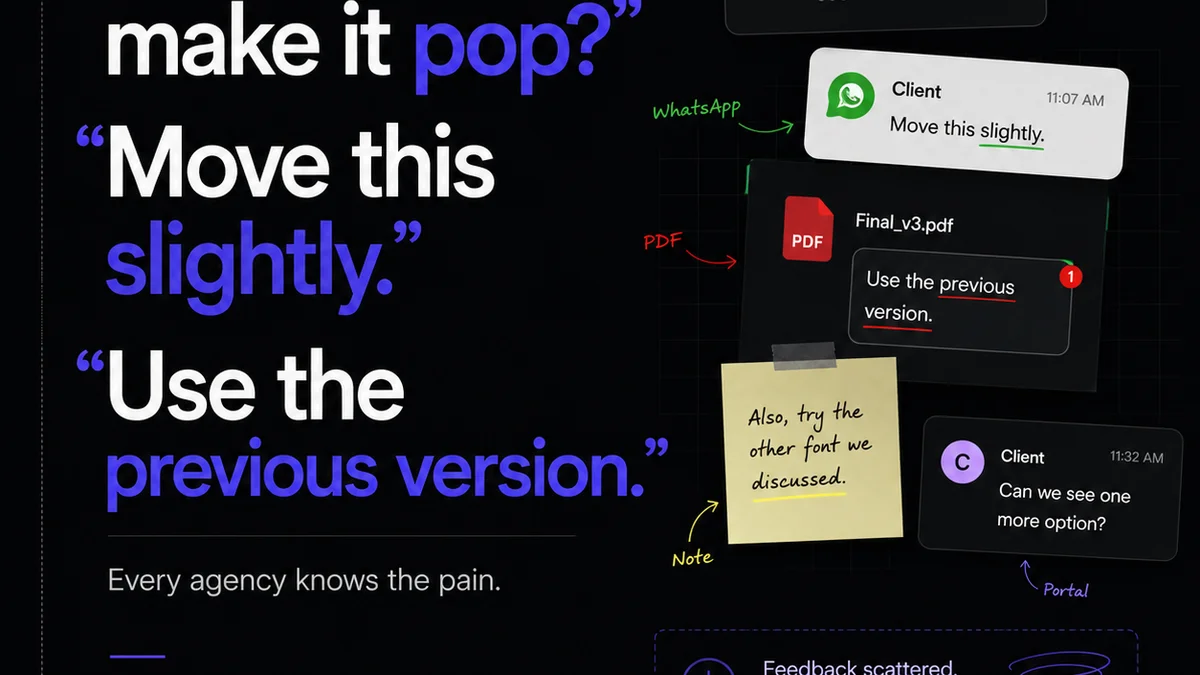
Everyone says client feedback is the hardest part of marketing. That it’s subjective, unclear, and always late. None of that is wrong. But it’s incomplete.
The deeper truth? Your client feedback process is likely broken. And it’s costing you time, money, and creativity.
1. The Illusion of 'Just Send It Over'
Most marketing teams treat feedback collection like an afterthought. A casual email chain. A shared Google Doc. Maybe a quick Slack message.
This haphazard approach breeds chaos. It assumes everyone is on the same page about what needs feedback, when, and how it should be delivered.
The Symptoms of a Broken Process
- Endless back-and-forth emails trying to decipher vague comments.
- Key stakeholders miss review cycles because they weren't notified properly.
- Version control nightmares where you're working off outdated creative.
- Wasted hours hunting down feedback scattered across multiple platforms.
- Clients get frustrated because they don't know how their input is being used.
This isn't just annoying; it's actively detrimental to the creative output and client relationships.
2. Why 'Collaboration' Often Means Confusion
Collaboration is vital. But true collaboration requires structure, not just access. When feedback is unstructured, it becomes a breeding ground for misinterpretation.
Think about it: a single comment like “make it pop more” can mean a dozen different things to different people. Without context, the creative team is left guessing.
The Feedback Loop Breakdown
- Lack of Context: Feedback is given without reference to the original brief or strategic goals.
- Vagueness: Comments are subjective and lack actionable direction.
- Conflicting Input: Different stakeholders provide contradictory feedback.
- Delayed Responses: Critical feedback arrives after the deadline, forcing rushed revisions.
- No Clear Ownership: It's unclear who is ultimately responsible for approving the work.
This is where most marketing teams get stuck, believing the problem lies with the client, not their own system.
3. The Hidden Costs of Inefficient Feedback
Every hour spent chasing down feedback, clarifying comments, or redoing work is an hour not spent on strategy, innovation, or client growth.
The financial impact is significant. Add up the billable hours lost to inefficient review cycles, and you'll see a substantial drain on profitability.
Quantifying the Loss
- Extended Project Timelines: Delays mean higher costs and missed market opportunities.
- Reduced Creative Bandwidth: Designers and writers spend more time managing feedback than creating.
- Client Dissatisfaction: Frustration with the process erodes trust and can lead to lost business.
- Increased Revision Rounds: Unclear feedback leads to more — and often unnecessary — revisions.
- Team Burnout: Constant rework and communication friction lead to stressed-out teams.
These aren't minor inconveniences. They are operational inefficiencies that directly impact your bottom line.
4. Building a Better Feedback Workflow
The solution isn't to manage clients better; it's to manage the *feedback process* better. This means implementing systems that provide clarity, structure, and accountability.
Key Components of an Effective System
- Centralized Platform: All feedback, comments, and approvals in one place.
- Clear Review Stages: Define specific points for feedback and who provides it.
- Contextual Annotations: Allow feedback directly on the creative asset, with clear links to project goals.
- Version Control: Easily track revisions and ensure everyone is reviewing the latest version.
- Automated Notifications: Keep stakeholders informed about review deadlines and status updates.
- Actionable Feedback Guidelines: Educate clients on how to provide constructive input.
This structure transforms feedback from a chaotic burden into a productive part of the creative process.
Where Revue Fits In
This is precisely why tools like Revue exist. They are built to address the operational friction points in creative project management.
Revue provides a single source of truth for all client feedback. Instead of digging through emails or Slack, all comments, annotations, and approvals live on the asset itself.
This means:
- Contextual Clarity: Feedback is tied directly to the specific element being reviewed.
- Streamlined Revisions: Easily track changes, manage versions, and ensure stakeholders are seeing the most up-to-date work.
- Visibility and Accountability: Everyone involved can see the feedback trail, understand decisions, and track progress towards final approval.
- Quality Assurance: Keep a clear record of feedback and approvals, reducing scope creep and ensuring final deliverables meet client expectations.
By centralizing and structuring the feedback process, Revue helps marketing teams move faster, reduce errors, and build stronger client relationships.
Final Thought
Is your team still wrestling with chaotic client feedback? Or are you proactively building systems that turn feedback into a strategic advantage? The difference isn't just about efficiency; it's about the quality of the work you produce and the growth of your agency.
Frequently asked questions
What are the biggest mistakes marketing teams make with client feedback?
Treating feedback collection as an afterthought, using unstructured methods like email chains or scattered documents, lacking clear review stages, and failing to provide context for feedback are common mistakes. This leads to confusion, delays, and rework.
How can I make client feedback more actionable?
Implement a centralized feedback system where comments are attached directly to the creative asset. Provide clear guidelines for feedback, encouraging specificity and context related to project goals. Define review stages and ensure the right stakeholders are involved at each step.
What are the hidden costs of poor client feedback management?
Hidden costs include extended project timelines, reduced creative team bandwidth due to rework, client dissatisfaction eroding trust, increased revision rounds leading to scope creep, and team burnout from constant communication friction and frustration.
How does a tool like Revue help with client feedback?
Revue centralizes all feedback and approvals in one place, directly on the asset. This provides contextual clarity, streamlines revisions with version control, offers visibility into the feedback trail, and aids in quality assurance, ultimately making the process more efficient and less prone to errors.