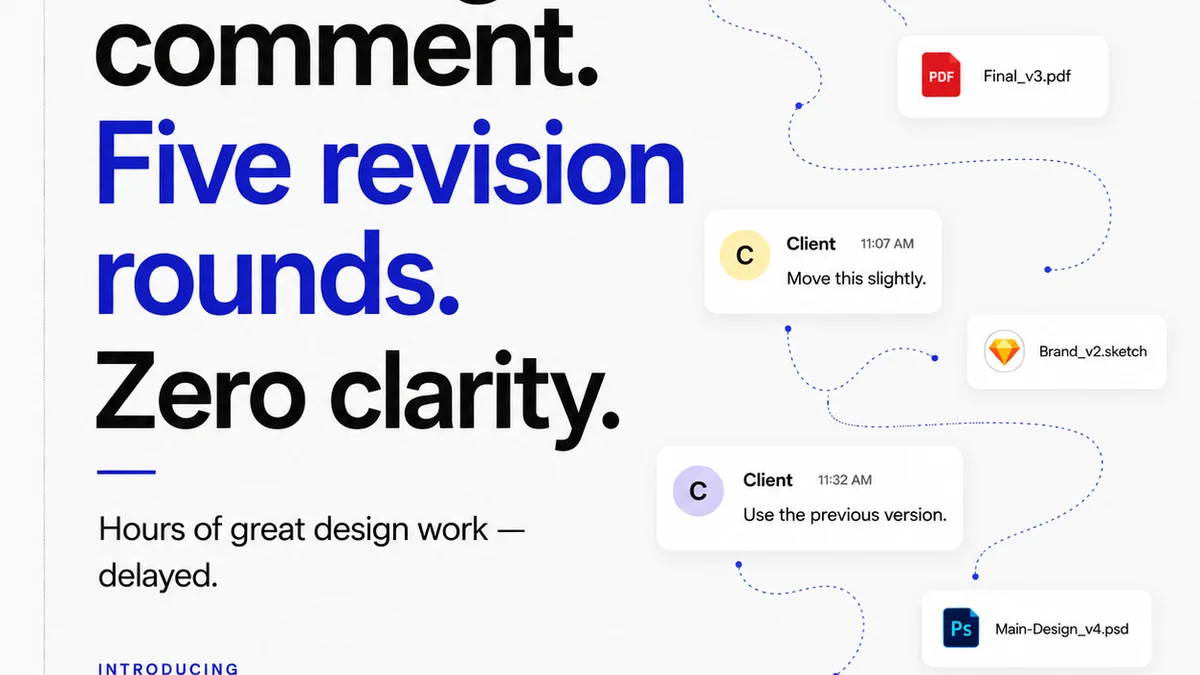
Everyone knows client feedback is part of the job. You get it, you process it, you iterate. It’s just… stuff you have to do to get paid.
None of that is wrong. But it’s incomplete.
The hard truth? Most agencies treat feedback like a necessary evil. A bottleneck. A source of frustration. They see it as an obstacle to delivering the final product.
This view is costing you more than just time. It’s costing you growth.
Client feedback, when handled strategically, isn't a drag on your process. It’s a vital engine for agency development. It’s how you build better client relationships, refine your services, and ultimately, scale your business.
1. Feedback Isn't Just About the Project. It's About the Partnership.
Your clients aren't just paying for deliverables. They're investing in your expertise, your creative vision, and your ability to solve their business problems.
When you actively solicit, organize, and respond to feedback thoughtfully, you’re doing more than just making revisions. You’re demonstrating:
- That you value their perspective.
- That you understand their business goals.
- That you're a true partner, not just a vendor.
This builds trust. And trust is the bedrock of long-term client relationships.
Think about it: would you rather work with someone who just takes your money and delivers something, or someone who engages in a dialogue, ensuring the final output truly aligns with your vision and objectives?
The difference is palpable. And it directly impacts client retention and repeat business.
The Cost of Ignoring the Partnership Angle
Treating feedback as a transactional chore leads to:
- Misunderstandings that escalate into major conflicts.
- Clients who feel unheard and undervalued.
- A higher likelihood of clients churning after the first project.
- Missed opportunities to upsell or deepen the engagement.
It’s a cycle that stunts growth and keeps you perpetually chasing new business.
2. Feedback Is Your Best Quality Control Mechanism
You have internal QA processes, sure. But your client is the ultimate arbiter of whether the work meets *their* needs. Their feedback is the final, critical check.
Ignoring or dismissing client feedback is like skipping the final inspection on a house you’re building. You might think it’s perfect, but the owner might find a leaky faucet or a drafty window.
The goal isn't to blindly implement every comment. It's to understand the *intent* behind the feedback.
Decoding Client Comments
Often, a client's comment isn't about the specific words they use. It's about an underlying concern:
- “I don’t like this blue.” might mean: “This blue doesn’t feel like our brand’s established personality.”
- “Make it pop more.” might mean: “I’m not sure this element is communicating the key message effectively.”
- “Can we try something else?” might mean: “I’m not seeing how this connects to the business objective we discussed.”
Learning to interpret these nuances is a skill. And it’s a skill honed by paying close attention to *all* feedback, not just the easy bits.
This interpretation process is invaluable. It sharpens your team’s understanding of client needs and improves your ability to anticipate issues before they arise.
3. Feedback Reveals Gaps in Your Process and Offering
Ever notice the same types of comments coming up from different clients? That’s not a coincidence. It’s a signal.
Repetitive feedback points to systemic issues. Maybe your initial brief process isn’t capturing enough detail. Perhaps your design presentations lack clarity. Or maybe your project scope needs better definition.
Common Feedback Patterns and Their Meanings
- Consistent comments on clarity: Your project communication or final deliverables might be too complex.
- Frequent requests for 'more energy' or 'less corporate': Your team might be defaulting to a style that doesn't fully align with certain client brands.
- Recurring questions about ROI or business impact: You may need to better connect creative decisions back to client objectives earlier and more often.
- Pushback on timelines or budget: Your scoping or estimation process might need refinement.
These aren't complaints; they're data points. They tell you exactly where to invest your efforts in improving your agency.
Analyzing this feedback allows you to proactively refine your workflows, update your service packages, and train your team more effectively. It’s a direct path to operational excellence.
4. Feedback Informs Your Agency's Strategic Direction
What kind of clients are giving you the most positive, constructive feedback? What types of projects are generating the most insightful comments?
Follow the feedback. It often points towards the work your agency is best suited to do, and the clients you’re best equipped to serve.
If you’re consistently getting feedback that suggests your clients love your strategic thinking but are less enthusiastic about your execution on, say, social media graphics, it might be time to re-evaluate your service mix.
Conversely, if you’re getting rave reviews for a particular niche service, that’s a strong indicator of where to focus your marketing and business development efforts.
Your clients are essentially telling you what they value most about your agency. Are you listening?
Using Feedback for Business Development
This insight is gold for business development:
- Refine your ideal client profile: Target clients who align with the projects that generate the best feedback.
- Develop new service offerings: If feedback highlights unmet needs in a specific area, consider building a service around it.
- Improve your sales pitch: Highlight the aspects of your work that clients consistently praise.
- Strengthen your portfolio: Showcase projects that were the result of highly collaborative, positive feedback cycles.
This isn't about chasing every opportunity. It's about strategically growing the agency you *want* to run, based on what clients truly value.
Where Revue Fits In
Managing client feedback effectively is the lynchpin. Without a system, it’s chaos. Feedback gets lost in email threads, Slack messages, and random call notes.
Revue provides the structure to turn this chaos into actionable intelligence.
- Centralized Feedback Hub: Keep all client comments, annotations, and approvals in one place. No more digging through endless communications.
- Clear Revision Tracking: See exactly what changes were requested, by whom, and when. This transparency reduces ambiguity and prevents scope creep.
- Streamlined Approvals: Get clear sign-offs at each stage, ensuring everyone is aligned before moving forward.
- Version Control: Easily manage different iterations of a project, so clients always see the latest, most relevant version.
By centralizing feedback and streamlining the revision process, Revue doesn't just make feedback management easier. It enables you to leverage that feedback as the powerful growth tool it’s meant to be.
Final Thought
Are you treating client feedback as a necessary administrative task, or as a strategic asset for growth? The answer reveals a lot about your agency's potential.
The agencies that thrive aren't just good at design; they're exceptional at listening, interpreting, and acting on what their clients tell them. They understand that every comment, every revision, is an opportunity to build a stronger relationship, a better product, and a more resilient business.
What are your clients *really* telling you?
Frequently asked questions
How can I make client feedback less painful?
Implement a centralized platform like Revue to consolidate all feedback. Establish clear communication protocols for how and when feedback should be provided. Train your team to interpret the intent behind comments, not just the literal words. This structure reduces confusion and streamlines the revision process.
What if a client's feedback is subjective or doesn't align with the brief?
This is where interpretation is key. Instead of just implementing the change, ask clarifying questions to understand the underlying need or concern. Refer back to the original brief and project goals. If the feedback genuinely deviates, have a professional conversation with the client about scope and potential impacts on timeline or budget.
How often should I ask for client feedback?
Integrate feedback loops at key milestones throughout the project lifecycle – after initial concepts, after revisions, and before final delivery. Consistent, structured feedback points are more effective than one large feedback session at the end.
Can feedback help me identify my agency's strengths?
Absolutely. By analyzing patterns in positive feedback, you can identify which services, project types, or aspects of your approach clients value most. This insight is invaluable for refining your niche, marketing efforts, and service development.