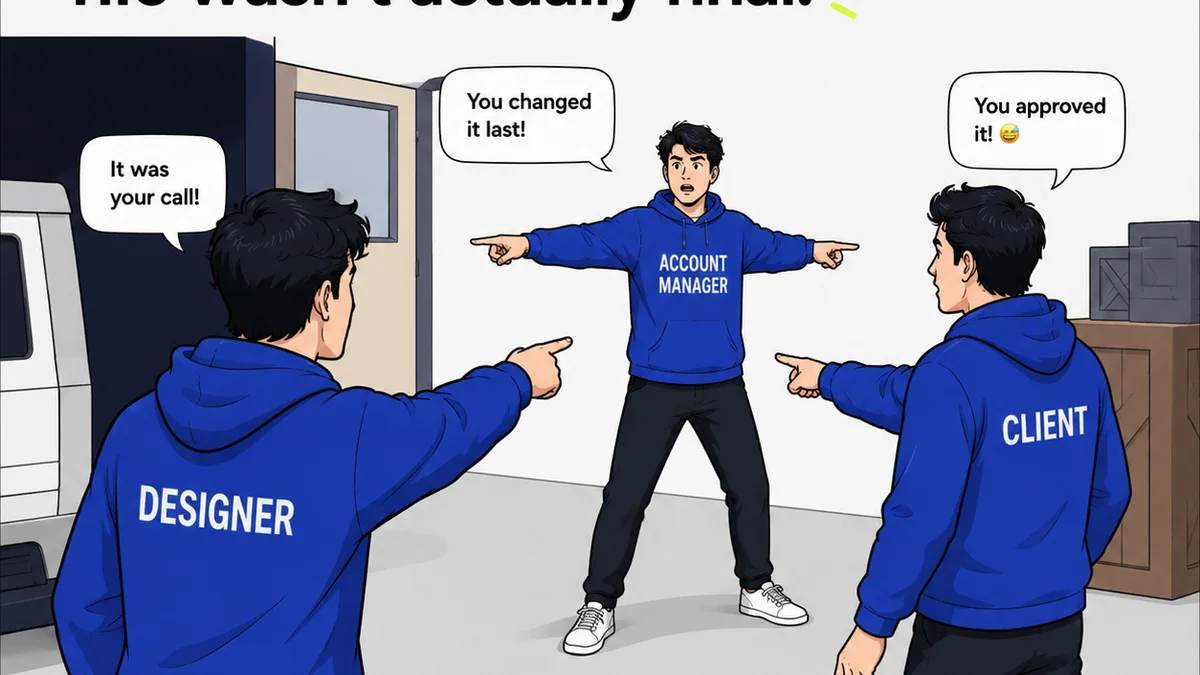
Everyone knows that vague feedback kills creative projects. Clients say, “I don’t like it,” or “Make it pop more.”
We nod, we sigh, we ask for clarification. We try to decipher the tea leaves of subjective preference.
None of that is wrong. But it’s incomplete.
The deeper truth? The most damaging feedback mistakes aren’t about vagueness. They’re about systemic flaws in how clients *approach* feedback, leading to wasted time, blown budgets, and demoralized teams.
This isn’t about blaming clients. It’s about understanding the disconnect and building bridges. Let’s look at the real problems.
1. The “Kitchen Sink” Feedback Pass
This is when a client waits until the very end of a stage to deliver all their thoughts. Every single minor tweak, every “nice-to-have,” every change of heart gets dumped in one massive email or meeting.
It feels efficient to them. One and done. They’ve “cleared their plate.”
But for the creative team, it’s a disaster.
Why it’s a problem:
- Scope Creep disguised as detail: What seems like a small change in isolation often has ripple effects. A new headline might require a new image, a different layout, a re-recording of audio.
- Loss of focus: The team has to parse through dozens of comments, prioritizing and de-prioritizing, often losing sight of the original brief.
- Demoralization: After working hard on a specific direction, receiving a laundry list of unrelated changes can feel like their effort was ignored.
- Missed opportunities for course correction: If feedback was given earlier, on smaller chunks, major issues could have been caught and resolved with less effort.
This isn’t about clients being difficult. It’s about a lack of understanding of the iterative nature of creative work.
2. Feedback by Committee
You’ve probably seen this. The primary contact is great. Then they loop in their boss, their colleague from marketing, maybe even their cousin who “has a good eye.”
Suddenly, you’re getting conflicting direction from multiple sources. “Sarah likes blue, but Mark wants green.” “John thinks this headline is too long, but Emily says it needs more context.”
The client contact might even be powerless, just relaying messages they’ve been given.
Why it’s a problem:
- Conflicting Priorities: Different stakeholders have different goals, different aesthetic preferences, and different levels of understanding about the project’s objectives.
- Analysis Paralysis: The creative team gets stuck trying to reconcile irreconcilable feedback, leading to inaction or a Frankenstein’s monster of a design.
- Erosion of Trust: When the client can’t present a unified front, it signals a lack of internal alignment and makes it harder for the agency to deliver effectively.
- Wasted Time: Every extra stakeholder requires an extra meeting, an extra email chain, an extra round of revisions.
The assumption here is that more eyes mean better results. Often, it just means more noise.
3. The “It’s Just a Small Tweak” Fallacy
This is a classic. The client sees a minor change – a font size adjustment, a color shift, a word change – and thinks, “That’ll take five minutes.”
They don’t see the underlying structure, the dependencies, or the time already invested in getting to the current state.
They don’t understand that a “small tweak” can unravel hours of meticulous work.
Why it’s a problem:
- Underestimation of Effort: Clients often lack visibility into the technical complexity or the sheer volume of creative decisions that go into a final piece.
- Unforeseen Consequences: A seemingly small change can break the visual hierarchy, impact readability, or clash with brand guidelines in ways the client didn’t anticipate.
- Erosion of Project Value: Constant “small tweaks” can devalue the expertise of the creative team and the perceived effort involved.
- Budget Overruns: Each “small tweak” billed out adds up, leading to sticker shock later on.
This mistake stems from a lack of appreciation for the craft involved.
4. Lack of Context and Strategic Alignment
The client provides feedback based on personal preference, not strategic goals. They might say, “I just don’t like that shade of blue,” without considering that it’s the client’s exact brand color.
Or they might request a feature that completely undermines the campaign’s core message.
The feedback is tactical, not strategic.
Why it’s a problem:
- Misalignment with Objectives: The creative work drifts away from its original purpose, becoming aesthetically pleasing but ineffective.
- Subjectivity Over Strategy: Personal taste trumps data, brand guidelines, or campaign goals.
- Reinventing the Wheel: The team might have to discard perfectly good creative that met the brief because the client shifted their personal preference.
- Difficulty in Measuring Success: If the feedback isn’t tied to measurable outcomes, it’s impossible to know if the changes actually improved performance.
This isn’t about being difficult; it’s about a lack of a shared understanding of the “why” behind the creative.
5. The “Perfect is the Enemy of Good Enough” Syndrome
Some clients get stuck in a loop of endless refinement. They’re chasing an unattainable ideal, constantly tweaking minor details, convinced that the next revision will be *the one*.
They don’t recognize diminishing returns.
The project stalls, deadlines loom, and the pressure mounts.
Why it’s a problem:
- Stalled Progress: Projects get stuck in perpetual revision cycles, never reaching completion.
- Missed Market Opportunities: A delayed launch means missing a crucial window of opportunity.
- Budget Exhaustion: The project consumes resources without delivering a final, usable asset.
- Team Burnout: Creative teams can become exhausted and disillusioned by the inability to finalize work.
This often comes from a fear of launching something imperfect, forgetting that “done” is often better than “perfect.”
Where Revue Fits In
These aren’t insurmountable problems. They’re workflow challenges that require better systems and communication.
This is where a centralized feedback and approval platform like Revue becomes critical.
Instead of fragmented email chains and confusing spreadsheets, Revue provides a single source of truth for all feedback.
- Consolidated Feedback: All comments and revisions are logged in one place, attached to the specific creative asset. This combats the “Kitchen Sink” problem by making feedback granular and contextual.
- Clear Accountability: Assigning feedback and approvals to specific stakeholders streamlines the process and reduces “Feedback by Committee” chaos. You know who needs to weigh in and when.
- Version Control and History: Every revision is tracked, showing the evolution of the creative. This helps clients understand the effort behind changes and combats the “It’s Just a Small Tweak” fallacy by providing context.
- Alignment on Objectives: By linking feedback directly to project briefs and goals within the platform, it’s easier to keep discussions strategic and focused, mitigating the “Lack of Context” issue.
- Streamlined Approvals: Clear approval workflows help move projects forward, preventing the “Perfect is the Enemy of Good Enough” syndrome by providing a defined path to completion.
Revue helps agencies and clients align, communicate, and move projects forward efficiently, transforming feedback from a bottleneck into a catalyst.
Final Thought
The goal isn’t to eliminate client feedback. It’s to make it constructive.
It’s about fostering a collaborative environment where feedback fuels progress, rather than derailing it.
How can you shift the conversation from subjective opinions to strategic input, ensuring every piece of feedback moves you closer to a successful outcome?
Frequently asked questions
What's the difference between vague feedback and bad feedback?
Vague feedback is unspecific (e.g., 'Make it better'). Bad feedback is often systemic, like waiting until the last minute to give all comments, involving too many people, or providing feedback that contradicts project goals. Vague feedback is a symptom; systemic issues are the root cause.
How can agencies prevent clients from providing 'kitchen sink' feedback?
Establish clear feedback stages and deadlines from the outset. Use a platform like Revue to consolidate feedback in real-time, making it easier for clients to provide input incrementally rather than in one large dump. Educate clients on the impact of batch feedback.
What's the best way to handle conflicting feedback from multiple stakeholders?
Designate a single point of contact for all feedback. If multiple stakeholders must be involved, ensure they have a clear internal alignment process before relaying feedback. Use a system that allows you to track who provided which comment and seek clarification from the primary contact to resolve conflicts.
How can agencies help clients understand the effort behind 'small tweaks'?
Use visual tools that show the evolution of a design. Platforms like Revue track every revision, providing context. When discussing changes, refer back to the original brief and explain how a seemingly small alteration impacts the overall structure or strategy. Transparency about your process is key.