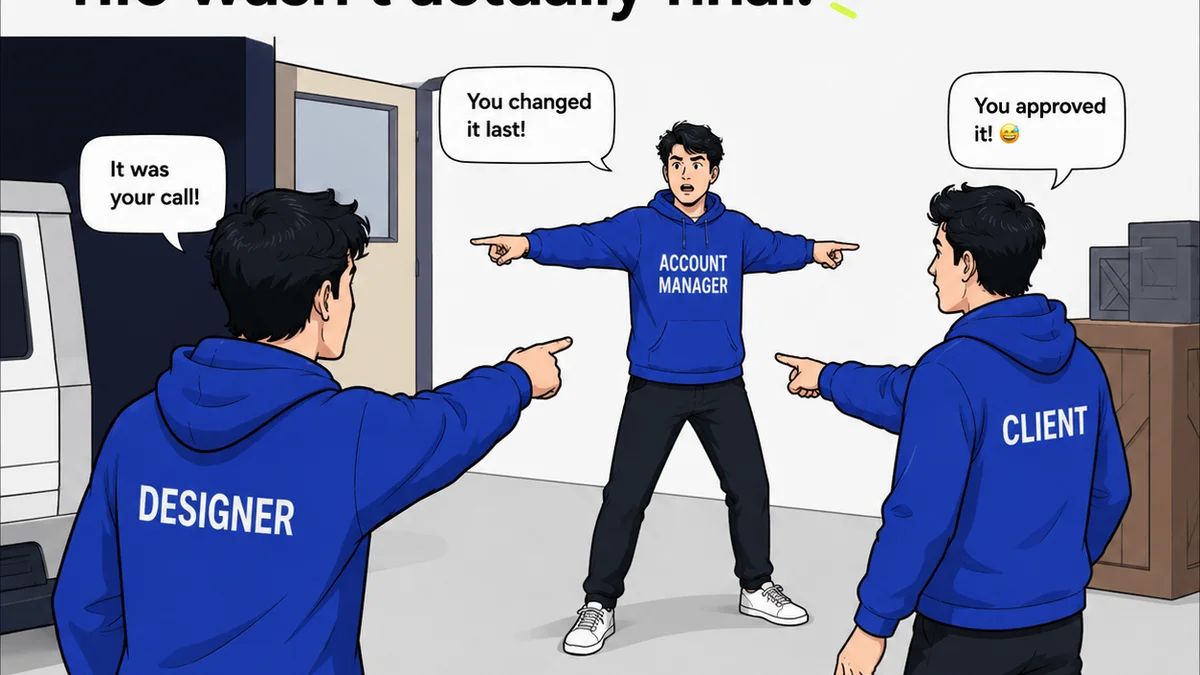
Everyone knows client feedback is critical. You hear it all the time: "Listen to your clients." "Understand their needs." "Collaborate effectively." None of that is wrong. But it’s incomplete.
The hard truth? A great client feedback workflow isn’t about being a great listener. It’s about being a great *manager*. Of information, of expectations, and of the creative process itself. For creative directors, this means moving beyond reactive chaos to proactive control.
1. The Myth of the 'Perfect Brief'
We all chase the perfect brief. The one document that captures every client need, every nuance, every objective, upfront. It’s a nice idea. It rarely happens.
Clients often don’t know what they want until they see it. Their business needs evolve. Market conditions shift. The brief is a starting point, not a sacred text.
This leads to:
- Endless scope creep disguised as clarification.
- Misunderstandings that resurface weeks later.
- Frustration on both sides when the deliverable misses the mark.
Rethinking the Brief as a Living Document
Instead of a static document, treat the brief as the first step in an ongoing dialogue. Build checkpoints into your process to revisit and refine objectives as the project progresses.
This requires a feedback workflow that embraces iteration, not just final sign-off.
2. The Feedback Black Hole
The most common failure point isn't the client's feedback itself, but *how* it’s captured and processed. Email chains. Slack messages. Random Word docs. Phone calls scribbled on notepads. Each is a potential black hole for crucial information.
This isn't just messy; it's dangerous.
When feedback lives in disparate places, you lose:
- Context: Why was this change requested? Who asked for it?
- History: What revisions have already been made based on similar input?
- Accountability: Who owns this decision?
- Efficiency: Sifting through dozens of messages to find one piece of direction wastes hours.
Establishing a Single Source of Truth
Your feedback workflow needs a central hub. A place where all comments, annotations, and approvals live. This isn't about adding another tool; it's about consolidating the process.
Imagine a world where every stakeholder can see the latest version, leave their feedback directly on the asset, and track the status of revisions. That’s not a fantasy; it’s operational hygiene.
3. The 'Vague Feedback' Trap
Clients say things like: "Make it pop." "I don't love it." "It needs more energy." Sound familiar?
This isn't necessarily bad faith. It's often a sign that the client doesn't have the creative vocabulary to articulate their specific needs. Or perhaps they haven't fully considered the implications of their request.
Your job as a Creative Director isn't just to receive this feedback, but to translate it into actionable direction.
Probing for Specificity
Your workflow needs mechanisms to elicit specific, actionable feedback. This involves:
- Asking clarifying questions: "When you say 'pop,' what specific visual element are you referring to? Color? Typography? Imagery?"
- Providing options: "We can achieve more energy by increasing contrast, using a bolder typeface, or introducing more dynamic imagery. Which direction feels closer to what you envision?"
- Defining acceptance criteria: Agree upfront on what constitutes a successful outcome for specific feedback points.
This requires a structured review process, not an open-ended discussion.
4. The Revision Cycle Nightmare
The dreaded endless revision cycle. It’s a drain on resources, a killer of morale, and a sure sign of a broken workflow.
Often, this stems from a lack of clear ownership and tracking of changes. Each revision should be a deliberate step, not a random iteration.
Key problems include:
- Uncontrolled versions: Multiple versions of the same asset floating around.
- Lack of clarity on what was changed: Did we address the client's last point? Or did we introduce new issues?
- No clear sign-off points: When is a revision cycle truly *done*?
Implementing Structured Revision Management
A robust workflow tracks every change, links it back to the original feedback, and clearly delineates between feedback, revisions, and final approval.
This means:
- Version control is non-negotiable.
- Every change should be logged.
- Clear stages of review and approval are defined.
5. Where Revue Fits In
This is where a centralized platform for creative collaboration becomes essential. A tool like Revue streamlines the entire client feedback loop, transforming chaos into clarity.
Revue allows you to:
- Centralize all feedback: Comments, annotations, and discussions happen directly on the creative assets, eliminating email chains and Slack messages. Every piece of input is logged and attributed.
- Manage revisions efficiently: Easily track versions, see exactly what changed between iterations, and understand the history of feedback. This prevents scope creep and ensures everyone is working from the latest approved version.
- Streamline approvals: Define clear approval stages and get definitive sign-offs, reducing ambiguity and speeding up project timelines. No more guessing if feedback was truly approved.
- Maintain quality control: With all feedback and revisions documented, you have a clear audit trail for quality checks and can ensure all project requirements are met before final delivery.
It's about bringing order to the creative process, ensuring that client feedback is a driver of progress, not a source of friction.
6. Final Thought
Is your client feedback workflow a source of strategic advantage or a constant operational headache? The difference lies not in your ability to listen, but in your ability to systematically manage the input and output of the creative process.
Stop reacting. Start managing.
Frequently asked questions
What is the biggest mistake Creative Directors make with client feedback?
The biggest mistake is treating client feedback as purely subjective input to be passively received. The real challenge and skill lie in actively managing, clarifying, and structuring that feedback into actionable direction, preventing it from becoming a source of scope creep or endless revisions.
How can I get more specific feedback from clients?
Implement structured review processes that prompt clients for specifics. Ask clarifying questions, offer defined options for changes, and establish clear acceptance criteria before feedback is given. A centralized platform can help by providing context for feedback directly on the asset.
How do I prevent endless revision cycles?
Establish a clear process for managing revisions. This includes robust version control, logging every change and linking it to specific feedback, and defining clear approval stages. A central platform is crucial for tracking all this information and ensuring accountability.
Why is a single source of truth for feedback important?
A single source of truth prevents information from getting lost in scattered emails, messages, or documents. It provides essential context, history, and accountability for every piece of feedback and every revision, leading to greater efficiency and fewer misunderstandings.