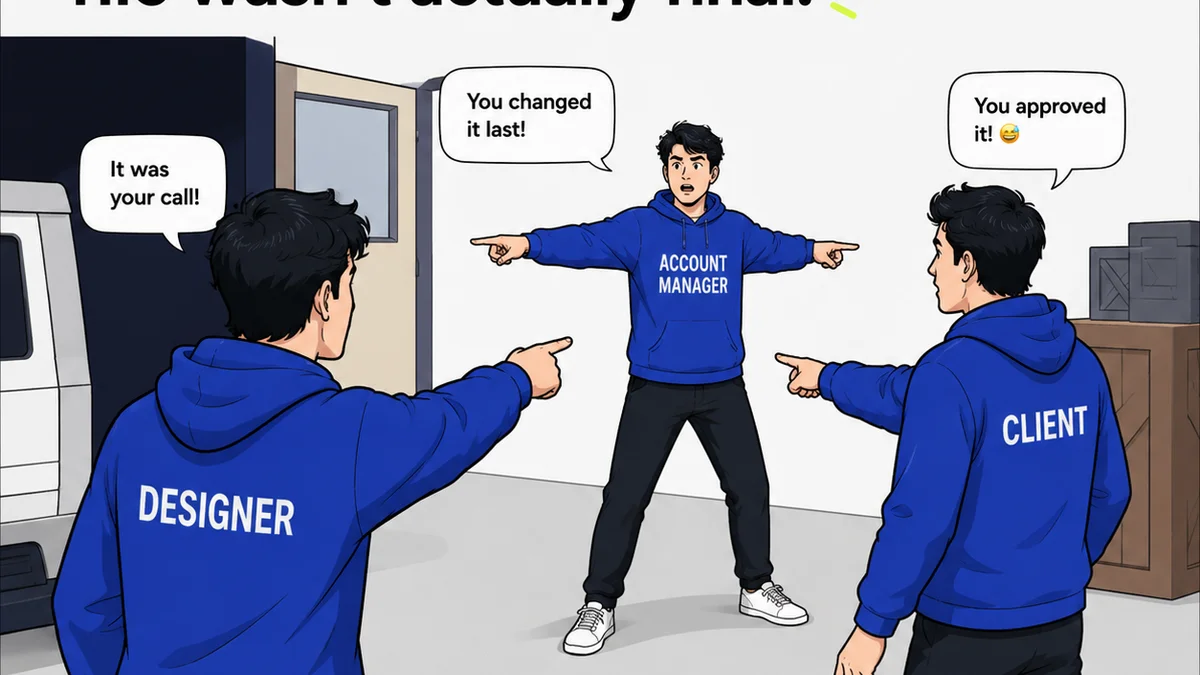
Everyone talks about client reviews. The goal, they say, is simple: get the client to sign off. That’s it. Just get that approval and move on.
None of that is wrong. But it’s incomplete.
The hard truth? Client reviews are rarely just about the final stamp of approval. They’re a critical juncture where miscommunication breeds scope creep, delays, and client dissatisfaction. Get them wrong, and you’re not just chasing a signature; you’re unraveling your project’s profitability and your team’s sanity.
1. The Assumption: Reviews Are Just for Feedback
The most common mistake is viewing client reviews as a passive step. You send something over, they give feedback, you make changes. Easy, right?
Wrong. This view ignores the operational friction that kills deadlines and erodes margins.
It assumes the client knows what they want, that your team understands their vague comments, and that the feedback loop will be smooth. It’s a recipe for disaster.
The Deeper Truth: Reviews Are a Control Point
Think of client reviews not as a passive event, but as an active control point in your workflow. This is where you:
- Confirm alignment.
- Identify scope drift.
- Manage expectations.
- Mitigate risk.
- Ensure quality.
A well-structured review process isn't just about getting feedback; it's about *managing* that feedback effectively. It’s about clarity, accountability, and protecting your project’s viability.
2. The Checklist Foundation: Setting the Stage
Before you even send a draft, the groundwork must be laid. This isn't about the creative itself; it’s about the process.
Define the Reviewers and Their Roles
Who needs to see this? More importantly, who has the final say? Not everyone needs to weigh in on every detail. Clarify this upfront.
- Identify primary decision-makers.
- Identify stakeholders who need to be informed.
- Identify subject matter experts for specific feedback.
Having too many cooks in the kitchen, or the wrong ones, is a common source of conflicting feedback and endless revisions.
Establish Clear Objectives for Each Review Stage
What are you asking the client to review *for* at this specific stage? Is it strategic alignment? Creative direction? Technical feasibility? Micro-level details?
Be explicit.
- Example:
Frequently asked questions
What's the biggest mistake agencies make with client reviews?
Treating reviews as just a checkbox for final approval, rather than a critical operational control point for alignment, scope management, and risk mitigation.
How can I ensure only the right people review my work?
Clearly define roles and decision-makers with the client *before* the review begins. Specify who needs to provide input and who has the final sign-off.
What should I include in a client review checklist?
Key items include: defining reviewers and roles, establishing clear objectives for the stage, setting deadlines, specifying feedback format, outlining the approval process, and detailing the next steps.
How does a good review process prevent scope creep?
By clearly defining objectives and the scope of feedback for each stage. This makes it easier to identify and address requests that fall outside the agreed-upon parameters early on.