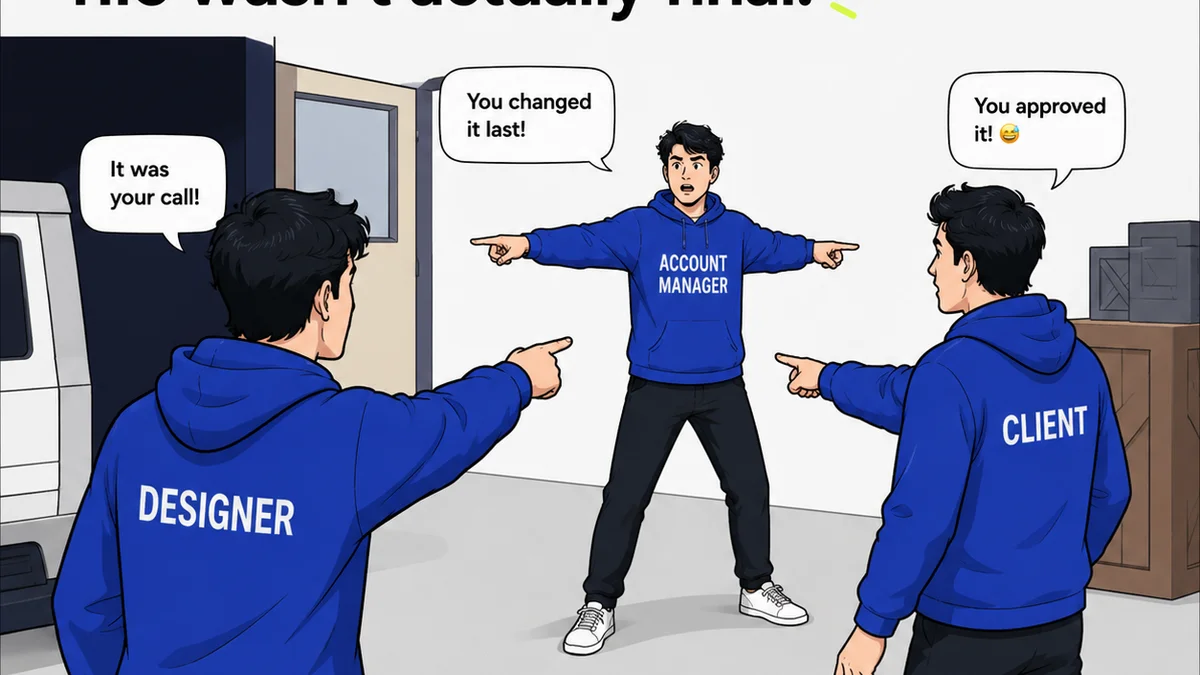
Everyone blames the client review process for project delays and scope creep. It’s the easy scapegoat. You’ve heard it all before: clients don’t know what they want, they change their minds last minute, they’re impossible to please.
None of that is wrong. But it’s incomplete.
The hard truth is, the client review process is often a symptom, not the root cause. The real problems lie in how *we* manage feedback, how we set expectations, and how we translate subjective input into actionable creative direction. We create the conditions for review chaos.
1. The 'Gut Feel' Feedback Trap
We’re conditioned to think creative feedback is purely subjective. “I don’t like it” or “Make it pop more.” This is where most agencies freeze.
But here’s the shift: subjective feedback isn't useless. It’s just *unfiltered*. Your job isn’t to guess what “pop” means. It’s to help the client articulate *why* they feel that way.
What 'Gut Feel' Really Means
- Lack of Clear Objectives: If the initial brief was vague, the client’s feedback will be too. They don't know what success looks like.
- Uncertainty About Target Audience: They might be reacting based on their personal taste, not the end-user’s.
- Fear of Committing: Vague feedback keeps options open, delaying a decision they might not be ready to make.
- Misalignment on Brand Voice: What feels
Frequently asked questions
What's the biggest mistake agencies make in client reviews?
The biggest mistake is treating subjective feedback as a dead end. Instead of pushing back or guessing, agencies should probe deeper to understand the 'why' behind the client's reaction. This often reveals underlying issues with the brief or strategy.
How can I get more specific feedback from clients?
Start by ensuring the initial brief is crystal clear on objectives and target audience. During reviews, ask clarifying questions like 'What specifically about this doesn't align with the goal?' or 'Who are we trying to reach with this?' Frame feedback around project objectives, not just personal preference.
How do I handle last-minute scope creep during reviews?
Clearly define the review process and scope in your contract and initial brief. Establish a limited number of revision rounds. If a client requests work outside the agreed scope, document it and present it as a separate change order with associated costs and timeline adjustments.
Can technology really help improve client reviews?
Yes. Centralized feedback tools allow clients to comment directly on specific elements, reducing ambiguity. They also provide a clear audit trail of feedback, revisions, and approvals, making it harder for requests to get lost or misinterpreted.