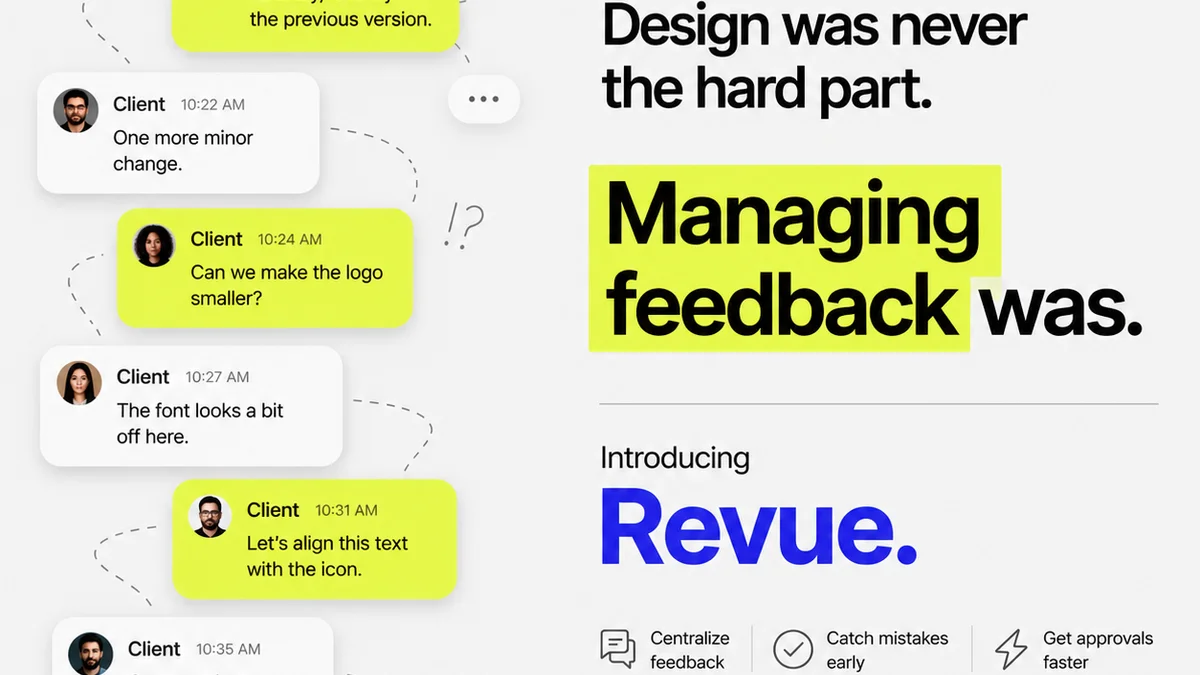
Everyone says client feedback is crucial. That it’s the cornerstone of a successful project. That without it, you’re just guessing.
None of that is wrong. But it’s incomplete.
The hard truth? The way most agencies handle client reviews is a bottleneck. It’s a black hole where time disappears, revisions spiral, and your team grinds to a halt.
This isn’t about avoiding feedback. It’s about structuring it. It’s about making the review process a clear, actionable step, not a chaotic free-for-all.
1. The Illusion of 'Quick' Feedback
You get an email: “Just a few quick thoughts on the latest draft.” Sounds innocent, right?
But what follows is rarely quick. It’s a jumble of subjective opinions, conflicting requests, and edits that go against the original brief.
This often happens because:
- Feedback is siloed. One person sees it, comments, then forwards it to someone else who adds their own layer.
- There’s no single source of truth. Different stakeholders are looking at different versions or have different understandings of the goals.
- The stakes feel low for the client. A quick email is easy for them; the ripple effect on your team is their problem.
This approach breeds inefficiency. It forces your team to:
- Decipher vague comments.
- Chase down clarification.
- Re-do work based on opinions, not strategy.
- Manage multiple versions of the same asset.
It’s a recipe for missed deadlines and frustrated creatives.
2. Defining the 'Right' Way to Give Feedback
The problem isn’t the client wanting input. The problem is the process of collecting and acting on that input.
We need to shift from a reactive, email-driven model to a structured, proactive one. This means setting expectations and establishing clear channels from the start.
2.1. The Project Brief as Your Shield
Your project brief is more than a kickoff document. It’s your contract for what success looks like. It should explicitly define:
- Project goals and objectives.
- Target audience.
- Key messaging.
- Deliverables and their specific requirements.
- The review and approval process itself.
When feedback comes in that contradicts the brief, you have a reference point to push back constructively. “This is a great idea, but it moves us away from the primary goal of X. Should we revisit the brief, or can we explore this as a separate phase?”
2.2. Centralizing Communication Channels
Email is the enemy of efficient feedback. It’s easy to lose track, hard to organize, and impossible to get a consolidated view.
Designate a single platform for all client feedback. This could be a dedicated project management tool, a review platform, or even a shared document with strict version control.
The key is that it’s the only place feedback lives. No more hunting through inboxes. No more missed comments.
2.3. Setting Clear Review Cadence and Roles
Don’t leave review timings to chance. Define them upfront:
- When will feedback be requested? (e.g., after specific milestones, at the end of a sprint).
- Who is responsible for providing feedback on the client side? (Identify key stakeholders and decision-makers).
- What is the expected turnaround time for feedback? (e.g., 48 business hours).
- What format should feedback take? (e.g., clear, actionable comments tied to specific elements).
This creates accountability and predictability. Your team knows when to expect input, and clients know when their input is needed.
3. Structuring the Feedback Loop
Once you have the framework, you need to execute. This means making feedback actionable for your team.
3.1. Consolidating and Prioritizing Feedback
When feedback arrives, it needs to be processed. Don’t just forward it directly to the designer or writer.
A project manager or account lead should:
- Review all comments for clarity and completeness.
- Consolidate similar points.
- Identify conflicting feedback and seek clarification before it hits the team.
- Prioritize feedback based on the project brief and overall goals.
This acts as a crucial filter, ensuring that only relevant, actionable, and strategic feedback makes its way to the execution team.
3.2. Visualizing Revisions
How many times has a client said, “I thought we changed that”? Visualizing changes is key.
Use tools that allow for:
- Annotation on specific elements. Click directly on an image or text block to leave a comment.
- Version tracking. Easily see what changed from one version to the next.
- Clear revision history. A log of all feedback, comments, and approvals.
This transparency prevents miscommunication and ensures everyone is on the same page about what’s been updated and why.
3.3. Establishing Approval Gates
Not all feedback requires a revision. Sometimes, feedback is just input that needs to be acknowledged.
Implement clear approval steps:
- Initial Concept Approval.
- Mid-stage Creative Approval.
- Final Approval.
Each stage should require explicit sign-off. This prevents endless tweaking and signals that a phase is complete and ready to move forward. Without this, you can get stuck in perpetual revision.
4. Where Revue Fits In
Managing feedback effectively is a workflow challenge. It requires structure, visibility, and a single source of truth.
This is precisely where a tool like Revue can make a significant difference.
Revue helps centralize client feedback, making it impossible for comments to get lost in email chains. You can manage revisions and approvals with clear visibility into what’s been requested and what’s been done.
It streamlines the quality check process by providing a clear record of feedback and approvals, ensuring that client requirements are met before final delivery.
By bringing all communication and version history into one place, Revue helps transform the chaotic review process into an organized, efficient workflow.
5. Final Thought
Are you treating client feedback as a collaborative input or a disruptive interruption?
The difference lies entirely in your process. It’s about setting clear expectations, establishing defined channels, and maintaining a structured workflow.
Stop letting the review process be the weakest link in your project delivery. It’s time to build a system that supports efficient collaboration, not hinders it.
Frequently asked questions
How can I get clients to provide feedback more efficiently?
Set clear expectations upfront. Define who provides feedback, when, and in what format. Use a centralized platform for all comments instead of scattered emails. Establish a reasonable turnaround time for their input.
What's the best way to handle conflicting client feedback?
Consolidate all feedback first. Identify any contradictions. Then, approach the client or key stakeholders to seek clarification and prioritize which direction aligns best with the original project brief and goals.
How do I prevent endless revisions?
Clearly define project scope and goals in the brief. Implement distinct approval stages (e.g., concept, mid-stage, final). Require explicit sign-off at each stage to signify completion and prevent scope creep.
Should I use email for client feedback?
It's generally not recommended. Email is prone to becoming disorganized, comments can be missed, and it's hard to track versions. A dedicated project management or review platform offers better structure and visibility.