Everyone thinks branding is about the logo. It’s the hero shot, the first thing people see. Get that right, and the brand is golden, right?
Wrong. That’s like saying a building is just its facade.
The truth is, great branding isn't built on a single visual element. It's a consistent, cohesive experience woven through every touchpoint. The errors designers make aren't usually about bad taste; they're about a lack of strategic thinking and operational discipline.
1. The 'Logo is the Brand' Fallacy
This is the most common trap. You nail the logo, the colors, the typography. You deliver a beautiful brand guide. Mission accomplished. But then what?
The brand guide sits on a shelf. The logo gets stretched, colors get misused, and the carefully chosen typography is replaced with Arial because someone's in a hurry. The brand becomes a distorted echo of its intended self.
The Deeper Truth: Brand is Experience, Not Just Assets
A brand is the sum total of every interaction a customer has with your client’s business. It’s the tone of their website copy, the speed of their customer service, the clarity of their product instructions, and yes, the look and feel of their marketing materials.
Focusing solely on visual assets misses the forest for the trees. The real work is ensuring consistency across all those other, less glamorous, touchpoints.
- Is the client's website copy as sharp as their new logo?
- Does the sales team understand the brand's core message?
- Is the product packaging as thoughtfully designed as the brochure?
If the answer is no, the logo doesn't matter as much as you think.
2. Neglecting the 'Why' Behind the 'What'
Clients often come to designers with a 'what' – they want a new logo, a website redesign, a campaign. Designers jump straight to the 'what' – sketching, wireframing, pixel-pushing.
This is efficient, on the surface. But it skips the crucial 'why'.
Why does the client need this? What problem are we *really* solving? What business objective does this redesign serve? Without understanding the 'why', you're just decorating.
The Deeper Truth: Strategy Dictates Design, Not the Other Way Around
Every design decision should be defensible by strategy. If you can't explain *why* a certain color, layout, or typographic choice supports the client's business goals, you're guessing.
This means digging deeper during the discovery phase. It means asking uncomfortable questions about the client's market, their audience, their competitors, and their ultimate business objectives.
- What are the client's top 3 business goals for the next year?
- Who is their *ideal* customer, and what are their pain points?
- What is the single most important action we want users to take?
Answering these questions informs the entire design process. It elevates your work from aesthetic execution to strategic problem-solving.
3. The 'One-and-Done' Delivery Trap
The project ends. Files are handed over. Payment is made. Everyone moves on. This is the default for many agencies and freelancers.
But this approach treats branding like a product, not a living, evolving entity.
Brands need maintenance. They need to adapt. They need to be managed.
The Deeper Truth: Branding is an Ongoing Process of Management and Evolution
The real value isn't just in the initial creation; it's in ensuring the brand remains effective and consistent over time. This requires systems and ongoing oversight.
Without a process for managing brand assets, ensuring correct usage, and guiding future iterations, the initial investment quickly erodes.
- How are new marketing materials approved?
- Who ensures brand consistency across all new initiatives?
- What’s the process for updating brand guidelines as the market shifts?
Failing to plan for this ongoing management is a critical branding error.
4. Underestimating the Power of Internal Branding
When we talk about branding, we almost always mean the external-facing elements – what customers see. But what about the internal audience?
The employees are the frontline ambassadors of any brand. If they don't understand, believe in, or embody the brand, the external message will fall flat.
Think about a notoriously customer-centric brand. That ethos starts internally. If the employees aren't treated well, if they don't understand the company's mission, they can't possibly project that consistently to customers.
The Deeper Truth: Employees are Your Most Critical Brand Touchpoint
Internal branding ensures that everyone within the organization is aligned with the brand's mission, values, and voice. It fosters a culture that naturally supports the external brand promise.
This isn't just about posters in the breakroom. It's about how the company operates, how it communicates internally, and how it empowers its people.
- Are internal communications on-brand?
- Do employees understand the brand's core values and mission?
- Is the company culture a reflection of the desired brand identity?
A disconnect here is a gaping hole in the brand's foundation.
5. Ignoring Usability and Accessibility
The brand looks stunning. The visuals are cutting-edge. The typography is elegant. But can *everyone* use it?
Too often, the pursuit of a unique aesthetic overlooks fundamental principles of usability and accessibility. This is a branding error that alienates a significant portion of the potential audience.
A brand that isn't accessible isn't truly inclusive. It's a brand that is failing to connect.
The Deeper Truth: True Brand Excellence is Inclusive and Functional
A brand's visual identity must serve its audience. This means adhering to accessibility standards (WCAG, for example) for digital products and ensuring that physical materials are easy to understand and interact with for diverse users.
This isn't about compromising design; it's about designing *better*. It's about thoughtful consideration for all users.
- Are color contrast ratios sufficient for readability?
- Is navigation intuitive for first-time users?
- Are forms easy to complete for people with varying technical skills?
Ignoring these aspects limits the brand's reach and effectiveness.
Where Revue Fits In
These common branding errors – the over-reliance on static assets, the disconnect between strategy and execution, the lack of ongoing management, the neglect of internal culture, and the oversight of accessibility – all stem from a lack of centralized control and clear communication.
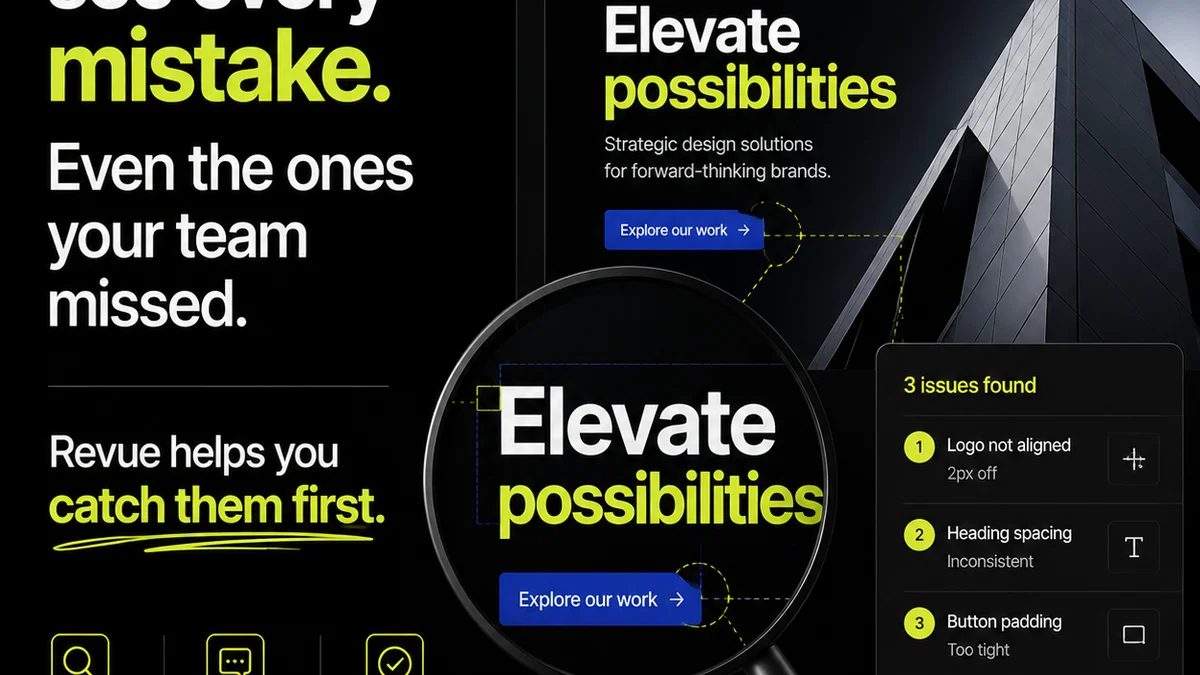
When feedback is scattered across emails, Slack messages, and random documents, it's easy for strategic intent to get lost. Revisions become a chaotic back-and-forth, making it hard to track decisions and ensure brand consistency.
Revue provides a single source of truth for all creative feedback, revisions, and approvals. It allows creative teams to:
- Centralize Client Feedback: All comments and annotations live directly on the creative asset, eliminating the need to hunt through endless email threads.
- Manage Revisions Visibly: Track every iteration, see who approved what, and understand the evolution of a project. This ensures that the final output aligns with the original strategic brief.
- Run Quality Checks: With a clear audit trail and consolidated feedback, you can perform thorough quality checks to ensure the final deliverables meet brand standards and strategic objectives before client sign-off.
By bringing order to the chaos of the creative workflow, Revue helps agencies and design teams avoid these common branding pitfalls and deliver work that is not just beautiful, but strategically sound and consistently applied.
Final Thought
Branding isn't a one-time design project. It's a continuous, strategic discipline that requires operational rigor.
Are you designing a logo, or building a brand experience?
Frequently asked questions
What is the most common branding mistake designers make?
The most common mistake is treating the brand as solely a visual asset, like a logo or color palette, rather than the entire customer experience. This leads to inconsistency and diluted brand messaging.
How does a lack of strategy impact branding?
Without understanding the 'why' behind a brand—its business goals, target audience, and market position—design decisions become arbitrary. This results in work that doesn't effectively serve the client's objectives.
Why is ongoing brand management important?
Brands need to evolve and remain consistent over time. Treating branding as a 'one-and-done' project leads to outdated visuals, inconsistent application, and a failure to adapt to market changes, eroding the brand's effectiveness.
How can agencies ensure brand consistency across all touchpoints?
Establishing clear brand guidelines, implementing a centralized feedback and approval process (like Revue), and educating internal teams are crucial for maintaining consistency across all client interactions and deliverables.